
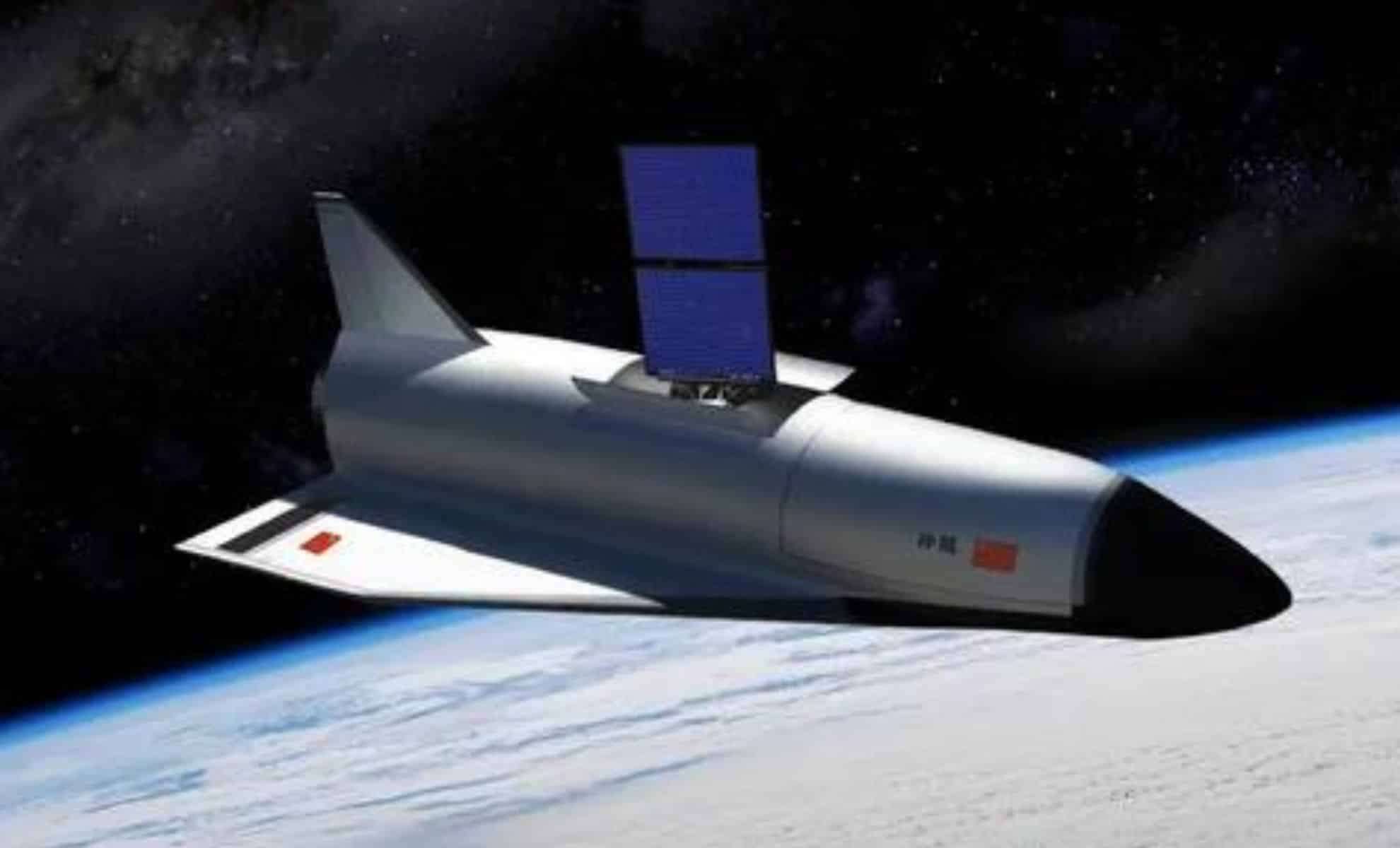
China’s reusable spaceplane has safely touched down after spending 268 days orbiting Earth.
The vehicle completed its mission by landing at the Jiuquan Satellite Launch Center in the Gobi Desert on Friday, September 6, 2024. Despite the limited information released publicly, this mission is considered a significant step forward for China’s reusable spacecraft technologies. Throughout its extended stay in orbit, the craft conducted several classified experiments, prompting speculation concerning the mission’s true objectives and China’s future ambitions in space.
Mission Highlights: A Long-Duration Stealth Operation
Launched aboard a Long March 2F rocket on December 14, 2023, this reusable spaceplane has attracted attention due to its opaque mission goals. Reports from space observers indicate the spaceplane orbited at altitudes reaching roughly 600 kilometers (372 miles). Although most mission details remain undisclosed, notable events included the deployment of six unidentified objects shortly after launch, as well as an additional release in May 2024. These incidents have fueled questions about the nature and purpose behind the spaceplane’s activities.

The craft’s in-orbit behavior has drawn comparisons to the U.S. military’s X-37B spaceplane, which also embarks on prolonged classified missions. China’s spaceplane is thought to be crucial in advancing both civilian and defense-related space endeavors. However, Chinese authorities have withheld specifics about the vehicle’s design, payload, and systems, maintaining an aura of secrecy around the project.
Technological Aspects of the Spaceplane
While official information is scarce, amateur astrophotography from Austria captured images revealing aspects of the craft’s structure. The spacecraft is estimated to measure around 30 feet (10 meters) in length and appears equipped with solar panels on its tail. This setup indicates a design capable of drawing power to support extended orbital missions.

The spaceplane’s reusable nature signals China’s intent to optimize cost efficiency for space access by creating spacecraft capable of multiple launches. This aligns with China’s strategic goal to develop an economically sustainable space infrastructure supporting missions like Earth observation, satellite deployments, and potentially sensitive military operations. Though specific technology tests remain undisclosed, this mission’s length demonstrates a meaningful advancement for China’s reusable spacecraft development.
Mysterious Object Releases During the Mission
A particularly puzzling element of the operation is the deployment of seven unidentified objects while in orbit. The initial six were set free soon after launch, with another object released in May 2024. Although their exact purposes are unknown, experts speculate these may be experimental satellites or devices intended to trial new space technologies such as on-orbit maintenance, satellite communication, or surveillance capabilities. This has sparked debates over the mission’s possible dual roles encompassing both civilian research and defense uses.
Chinese officials have remained silent regarding these objects, but space analysts have detected signals emanating from them. This suggests operational activity, such as data collection or communications testing. The ambiguity has drawn international curiosity, as these satellite deployments could represent early stages of China’s ambitions in space security technologies or strategic satellite constellations.
The Significance of Reusable Spaceplanes in Modern Spaceflight
China’s progress with a reusable spaceplane reflects the growing global drive to make space access more affordable and frequent. Reusability is a crucial element for enhancing a country’s space capabilities, enabling more versatile and cost-effective missions. This technology holds importance for scientific research as well as national defense, making it a top priority for world space powers.
Following a previous successful 276-day mission in 2022, this recent flight reaffirms China’s dedication to mastering endurance missions and leading in space logistics. Astrophysicist Jonathan McDowell confirmed the craft’s return near a dried lakebed in the Lop Nur area of China’s Xinjiang Autonomous Region. The spacecraft passed above the landing zone around 9:10 p.m. ET, verifying its precise touchdown.
China’s pursuit of reusable technology could significantly influence future operations, including satellite launches and potential crew missions. As China develops its space station capabilities and prepares for moon expeditions, such reusable vehicles may become critical enablers for upcoming endeavors.
Looking Ahead: China’s Expanding Space Ambitions
The spaceplane’s successful return highlights a key advancement within China’s broader space ambitions. Beyond reusable vehicles, China plans to grow its Tiangong space station and aims for human lunar missions during the 2030s. This mission might be a stepping-stone toward deploying crewed or autonomous spacecraft targeting low Earth orbit and deeper space.
China’s intensified focus on space also raises the prospect of a renewed space race. With the U.S. operating its own reusable spaceplane via the X-37B and firms like SpaceX pushing rapid advancements in reusable rockets and crew transport, China’s spaceplane project adds competitive momentum to global exploration efforts.
Experts anticipate continued development of China’s spaceplane technology, possibly integrating it into future missions to the moon or Mars. The secretive nature of these missions hints at potential military applications, underscoring China’s growing interest in establishing dominance in space as a strategic frontier.
- Categories:
- Astronomy ,
- News ,
- Space









0 comments
Sign in to Comment