
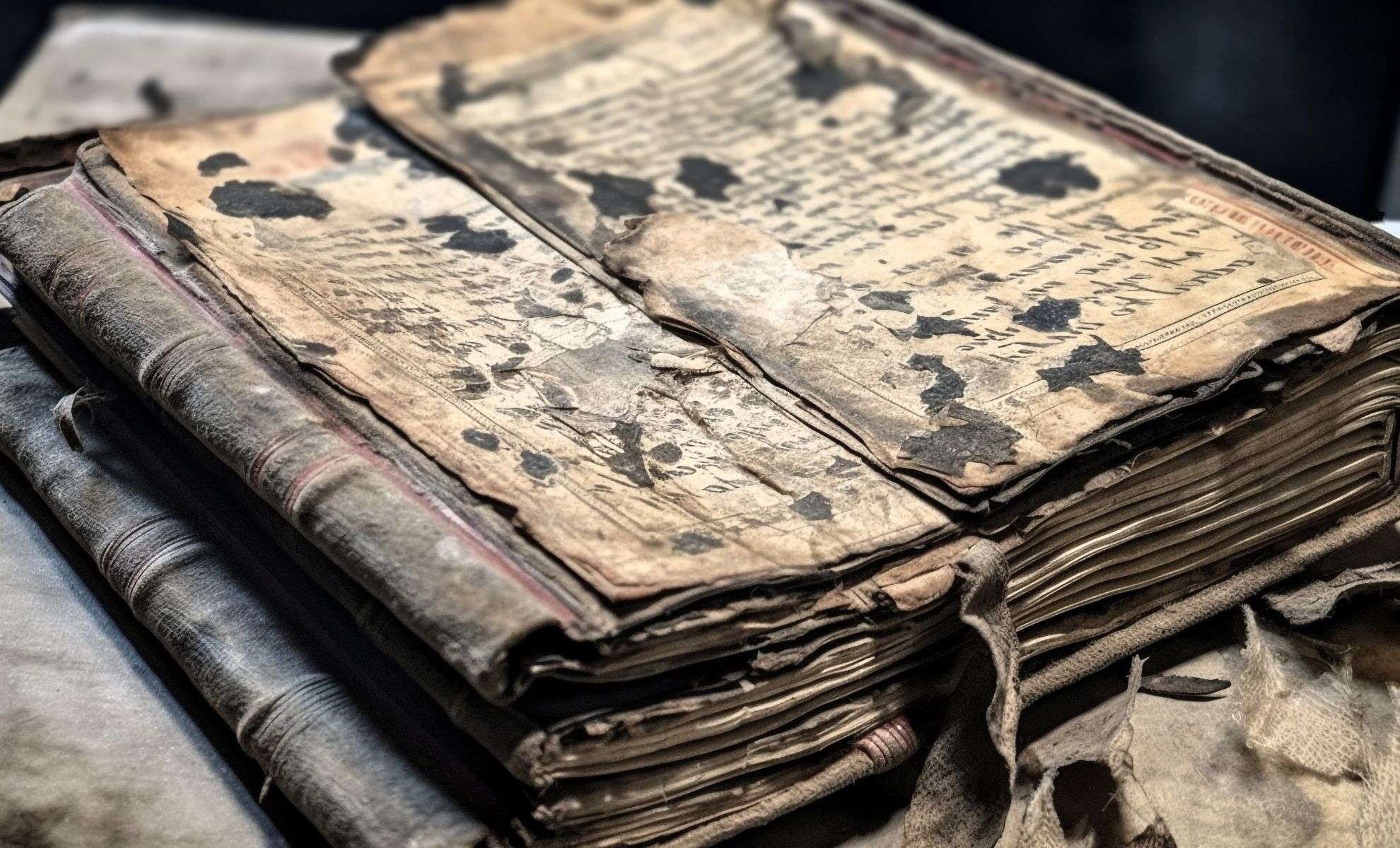
Within the shadowy confines of a 13th-century monastery in Constantinople, scribes unknowingly obscured a manuscript that contained some of the most groundbreaking mathematical discoveries of the ancient world. Beneath layers of religious texts, faint remnants of brilliant work by Archimedes, one of history’s foremost mathematicians, lay hidden.
This overwritten manuscript, now called the Archimedes Palimpsest, resurfaced only in 1906 when the Danish scholar Johan Ludvig Heiberg identified faint Greek script beneath the newer religious writing. Initially underestimated, the artifact disappeared again before reappearing at a private sale in 1998, fetching a price of $2 million from an undisclosed collector. The revelations it contained had the potential to reshape the narrative of scientific history.
Advanced ultraviolet and X-ray techniques applied by teams at Stanford University and the Walters Art Museum unveiled hidden passages from The Method of Mechanical Theorems, a text thought lost to antiquity. These findings, reported by the Stanford Synchrotron Radiation Lightsource, confirmed that Archimedes formulated ideas closely resembling integral calculus nearly 2,000 years before Newton and Leibniz.

Archimedes’ Forgotten Brilliance
Originating from Syracuse around 287 BC, Archimedes is widely recognized for his discoveries in buoyancy and lever mechanics. However, his profound yet overlooked work in mathematical concepts such as infinite series, calculating volumes, and early theories of infinitesimals highlight a genius far beyond his epoch.
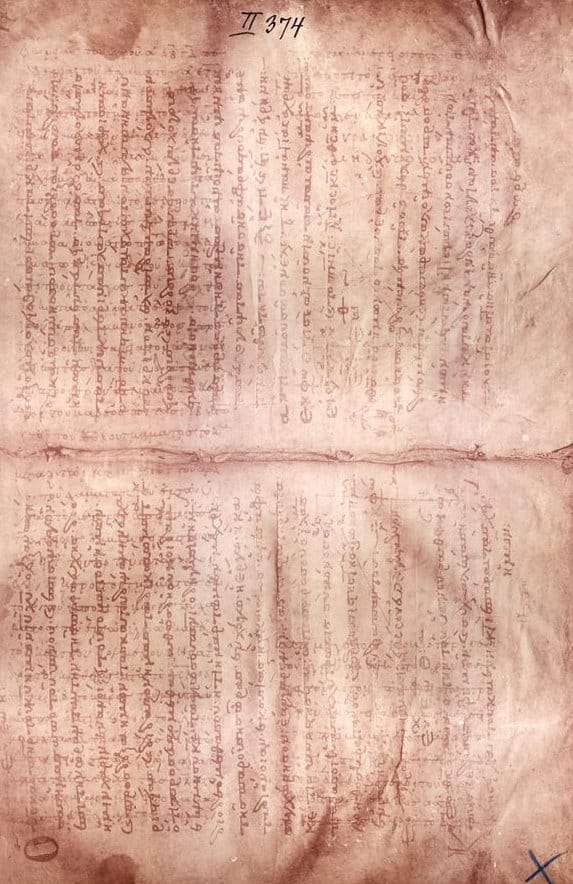
Recovered sections of "The Method" illustrate Archimedes’ early understanding of combinatorics, a cornerstone of today’s computational sciences and algorithms. Additionally, the text demonstrates mechanical reasoning analogous to approaches used in modern physics education. Essentially, this manuscript offered a template for scientific breakthroughs that wouldn’t reemerge until centuries later during the Enlightenment.
Had this knowledge endured unharmed, some scholars argue that major technological advances including the Industrial and Information Revolutions might have been triggered much sooner. “We lost centuries,” remarked Dr. Reviel Netz, classics expert at Stanford University and co-editor of the Archimedes Palimpsest Project. “It’s not just the advanced nature of these ideas; it’s that they disappeared exactly when they were desperately needed.”
The Manuscript’s Disappearance and Its Remarkable Recovery
Its erasure was primarily due to limited resources. In the medieval era of Constantinople, parchment was rare and costly, prompting monks to scrape old documents clean to reuse them for religious purposes—a practice known as palimpsesting. The mere survival of The Method is a remarkable stroke of luck.
After its 1998 acquisition, a diverse team of experts began an extensive restoration and analysis process. Employing cutting-edge multispectral imaging, such as infrared scans and synchrotron radiation, they carefully removed layers of deterioration to reveal the hidden writings. Portions of their work, published through Project Euclid’s peer-reviewed outlets, verified the presence of multiple lost Archimedean texts, including the Stomachion, one of the earliest treatments of combinatorial theory.
Despite these advances, much of the manuscript remains indecipherable, its pages stained by mold, wax, and centuries of neglect. “Deciphering it feels like piecing together a secret message from the distant past,” said William Noel, former curator at the Walters Art Museum who led much of the restoration. “Every recovered page opens new mysteries—and deeper reflections on what could have been.”
- Categories:
- News









0 comments
Sign in to Comment