
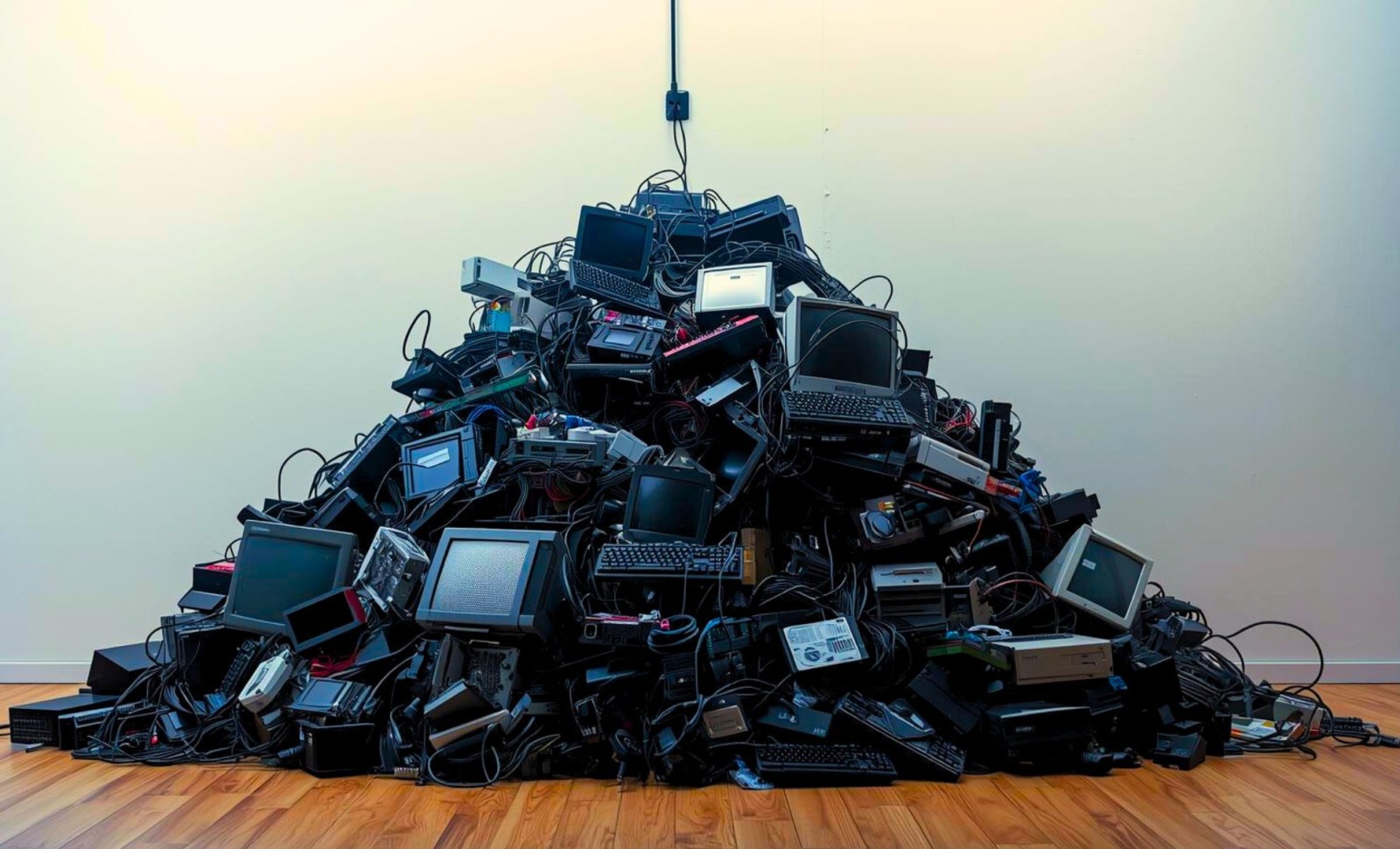
In a suburban neighborhood in Farmingdale, New York, a privately owned home has been functioning off the grid since 2016—completely free from electricity bills, commercial battery systems, or government funding. The energy source? A network of 650 salvaged laptop battery cells, meticulously configured by an individual known as Glubux.
Constructed using used 18650 lithium-ion cells harvested from obsolete laptops, this battery array has been running flawlessly for nearly ten years. Crafted by hand and maintained with daily attention, this inventive DIY power setup challenges conventional beliefs about battery durability, renewable energy storage solutions, and the practicality of off-grid lifestyles.
Repurposing E-Waste for Sustainable Power
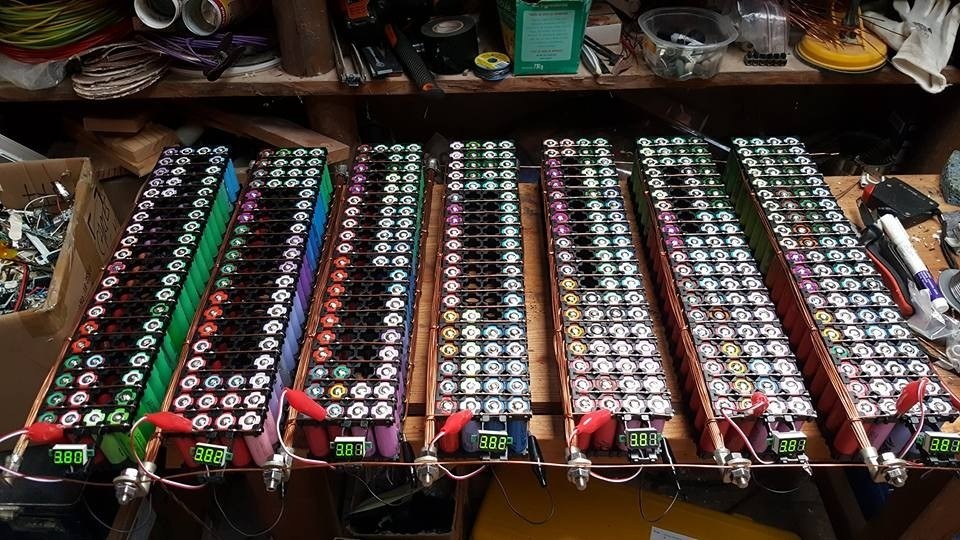
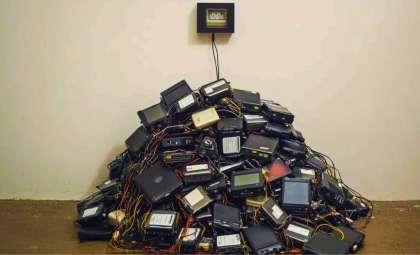
Instead of investing in commercial options like the Tesla Powerwall, Glubux chose to reclaim and repurpose lithium cells from electronic waste. After collecting over 650 laptop battery packs, he carefully dismantled and individually tested each cell to determine its remaining capacity. Functioning cells were then arranged into modular battery packs rated around 100Ah, each holding between 51 and 80 cells.

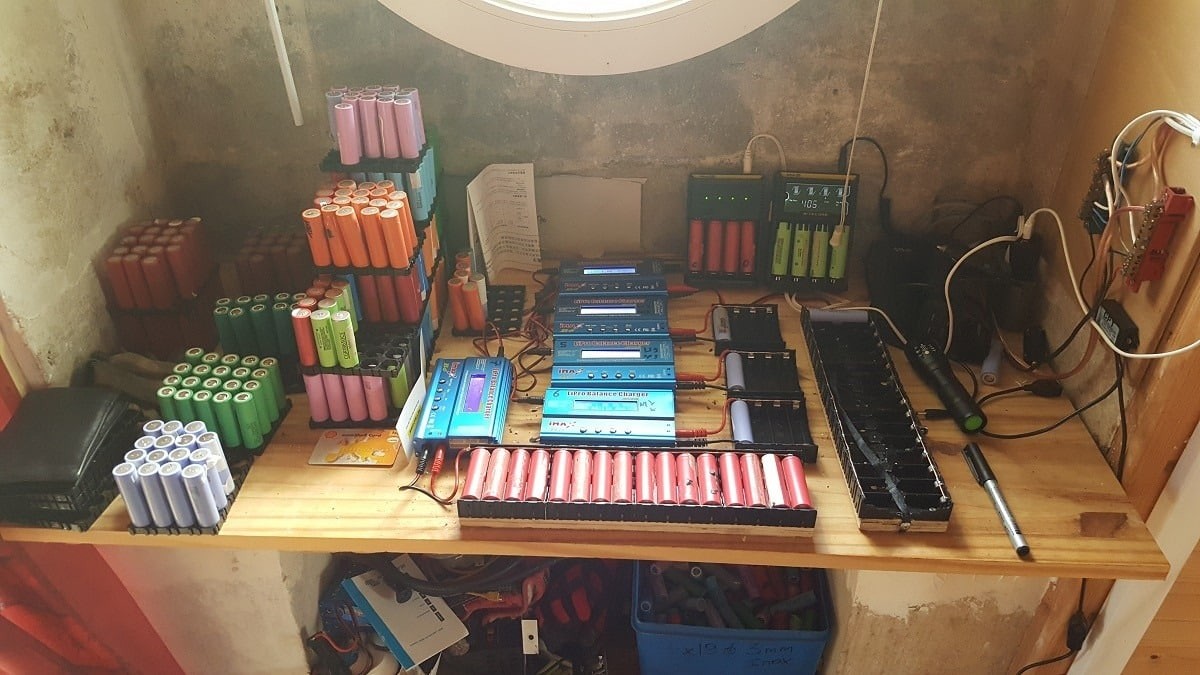
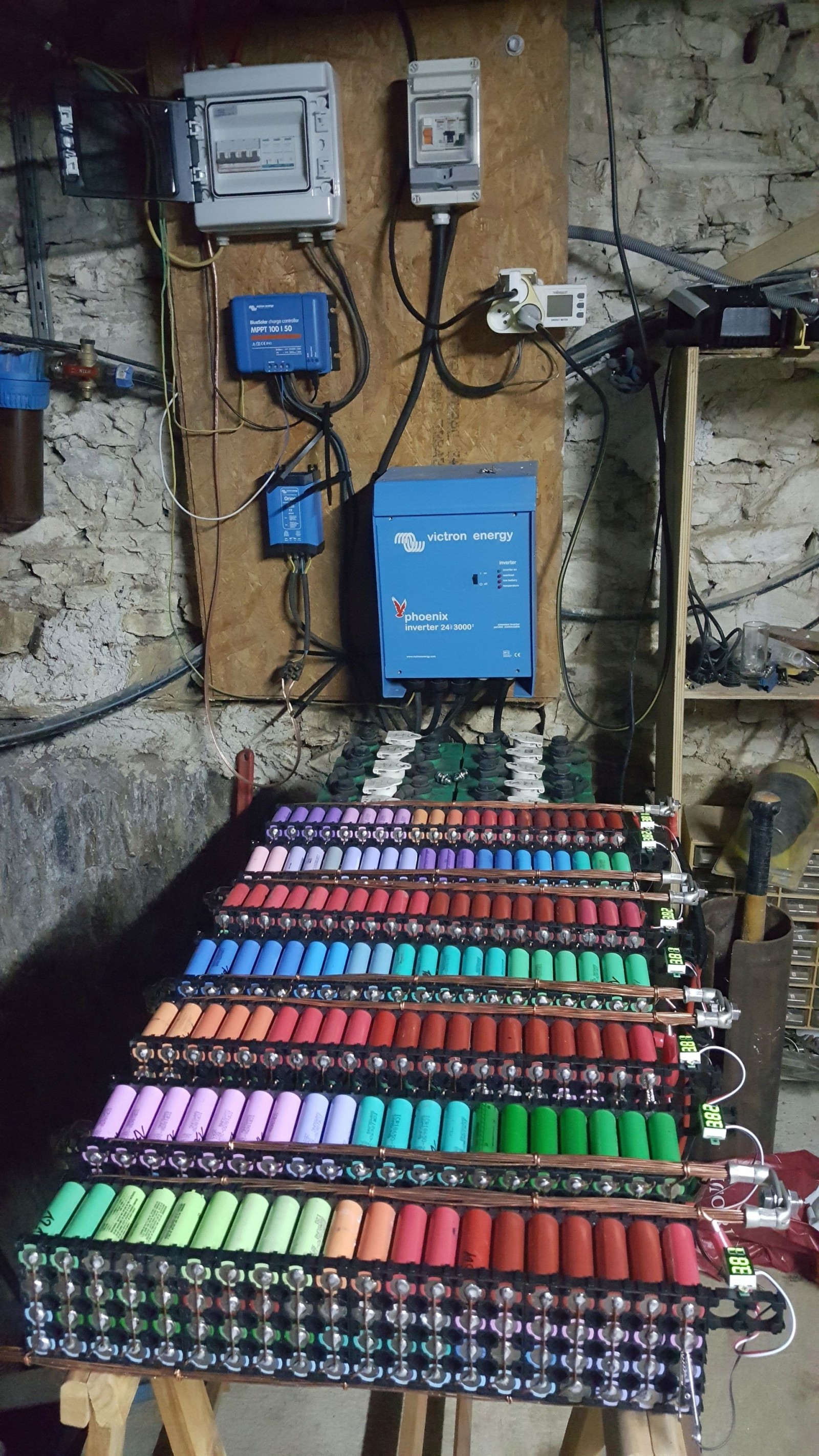
To guarantee steady performance, copper conductors measuring 1.5 mm in diameter were selected for wiring due to their excellent conductivity and reliability. The battery bank is installed in a garden shed located roughly 50 meters from the residence, connected to a solar panel system with 24 rooftop modules rated at 440 watts each—delivering more than 10.5 kW of solar power capacity.
The energy setup incorporates a Victron MPPT 100/50 charge controller, a 3kVA Victron inverter, and a 24V-to-12V DC converter to supply power. There is no backup grid connection. Even through winter and peak demand, the household has stayed fully powered.
Smart Engineering Prevents Battery Failures
Although utilizing older cells, the battery system shows no decline in effectiveness. Over nearly nine years, Glubux notes no thermal incidents, no battery swelling, and zero replacements. This defies the typical narrative that reused lithium-ion cells degrade rapidly or are risky fire hazards.
The main obstacle was managing voltage inconsistencies between packs of varying sizes. An extensive overnight test, running two refrigerators and other essential appliances, revealed a sudden voltage drop in some packs. While most sustained about 3.3 volts, the smaller packs dropped below 2 volts, a damaging threshold for lithium batteries.
Investigation showed that smaller packs were hitting their discharge limits prematurely compared to larger ones, triggering early voltage decline. Glubux corrected this by adding cells to the smaller packs and standardizing pack sizes. Since then, the system has consistently handled full load cycles without issues.
Additionally, he discovered that maintaining moderate voltage levels—keeping cells between roughly 3.3 and 3.8 volts—reduced internal battery stress and slowed wear. By avoiding extreme voltage ranges, the system's lifespan was significantly extended without relying on sophisticated battery management technology.
The Untapped Promise of Lifespan-Extended Batteries
This project stands in stark contrast to the current clean energy industry model, which depends on new lithium supplies, freshly manufactured cells, and proprietary systems. Commercial products like Tesla’s Powerwall or LG’s RESU focus on new materials and controlled installations. In contrast, Glubux’s system was built at a fraction of the cost, using solely recycled parts backed by shared community expertise.
The Second Life Storage forum chronicles his ongoing project and has attracted interest from DIY enthusiasts and professionals interested in solar battery innovation, energy autonomy, and battery reuse.
By avoiding full charge cycles and deep discharge events, and through constant monitoring of performance, Glubux’s system remains both safe and highly durable. Its longevity surpasses many mass-produced systems, a remarkable achievement for batteries repurposed from discarded laptops.
Energy Sector Blind Spots
Despite its proven reliability, setups like this rarely receive acknowledgment from energy regulators. In many countries including the US and parts of Europe, second-life batteries operate without formal certification and are mostly excluded from clean energy incentives, rebates, and grid feedback schemes—even when fully functional.
This regulatory gap complicates broader adoption, even though the cost per kWh of such DIY systems is substantially lower than commercial units. While commercial residential storage can top $1,000 per kWh, second-life battery setups can be made for a tiny fraction, especially when handcrafted using reclaimed materials.
Moreover, Glubux’s powerwall highlights a critical but overlooked point: electronic waste still retains significant energy potential. Every year, millions of lithium-ion batteries from laptops and other gadgets are discarded, many with 70% to 90% of their original capacity intact, suitable for less demanding stationary storage purposes.
However, without clear legal frameworks, second-life battery reuse remains marginal. Projects like this one not only operate off-grid but exist entirely outside formal systems.
- Categories:
- News








0 comments
Sign in to Comment