
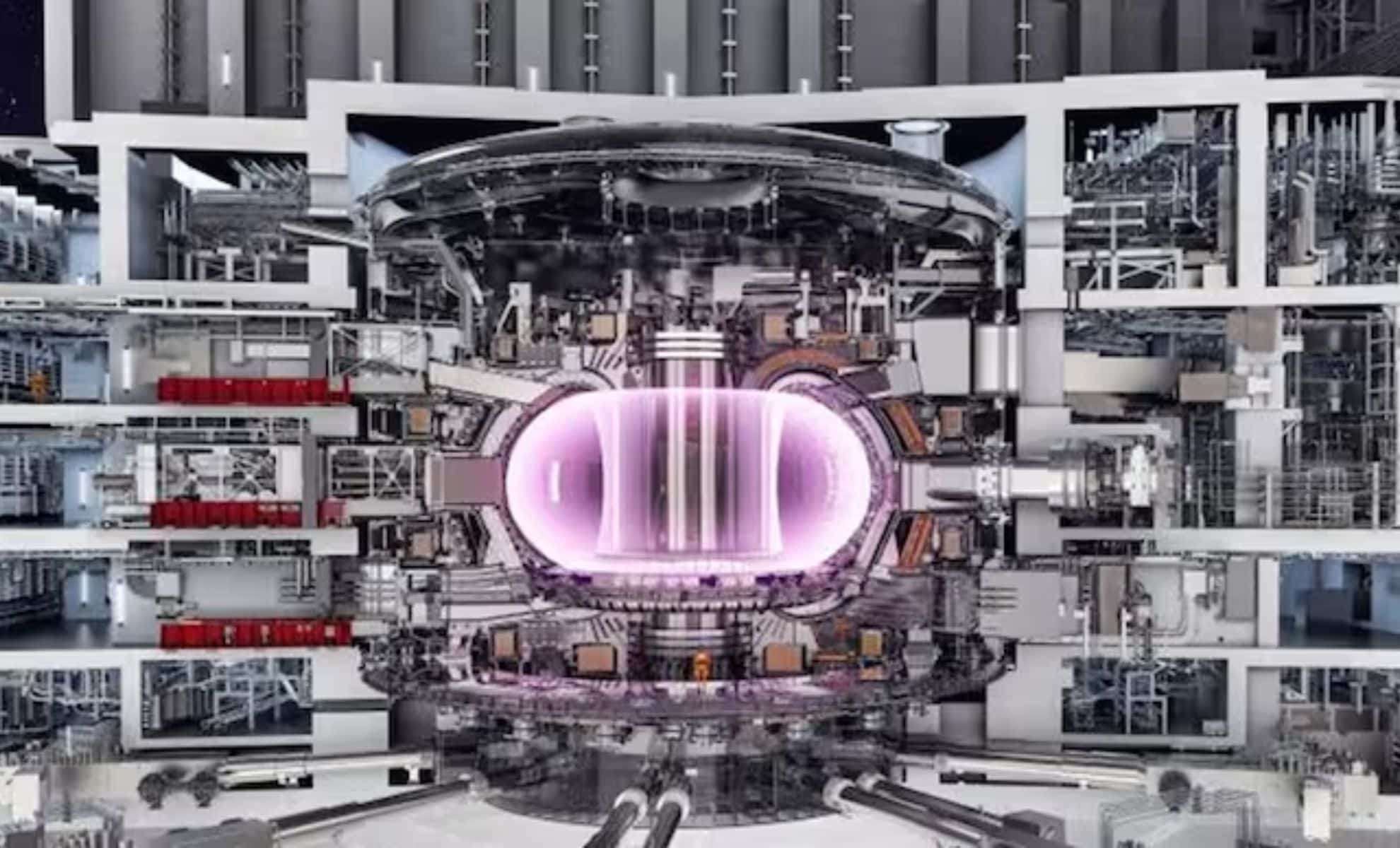
The International Thermonuclear Experimental Reactor (ITER) has achieved a pivotal advancement in advancing zero-emission energy.
The completion of the largest superconducting electromagnet assembly globally marks a new chapter for ITER’s fusion energy experiments.
A Landmark in Fusion Power Development
Interesting Engineering reports that the ITER collaboration, based in southern France, represents an unprecedented international effort to validate fusion as a viable energy source.

The project's latest milestone is the successful fabrication of its pulsed superconducting electromagnet system.
This record-setting set of magnets is fundamental to the ITER Tokamak device engineered to sustain fusion reactions under controlled conditions.
As ITER Director-General Pietro Barabaschi highlighted, “ITER’s uniqueness rests not just in its engineering complexity but also in its international partnership that endures through shifting global dynamics.”
Core Component: The Central Solenoid Magnet
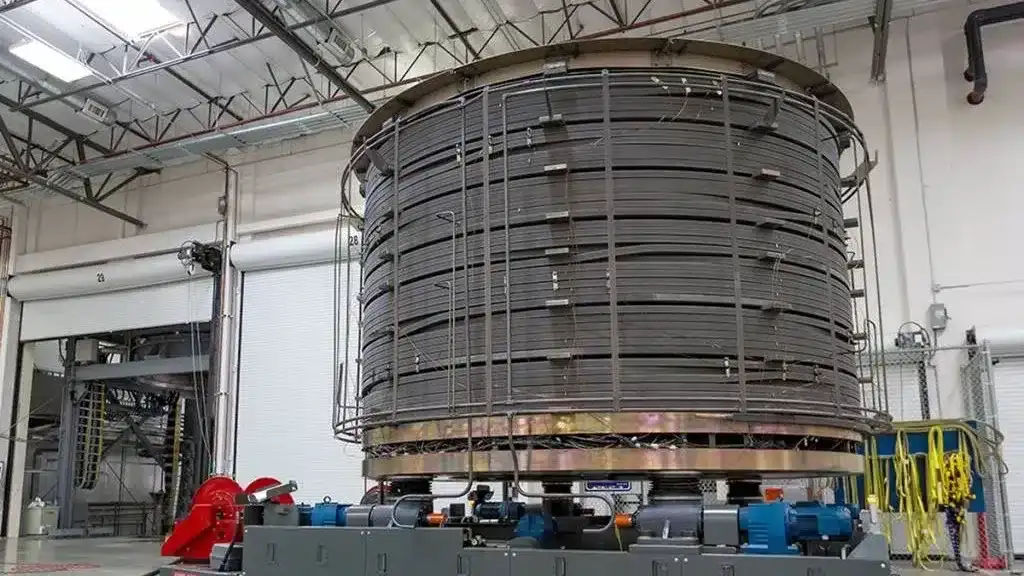
The Central Solenoid—a monumental magnet weighing approximately 3,000 tons—forms the hub of this electromagnetic system and was constructed and thoroughly tested in the U.S. before its shipment to ITER.
It plays an essential role in initiating and stabilizing the high-temperature plasma required for fusion.
According to ITER’s updates, the entire pulsed electromagnet assembly will weigh about 3,000 tons and function together with six poloidal field magnets supplied by Russia, Europe, and China.
Mechanics of Fusion Energy Generation
Fusion energy replicates stellar processes by fusing hydrogen isotopes like deuterium and tritium within the Tokamak chamber.
The electromagnet array induces a current that converts these gases into a plasma state.
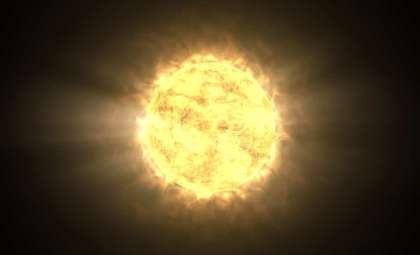
This plasma is then confined and shaped by intense magnetic fields, preventing contact with the reactor walls, and heated to a blistering 150 million degrees Celsius—a temperature far surpassing that of the sun’s core.
At such extreme temperatures, atomic nuclei merge, releasing immense energy. “At this temperature, the atomic nuclei of plasma particles combine and fuse, releasing massive heat energy,” ITER stated.
Progress Toward a Sustainable Energy Solution
ITER’s objective is to validate fusion as an effective energy source. Once operational, it aims to generate 500 megawatts of fusion energy from just 50 megawatts of input power, achieving a tenfold energy gain.
This process, known as a “burning plasma,” involves a self-sustaining reaction fueled by its own heat. ITER’s design and expected output signify a critical breakthrough for clean energy futures.
ITER explains, “At this efficiency level, the fusion reaction largely self-heats, becoming a ‘burning plasma.’”
Global Collaboration Driving Innovation
ITER stands as a hallmark example of worldwide scientific collaboration. Over 30 nations have contributed expertise and components to assemble the Tokamak reactor.
The U.S. developed the Central Solenoid magnet, while Russia, China, and Europe have supplied the poloidal field magnets. Other countries such as Japan, Korea, and India have provided critical parts, including the vacuum vessel and thermal shielding.
Through this cooperative spirit, these countries aim to establish fusion power as a practical and sustainable energy source.
“The ITER Project is the embodiment of hope. With ITER, we show that a sustainable energy future and a peaceful path forward are possible,” said Barabaschi.
- Categories:
- News





0 comments
Sign in to Comment