
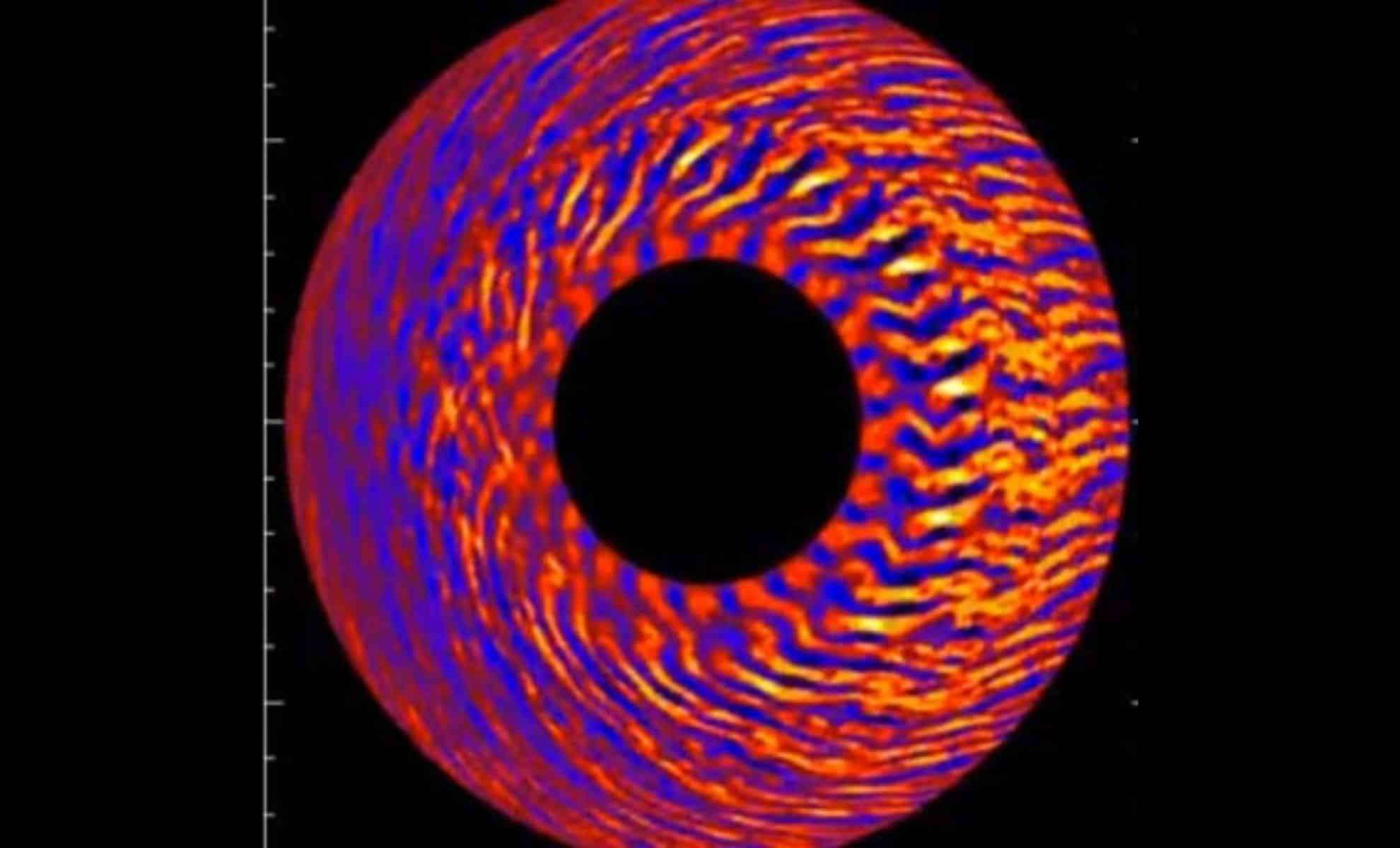
Fusion energy, generated by merging light atomic nuclei, remains a promising source of clean and abundant power. Among the various fusion strategies, magnetic confinement fusion stands out by using powerful magnetic fields to contain plasma — a superheated, ionized gas — at temperatures reaching millions of degrees Celsius. For fusion to be energy-positive, it is vital that the plasma retains heat efficiently, which hinges on controlling the turbulent behavior inside it.
As Dr. Klara Höfler from the Max Planck Institute for Plasma Physics (IPP) explains, plasma turbulence plays a dual role. While it facilitates the removal of helium nuclei, the inert byproducts of fusion, excessive turbulence causes premature energy leakage, reducing the efficiency of the process. Striking the right equilibrium between these effects is a key challenge for sustaining fusion reactions.
The research team’s latest publication in Nature Communications verifies the impressive accuracy of the GENE simulation code in modeling plasma turbulence. This validation is a significant advancement, allowing better prediction and optimization of fusion reactor behavior to enhance energy retention.

Understanding the Complexity of Plasma Turbulence
Within fusion plasmas, turbulence affects how energy and particles move. This dynamic resembles stirring a cup of coffee: the more intense the stirring, the faster the ingredients mix. Likewise, heightened turbulence accelerates energy escape from the plasma core, diminishing fusion output. Scientists have aimed to master this delicate interplay to improve energy confinement.
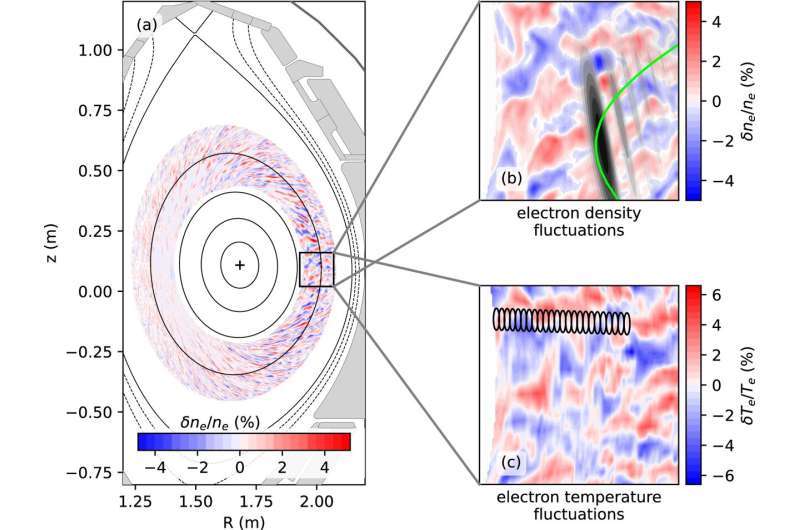
To deepen their understanding, Dr. Klara Höfler and her collaborators employed the sophisticated diagnostic instruments at the IPP’s renowned ASDEX Upgrade fusion experiment. By closely examining temperature and density fluctuations in the plasma, they directly compared these real-world observations with the predictions produced by the GENE simulation code.
Confirming GENE’s Predictive Power and Unexpected Insights
This study marks the first occasion where measurements of plasma turbulence align so closely with simulations from GENE. The combination of cutting-edge diagnostic techniques and sophisticated modeling allowed the team to recreate complex plasma behavior with remarkable precision. The GENE code, which originated at IPP, demonstrated exceptional ability by replicating not only expected patterns but also surprising experimental observations.
Dr. Höfler remarked on the outcomes, saying, "The simulation results matched the experimental data more precisely than I anticipated." The model’s capacity to predict subtle fluctuations in plasma density even under puzzling experimental conditions stands out as a major achievement.
These results confirm that GENE serves as a trustworthy tool to forecast plasma dynamics across diverse scenarios, advancing the development of optimized fusion reactor designs.
Advancing Toward Practical Fusion Power
Success in this research brings the fusion community closer to harnessing steady fusion power. Enhanced modeling accuracy allows scientists to better anticipate plasma behavior in future reactors, paving the way for improved heat retention and more efficient fusion reactions.
Dr. Höfler highlighted, "Our findings demonstrate that GENE reliably represents the behavior of two distinct plasma discharges." Such validation supports using simulations to refine plasma conditions, aiming for reactors that maintain energy confinement at ideal levels.
This breakthrough significantly progresses the vision of feasible fusion power plants. As predictive models like GENE continue to evolve, researchers can fine-tune reactor operations to achieve safer, steadier, and more productive energy generation.
- Categories:
- News











0 comments
Sign in to Comment