
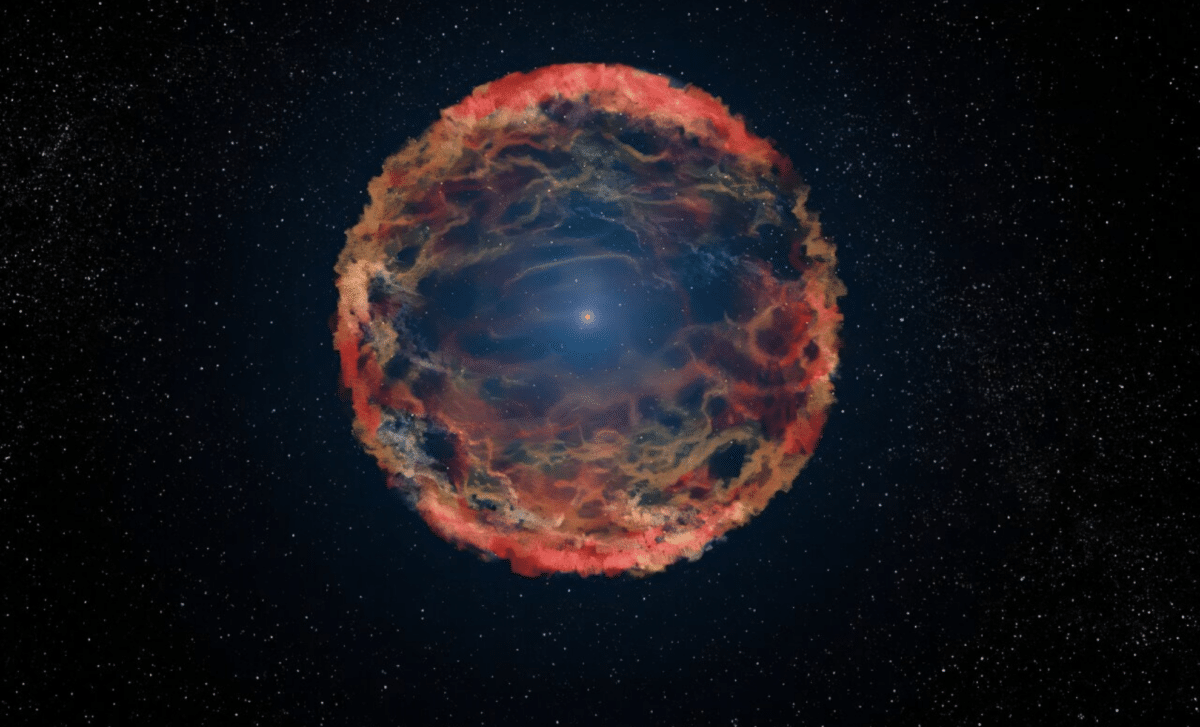
The next supernova within our Milky Way galaxy might no longer take astronomers by surprise. A recent analysis published on the arXiv preprint platform suggests the Vera C. Rubin Observatory, poised to begin its decade-spanning Legacy Survey of Space and Time, will significantly enhance the speed and accuracy with which these elusive cosmic explosions are detected, potentially revolutionizing our understanding of some of the universe's most dramatic phenomena.
Rare yet Inevitable Cosmic Explosions in Our Galaxy
Supernovae in galaxies like ours are well-expected events supported by astrophysical theories and observations of other galaxies. The existence of Milky Way core-collapse supernovae is predictable. However, actual sightings tell a different tale. As highlighted by the authors of the new research,
“Supernovae are observed to occur approximately 1–2 times per century in a galaxy like the Milky Way,” they write. “Based on historical records, however, the last core-collapse galactic supernova observed by humans occurred almost 1,000 years ago. Luckily, we are well positioned to catch the next one with the advent of new neutrino detectors and astronomical observatories.”
Add Cosmo Herald as a Preferred Source

The last supernova witnessed from Earth, SN 1054, created the well-studied Crab Nebula. Since then, interstellar dust, great distances, and the complex layout of our galaxy have obscured subsequent explosions from view. The recently published paper, “Uncovering the Next Galactic Supernova with the Vera C. Rubin Observatory,” predicts that the wait for the next observed event is nearing its end.
The Significance of Supernovae Beyond Their Bright Flashes
Supernovae are critical not just for their spectacular displays. They synthesize many of the heavy elements necessary for forming rocky worlds and supporting life. These stellar detonations influence galactic chemistry and signal the final stages of massive stars, often producing compact objects like neutron stars or black holes.
Moreover, their extreme environments offer natural testbeds for physics under extreme conditions impossible to recreate on Earth, allowing researchers to refine models of stellar collapse, nuclear reactions, and neutrino behavior. Each well-documented supernova advances our understanding of stellar and galactic evolution.
Neutrinos as Precursors to Optical Signals
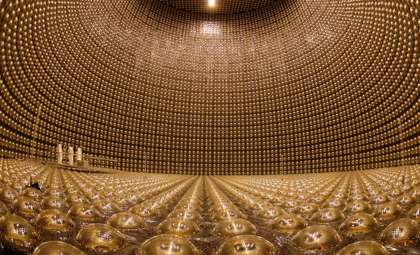
A pivotal point in the study relates to neutrinos, nearly massless particles that carry away the majority of energy during a core-collapse supernova. While the explosion’s light grabs attention later, about 99 percent of the energy escapes initially as neutrinos, arriving long before the supernova becomes visible.
“Neutrino observatories can provide unprecedented triggers for a galactic supernova event as they are likely to see a supernova neutrino signal anywhere from minutes to days before the shock breakout causes the supernova to brighten in optical wavelengths,” the authors explain. “Given its large etendue, the Vera C. Rubin Observatory is ideally positioned to rapidly localize the optical counterpart based on the neutrino trigger.”
This early neutrino alert enables telescopes like Rubin to swiftly scan wide stretches of the sky to pinpoint the explosion's location before it reaches maximum brightness.
Rubin Observatory's Unique Strengths in Supernova Detection
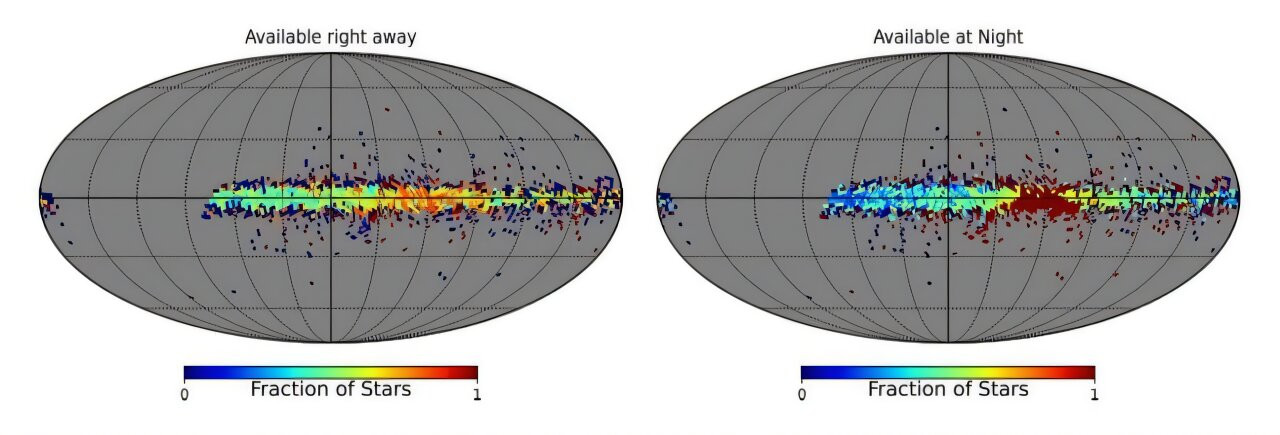
The Vera C. Rubin Observatory offers a rare combination of a vast field of view and the capability for quick, deep exposures—a crucial advantage for capturing sudden transient events. The team’s simulations modeled 100,000 supernovae scattered randomly throughout the Milky Way, factoring in realistic challenges like dust absorption, distances, and observing conditions such as daylight and night.
The findings signal a breakthrough in observational power.
“We find that the observatory is ideal for initial localization of nearly all observable supernova triggers and has a 57%–97% chance of catching any supernova based on theoretical stellar mass density predictions and observations,” the authors write.
Even short exposures, as brief as 30 seconds in the observatory’s reddest filters, might suffice to verify a supernova, a crucial advantage given how quickly early feedback is needed to capture the explosion’s initial stages.
- Categories:
- Space




0 comments
Sign in to Comment