
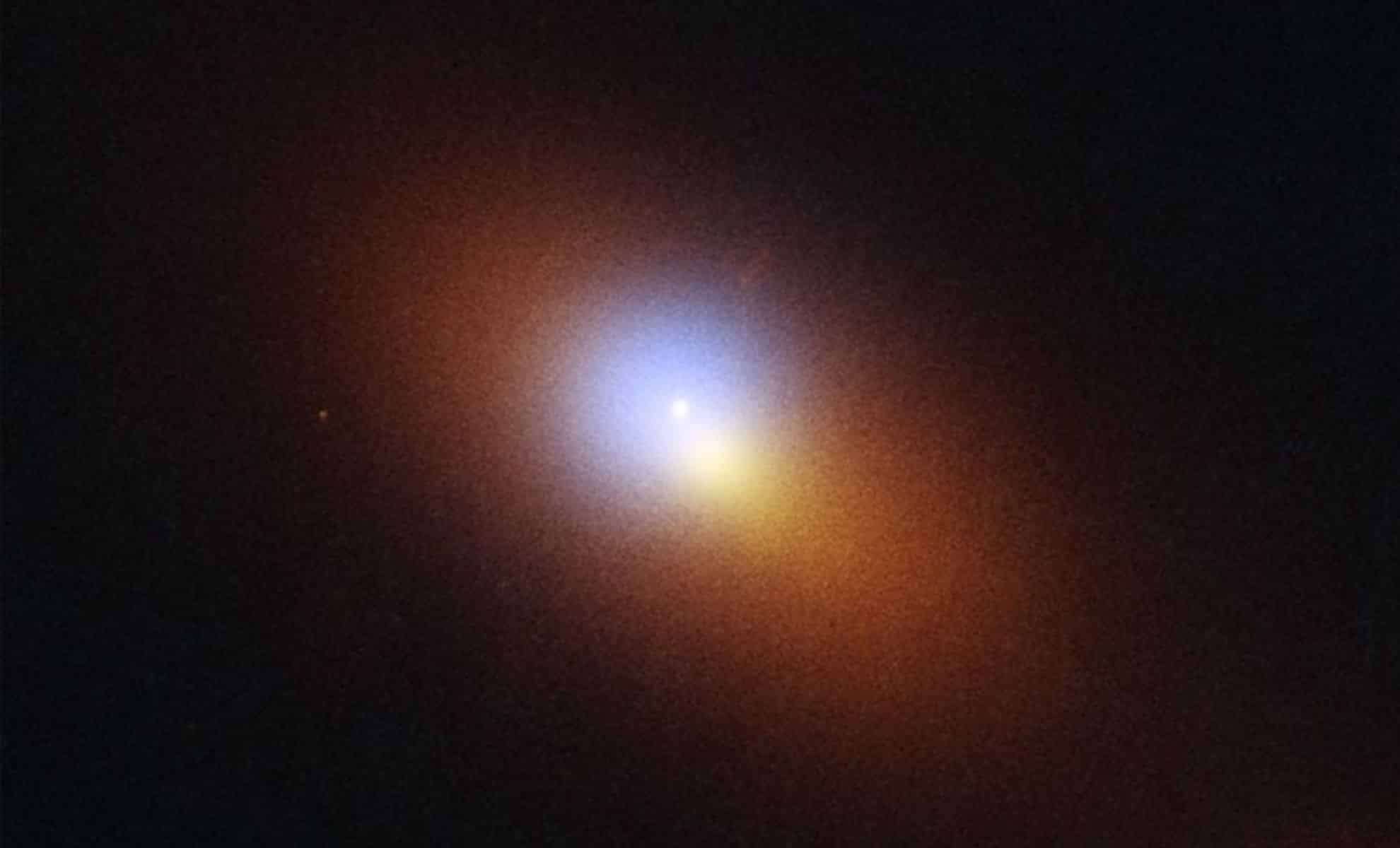
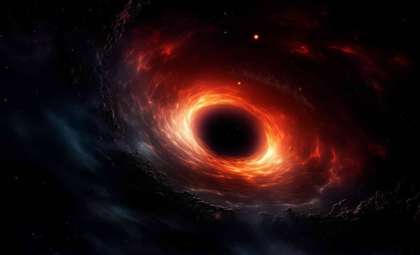
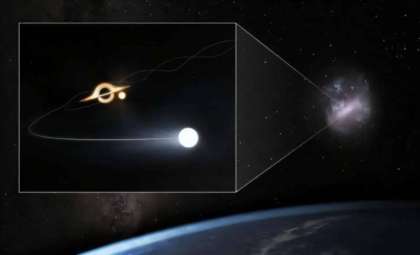
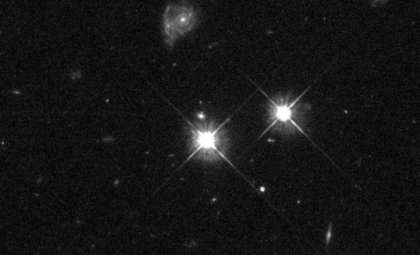
Researchers utilizing NASA’s Hubble Space Telescope have captured the first clear observation of a supermassive black hole roaming through space, actively dismantling a star in an extraordinary tidal disruption event (TDE) located 600 million light-years from Earth. This rogue black hole, identified as AT2024tvd, is situated far from the center of its host galaxy, challenging the traditional view that such massive black holes only inhabit galactic nuclei. Detailed findings by NASA and UC Berkeley researchers promise to reshape how scientists approach the detection and analysis of black holes beyond central galactic regions.
The breakthrough was achieved through a coordinated effort involving both space- and ground-based observatories, including the Zwicky Transient Facility and the Hubble telescope. This black hole lies approximately 2,600 light-years from the galaxy’s nucleus, a distance unusual for such massive entities, especially considering the central black hole is about 100 million solar masses. This marks the initial observation of a TDE occurring so far from the galactic core, revealing new possibilities in the study of wandering supermassive black holes.
Understanding Tidal Disruption Events
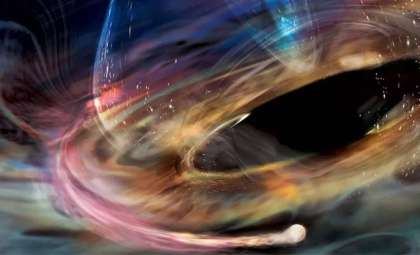
Tidal disruption events are uncommon phenomena where a star ventures too close to a black hole and is pulled apart by tidal forces, an effect sometimes termed “spaghettification.” The star gets stretched and elongated due to intense gravitational gradients, creating a striking visual of a narrow, thread-like form. Such encounters emit powerful bursts of radiation, spanning wavelengths from X-rays to radio signals.

This recent event stands out because it represents the first instance of an off-center black hole causing a TDE to be observed. Yuhan Yao, the lead author from the University of California, Berkeley, emphasizes that this could inspire future astronomical surveys to identify additional rogue black holes in other galaxies.
"This finding encourages the search for similar off-nucleus TDEs," Yao explained. "AT2024tvd is the inaugural detection of an offset TDE through optical sky surveys, potentially unlocking a whole population of elusive wandering black holes through upcoming surveys."
Wandering Giants Found Beyond Galactic Centers
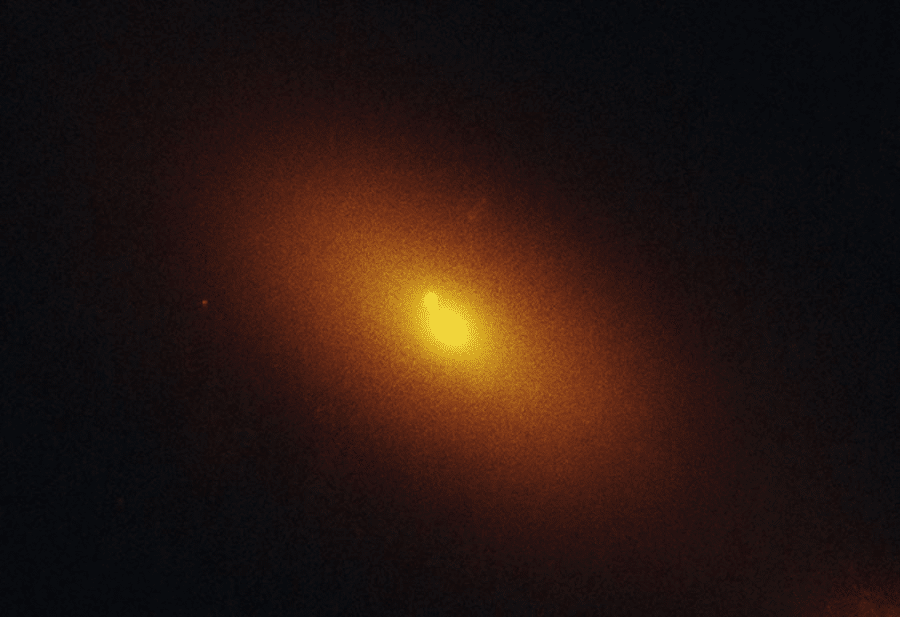
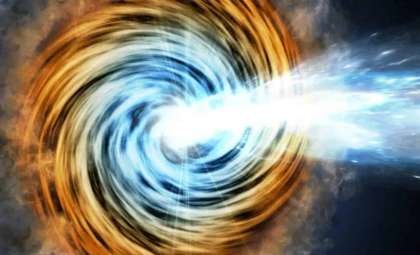
Multiple black holes coexisting in a single galaxy is not unexpected, particularly given that galaxies frequently merge and collide. Yet, spotting a supermassive black hole significantly distant from the galaxy’s center is an extraordinary revelation. Scientists have long hypothesized the existence of rogue black holes drifting throughout galaxies, but empirical evidence remained scarce until now. This milestone discovery greatly advances the hunt for these elusive cosmic wanderers and equips astronomers with new detection strategies.
As Ryan Chornock, a professor at UC Berkeley, notes, “This is crucial because it confirms a group of black holes we previously had little proof of. Theories have predicted massive black holes away from galactic centers, and now with TDEs, we finally have a method to locate them.”
Origins of the Roaming Black Hole
The remote location of this black hole provokes questions about its history. It might have been propelled out of the galaxy’s core by gravitational forces during interactions of multiple black holes or might be the leftover of a once smaller galaxy absorbed over a billion years ago.
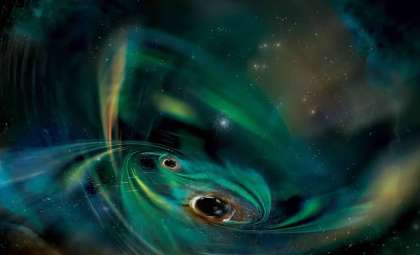
Should it be a consequence of such a galactic merger, this black hole might eventually migrate back to the center, where it could merge with the primary supermassive black hole. This event would emit gravitational waves, detectable through future missions like the Laser Interferometer Space Antenna (LISA) planned for launch in 2035.
Looking Ahead: Expanding the Search for Rogue Black Holes
The detection of AT2024tvd marks an exciting step forward in the exploration of non-central black holes. As sky surveys become more sophisticated, astronomers anticipate unearthing more wandering black holes, deepening comprehension of the universe’s dynamic environment.
Yuhan Yao remarks, “Offset TDEs have not been widely explored by theorists, but this discovery will inspire the community to find more occurrences.”
This cutting-edge discovery opens a promising new avenue for studying black holes once hidden from view. With advancements in observational technology, the cosmic census of drifting black holes across the cosmos is only beginning.
- Categories:
- News

0 comments
Sign in to Comment