
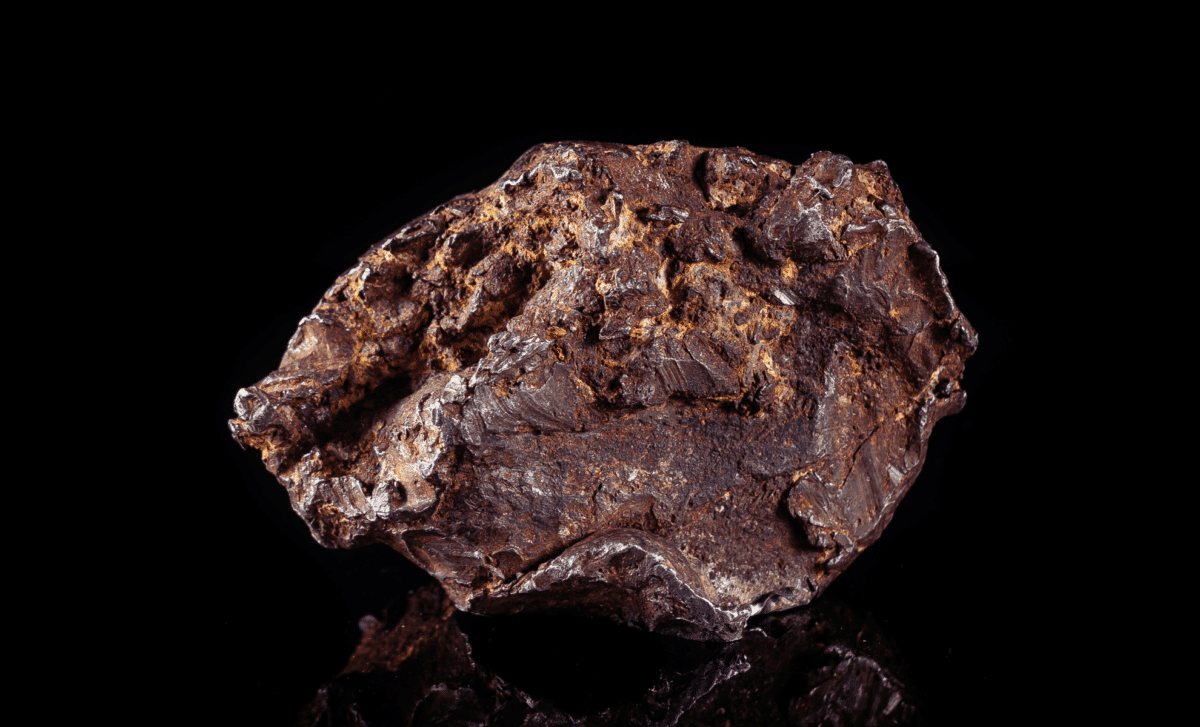
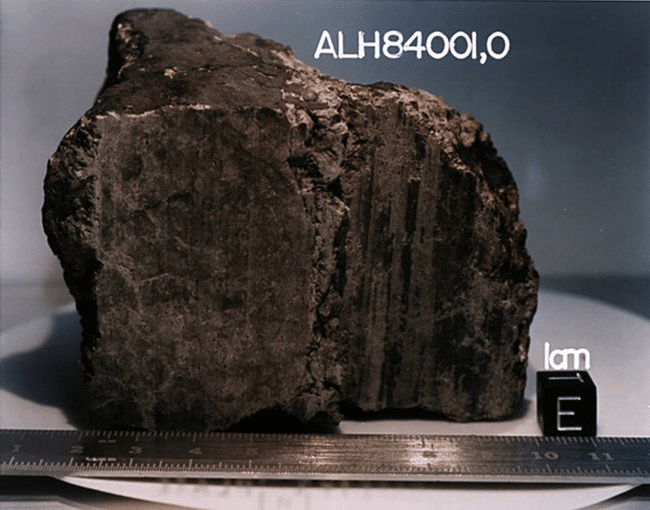
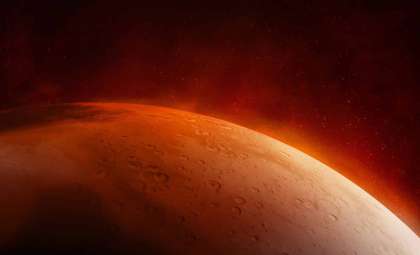
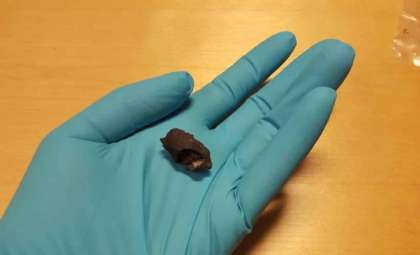
A groundbreaking finding challenges fundamental questions about the origin of life. Scientists examining a Martian meteorite have uncovered fragments resembling human DNA, sparking fresh debates about where life began. First reported in ScienceFocus, this discovery revives interest in the theory of panspermia, which proposes that life or its essential components may have traveled between planets via space rocks.
Life’s Building Blocks Might Have an Extraterrestrial Origin
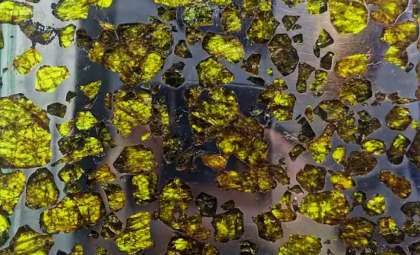
Upon analyzing the meteorite, researchers were surprised to detect genetic materials akin to those found in humans. According to the ScienceFocus article, the Martian fragment contained preserved amino acids and organic molecules — fundamental ingredients for life — lasting billions of years. These molecules, believed to have emerged on early Mars, imply that vital DNA components were forming before Earth had fully developed its own biosphere.
“Bennu is basically a pantry full of ingredients,” said Dr. Jason Dworkin, NASA’s lead scientist on the OSIRIS-REx mission. “But it wasn’t quite the right conditions to make a cake. On Earth, we have cake, and we don’t know why.”
Add Cosmo Herald as a Preferred Source

This comparison aptly illustrates the mystery: Earth may have been the right environment, but the foundational recipe for life could have originated elsewhere. This supports ideas that cosmic impacts, comets, and asteroids helped shuttle life's raw materials across the solar system. Mars, often viewed as lifeless and icy, might have played a crucial role in distributing the seeds of life that eventually flourished on our planet.
Mars’s Early Cooling Gave Life a Possible Advantage Over Earth
Geological data reveals that Mars reached thermal stability before Earth, potentially allowing life-supporting conditions to arise sooner on the red planet. This has led researchers to hypothesize that microbial life could have emerged on Mars first and later been transferred to Earth through asteroid impacts.
“Mars cooled faster than Earth, so it may have been ready for life sooner,” said Professor Paul Davies, a theoretical physicist and astrobiologist at Arizona State University. “It’s entirely possible we’re all descendants of Martians.”
This perspective reshapes our understanding of human origins: life on Earth might carry a biological inheritance from Mars. The idea that life could endure space travel and jump from one planet to another challenges conventional evolutionary explanations and broadens the quest for our real beginnings.
Cosmic Couriers: Life’s Journey Across Planets
Meteorites, comets, and cosmic dust frequently escape their planetary origins, carrying frozen organic molecules or potentially dormant life. These objects can drift in space for millions of years before being captured by another celestial body. While once dismissed as unlikely, these natural transfers are increasingly seen as viable routes for life’s distribution.
“The fact we’re finding that stuff can be kicked out of one planetary system and make its way to another shows it’s not impossible,” said planetary scientist Fred Ciesla from the University of Chicago. “It’s rare, but it’s not crazy.”
These findings imply that life’s essential components could travel much more widely through the cosmos than previously thought. If materials can be transported not just between planets but possibly across star systems, then life’s emergence may be a universal occurrence wherever the right conditions exist.
Earth’s Volcanic Origins and the Late Delivery of Life’s Components
During its infancy, Earth was a molten sphere subjected to intense asteroid and comet bombardment. Any organic compounds forming on the surface likely vaporized quickly. This leads some scientists to propose that life’s foundational chemicals were delivered afterward, rather than originating here.
“Earth went through a molten phase early on,” said Dworkin. “Anything organic here would have burned away. So maybe the ingredients arrived later, delivered by the same impacts that brought our oceans.”
This concept, known as the late heavy bombardment hypothesis, suggests the impacts that also brought water to Earth could have supplied organic molecules. If the Martian DNA fragments prove genuine, they may be remnants of those primordial deliveries — cosmic carriers of life’s essential recipe. This discovery not only sheds light on our past but hints that similar processes might be active on other planets yet to be explored.
- Categories:
- News




0 comments
Sign in to Comment