
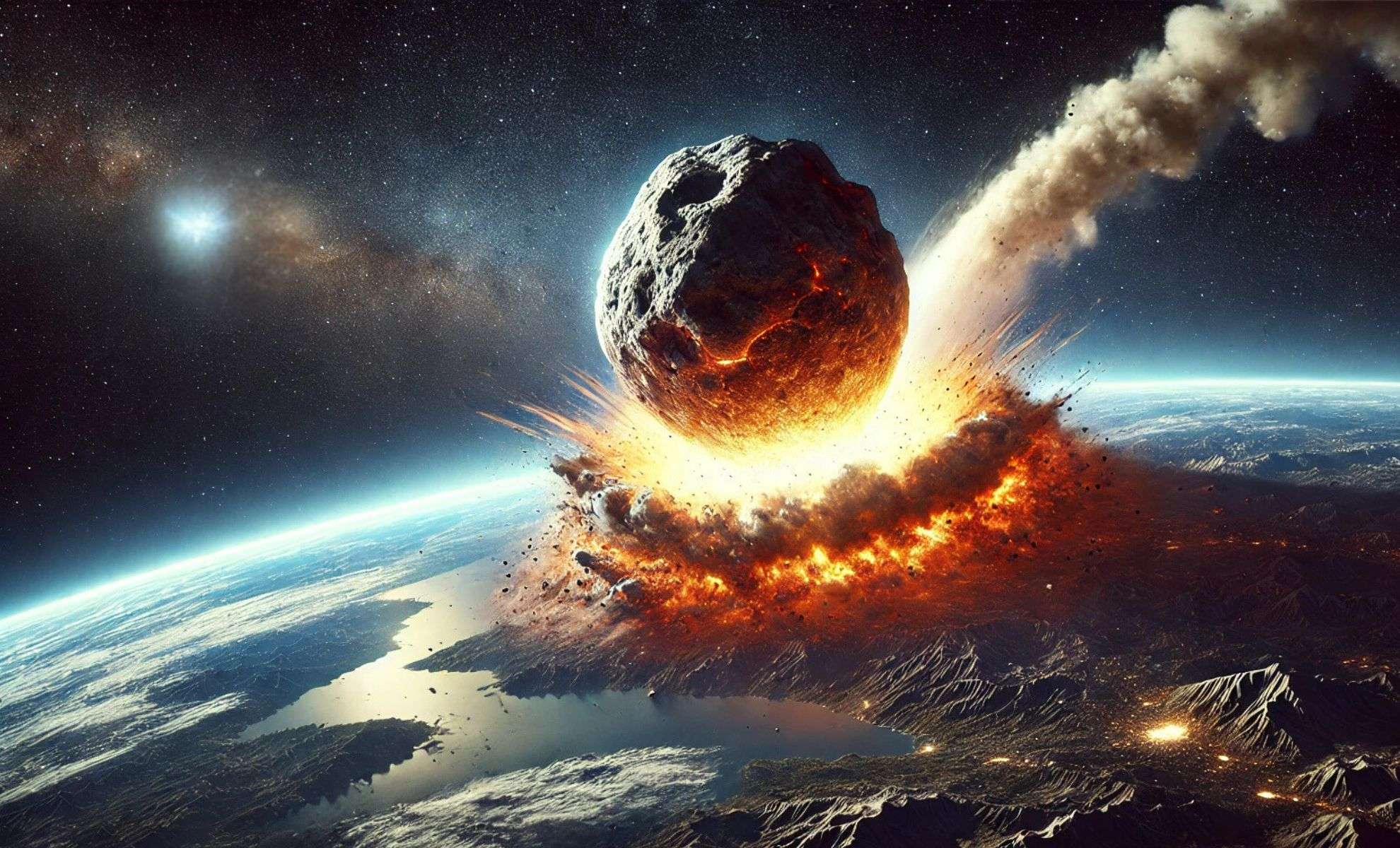
Over 3.26 billion years ago, a colossal meteorite collided with Earth, transforming its environment long before complex organisms emerged.
This massive impact, identified today as the S2 event, profoundly affected our planet’s surface and atmosphere, possibly creating favorable conditions for early microbes to thrive. Recent research reveals the meteorite was an astonishing four times taller than Mount Everest and suggests such a disaster played a pivotal role in Earth's biological development.
The S2 Impact and Its Environmental Consequences
The S2 meteor strike, located in what is now South Africa’s Barberton Greenstone Belt, unleashed immense energy triggering drastic environmental changes. Dr. Nadja Drabon, a Harvard geologist specializing in early Earth, led the investigation and detailed how the impact generated a gigantic tsunami, which devastated shallow coastal zones and disrupted ocean layers. She described it as standing off Cape Cod’s coast, a normally calm area, suddenly ravaged by a towering tsunami sweeping through.

Beyond ocean disturbances, the meteor’s impact produced enough heat to evaporate upper ocean layers and envelop the planet in dense dust, cutting off sunlight and ceasing photosynthesis. The atmosphere shifted dramatically, creating critical challenges for existing life forms. Yet despite these conditions, life found ways to endure and evolve.
Survival and Growth of Early Microbes
In spite of widespread devastation, microorganisms—particularly iron-processing bacteria—displayed remarkable resilience. The impact-induced environmental shifts actually offered new advantages. The towering tsunami churned up deep-sea nutrients, elevating iron concentrations, while erosion released essential phosphorus into coastal waters. This nutrient boost fostered an ideal habitat for these microbes.
Drabon emphasized life's resourcefulness amid destruction: “Impact events are usually seen as devastating, but our study reveals they may have actually supported early life, enabling it to prosper.” This perspective challenges the traditional belief that meteor impacts are solely harmful, showing they might have created opportunities for microbial expansion crucial to Earth's early biosphere.
Geological Clues of Ancient Impacts
The S2 event evidence arose from detailed geological investigations in South Africa’s Barberton Greenstone Belt, home to some of Earth’s oldest rocks. By examining the geochemical and sedimentary features, Drabon’s team detected chemical markers indicative of massive tsunami events and other cataclysms. These sediment layers reveal traces of at least eight meteor strikes, including the significant S2 collision.
These discoveries provide scientists with a clearer understanding of early Earth history, demonstrating how enormous meteorite impacts reshaped the landscape and influenced primitive life’s evolution. Drabon’s group continues exploring the Barberton Greenstone Belt, seeking deeper insights on how these cosmic events helped form Earth's continents and oceans.
New Insights on Meteorite Impacts and Life’s Origins
While the S2 impact caused immediate destruction, it also illustrates life's resilience and adaptability. Typically viewed as catastrophic, such impacts may have fostered environmental conditions conducive to microbial growth. The influx of iron and phosphorus after the collision created nutrient-rich habitats supporting iron-metabolizing bacteria, albeit perhaps for a limited time.
Drabon’s findings provide a novel angle on how meteorite impacts affected Earth's geological and biological past. Understanding these ancient events offers crucial clues about life’s origins here and how it might survive on other planets subjected to similar impacts.
Their study, published in the Proceedings of the National Academy of Sciences, continues to shed light on the complex relationship between cosmic disturbances and life’s emergence. As research progresses, new revelations about Earth’s earliest life and environmental transformations are anticipated.
- Categories:
- Astronomy ,
- News







0 comments
Sign in to Comment