
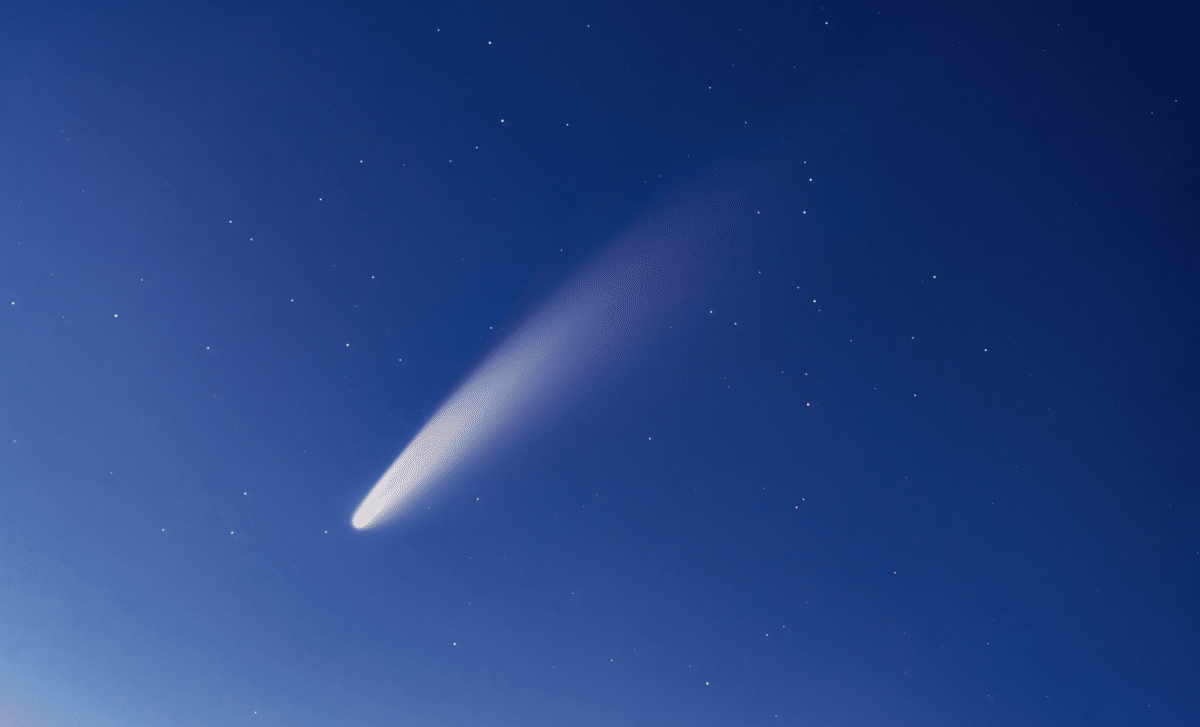
On January 20, 2026, comet C/2024 E1 (Wierzchos) will make a close solar approach, creating a brief but intense astronomical spectacle. Though not visible to the naked eye, this frozen wanderer from the distant Solar System will reappear near Earth in February, potentially providing better observation opportunities for astronomers and photographers.
An Intense Solar Encounter
As reported by Space.com, Comet Wierzchos will reach its perihelion at 1:24 p.m. EST on January 20, passing approximately 52.6 million miles (84.6 million kilometers) from the Sun. This proximity will cause the comet to brighten considerably, reaching a magnitude of +8.1, which remains too faint for unaided eyes but observable through binoculars or telescopes. This event stands out as a remarkable chance for astronomers.
Although invisible without optical aid, the comet presents a special opportunity for amateur astronomers to witness a dynamic cometary event. On clear nights, with modest equipment, observers in suitable locations may track the comet’s movement, demonstrating the spectacular activity of distant icy bodies when drawn near the Sun.

Visibility Primarily in the Southern Sky
Currently, Comet Wierzchos is traveling through the constellation Microscopium in the southern celestial hemisphere, making it mostly inaccessible to viewers in the Northern Hemisphere, including the U.S. Stargazers in the Southern Hemisphere should have a better vantage point using binoculars or telescopes, particularly under dark conditions.
The comet’s journey is not over for northern viewers. In mid-February, it will reappear in the Northern Hemisphere sky. On February 17, Wierzchos will pass at its closest distance to Earth—about 93 million miles (1 Astronomical Unit). At that time, it will be low in the southwestern sky just after sunset, giving skywatchers in North America another chance to observe it.
Newly Found Comet On a Long Voyage
Discovered in March 2024 by astronomers affiliated with the Catalina Sky Survey at the University of Arizona—a NASA-supported project dedicated to detecting near-Earth objects—Comet Wierzchos initially attracted interest not for potential danger, but for its captivating nature.
Scientists believe that Wierzchos originated in the Oort Cloud, a remote region filled with icy debris far beyond the planets. Observations by the James Webb Space Telescope captured details of its light emissions, revealing an unexpected absence of cobalt. This chemical absence might point to past alterations caused by gravitational interactions with large planets like Jupiter or Saturn during its inward journey.
February Viewing Offers Another Chance
Though currently fading from view, Comet Wierzchos is set to become observable again in February. At that time, it is predicted to reach an apparent magnitude of +8.9, which remains below naked-eye visibility but accessible to backyard telescopes. It will appear shortly after sunset, making it a great target for evening observation.
Astronomy enthusiasts should use star charts and live tracking apps to locate Wierzchos, as it will be positioned near the western horizon. Clear skies and an unobstructed view in that direction will be essential. Photographers might also find this period ideal for capturing images of this rare cosmic visitor moving away from the Sun’s influence.
- Categories:
- News










0 comments
Sign in to Comment