
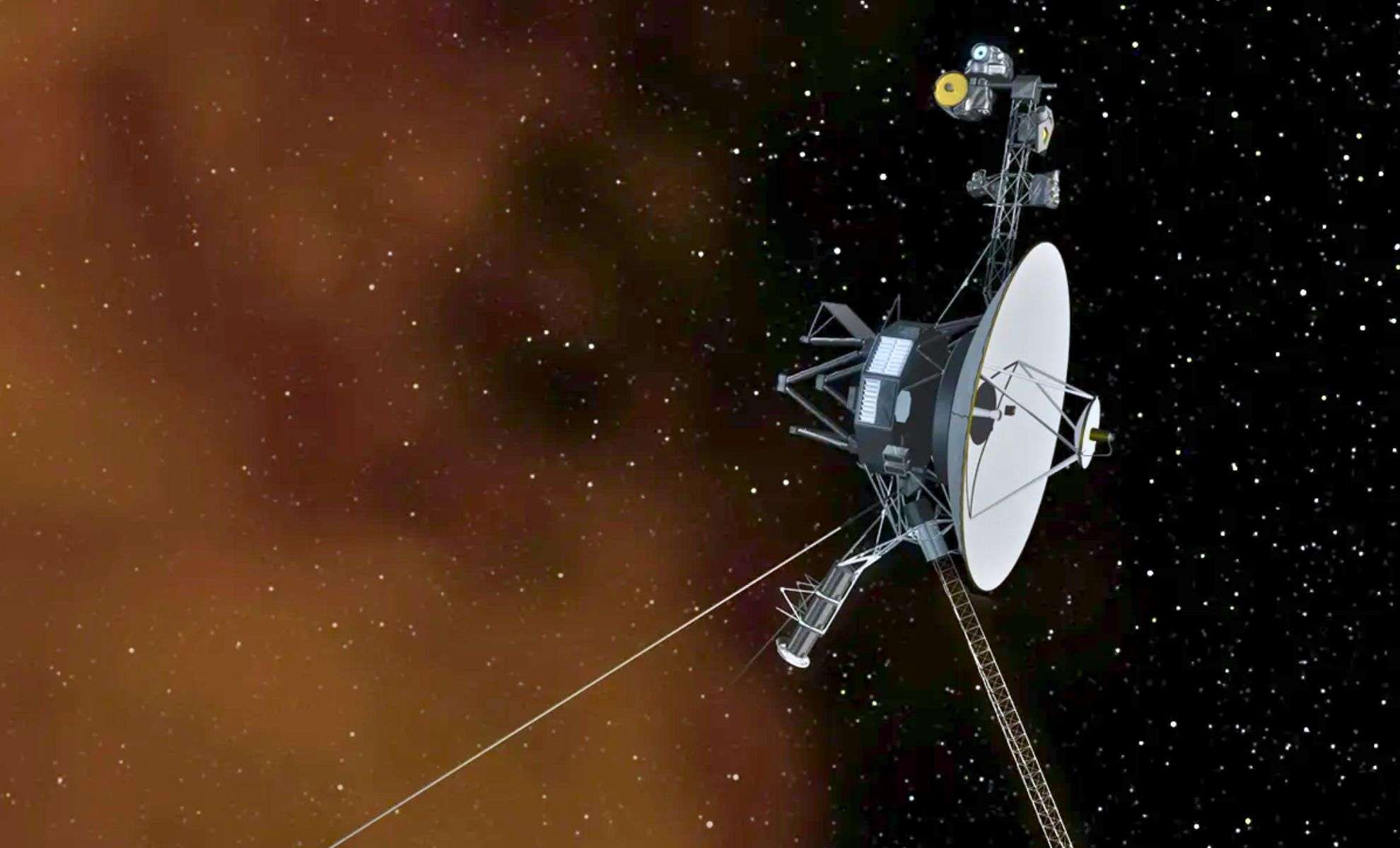
Traveling through the expanse of interstellar space, a modest probe steadily advances, marking historic distances along its route. Voyager 1, launched by NASA over 40 years ago, is approaching unprecedented separation from our planet. Originally intended for brief planetary investigation, it has evolved into a lasting emblem of space exploration.
The spacecraft has journeyed past the boundaries of our solar system into unexplored realms where no other human-made object has ventured. Even with a dwindling nuclear power source, it continues to transmit faint signals over billions of miles, a technological achievement unmatched by any other spacecraft.
Exploration Beyond Jupiter and Saturn
Voyager 1 launched in September 1977, initially tasked with surveying Jupiter and Saturn. This mission alone was a tremendous accomplishment, but the probe's journey extended well beyond its original scope. It surpassed all milestones to become the farthest human-made object in existence.

According to WION News, in August 2012, Voyager 1 left the heliosphere, the protective bubble formed by solar winds, and entered interstellar space. This milestone marked humanity’s first reach beyond the Sun’s sphere of influence. At that time, the spacecraft was located over 11 billion miles from Earth.
Despite its advanced age and massive distance, Voyager 1 still operates, delivering invaluable scientific insights. It has been key in unveiling properties of the boundary between the heliosphere and interstellar space — a frontier still largely enigmatic.
Speeding Through the Cosmos at Over a Million Miles Daily
Voyager 1 moves through space at roughly 38,000 miles per hour, covering more than one million miles each day. It follows a set trajectory, not directed toward any specific star, maintaining its journey deeper into the cosmos. This velocity and distance bring the probe ever closer to a profound milestone.
On November 15, 2026, Voyager 1 is projected to be located exactly one light-day from Earth, as per NASA figures referenced in the report. At this distance, light takes a full 24 hours to traverse the gap between Earth and the spacecraft, illustrating the immense scale of its voyage.
A subsequent landmark will be achieved on January 28, 2027, when Voyager 1 attains one light-day away from the Sun. No other craft built by humans has reached such a remote point. These achievements are not merely technical but symbolize immense endurance across time and space.
Fueling the Longest Space Voyage Ever Undertaken
Voyager 1 is powered by a radioisotope thermoelectric generator, which converts heat from radioactive decay into electrical power. Although its energy output has diminished over time, it still provides sufficient electricity to operate essential instruments and sustain communication.
As WION highlights, the spacecraft maintains data transmission to NASA’s Deep Space Network, albeit using very weak signals. The information it sends includes measurements of cosmic rays, magnetic fields beyond the solar bubble, and plasma waves—details unobtainable within our solar system.
Voyager 1 also carries the iconic Golden Record, a repository of Earth’s images, sounds, and music, along with greetings in 55 different languages. Though it remains uncertain if this message will ever be discovered, it stands as a poignant symbol of humanity’s reach into the cosmos.
- Categories:
- News




0 comments
Sign in to Comment