
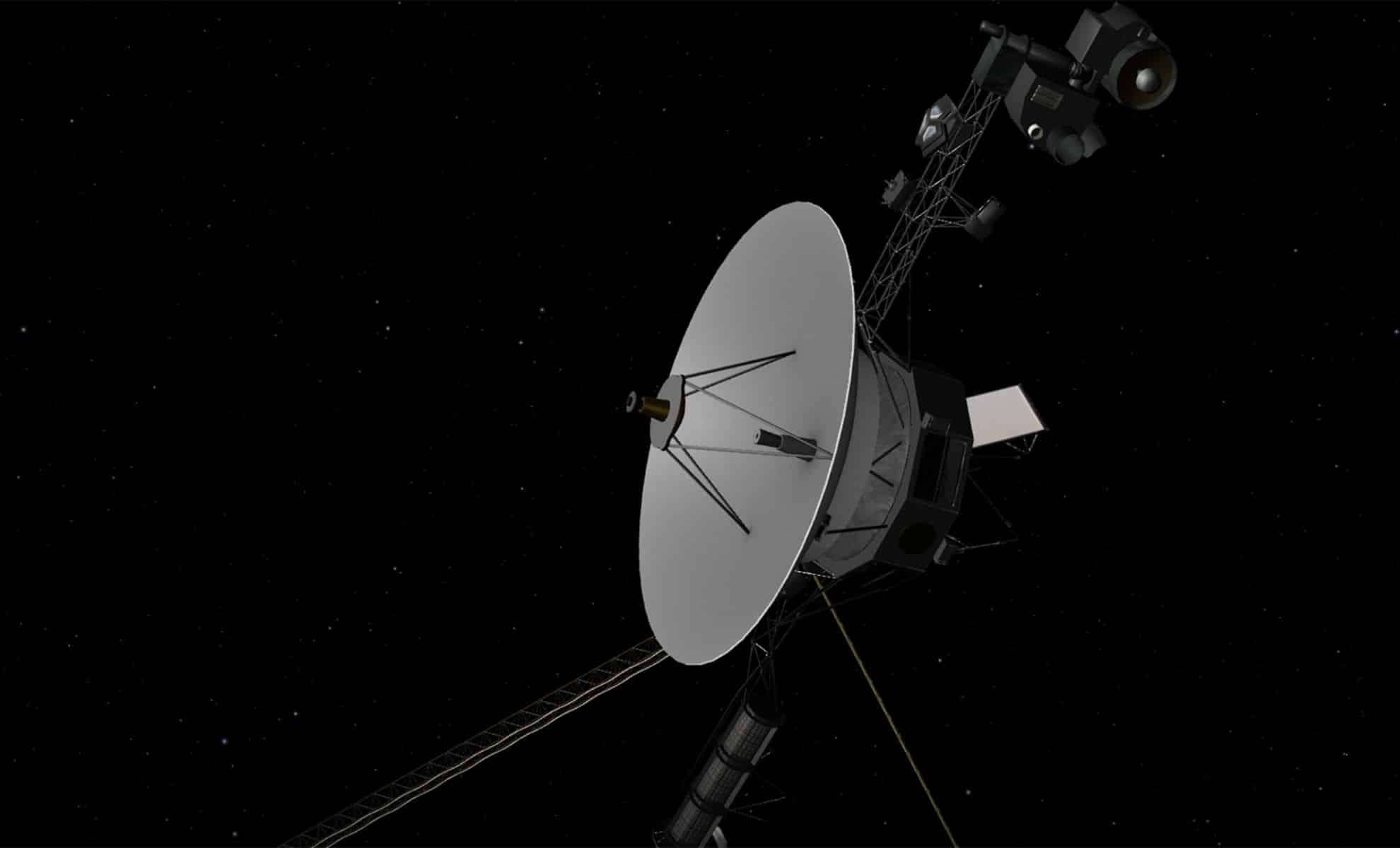
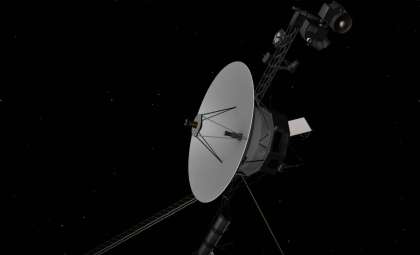
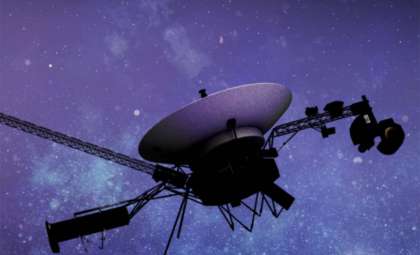
In November 2026, NASA’s Voyager 1 will reach a monumental landmark as it becomes the first spacecraft crafted by humans to travel a complete light-day away from our planet. This landmark event, set for November 15, 2026, will celebrate almost five decades of Voyager 1’s continuous voyage since its 1977 launch. Presently, Voyager 1 is positioned roughly 166 astronomical units (AU) from Earth, holding the record for the furthest distance achieved by any artificial object. Crossing the threshold of one light-day will dramatically illustrate the staggering expanses that separate objects in the cosmos.
NASA’s Eyes on the Solar System platform offers a comprehensive visualization of Voyager 1’s path. Surpassing this milestone will not only highlight a key achievement in space science but also push the envelope of exploration, showcasing the extraordinary stretches Voyager 1 has covered in our solar neighborhood.
The Epic Journey of Voyager 1
Since its 1977 departure, Voyager 1 has been on an almost 50-year trek through the outskirts of the solar system, now venturing into interstellar territory. At over 166 AU from Earth, it moves at a pace that seems glacial from a human standpoint. Traveling at an average velocity of 61,195 kilometers per hour (38,025 miles per hour), it has already crossed beyond the heliosphere—the sun’s protective particle and magnetic field bubble—and entered the interstellar medium.

Despite its remarkable speed, communication signals take approximately 23 hours, 5 minutes, and 36 seconds to make a round trip between Earth and Voyager 1. This vast distance also means it will require more than a year to bridge the gap to the light-day mark. The spacecraft is expected to reach roughly 25.9 billion kilometers away by January 2027, culminating nearly fifty years of pioneering exploration with this significant achievement.
The Significance of a Light-Day in Space Travel
A light-day corresponds to the distance light covers in 24 hours, close to 25.9 billion kilometers. To put this into perspective, that equals about 166 times the Earth-Sun distance, commonly known as 1 AU. Voyager 1 attaining this distance underscores the immense scale of our cosmic environment. Despite light’s astonishing speed of 299,792 kilometers per second, it emphasizes how vast space is as Voyager 1 continues its voyage.
This accomplishment reflects the steady, patient nature of humanity’s ventures into space. Although Voyager 1 travels faster than any manmade craft before it, its speed remains a tiny fraction of light speed, reminding us of how slowly even the fastest vehicles navigate the universe. Still, Voyager 1 remains the record-holder for the furthest distance traversed, with its mission progressing ever deeper into interstellar space.
Continuing the Voyager 1 Expedition
Reaching a light-day from Earth is a major milestone, but Voyager 1 will press forward on its mission. Powered by a nuclear energy source, it is expected to operate until the early 2030s when its power supply will decline. Until then, it will keep transmitting precious data about conditions far beyond our solar system, offering insights into the cosmic environment of interstellar space. Voyager 1 stands as a powerful emblem of human curiosity and the quest for knowledge.
Despite its decades in space, Voyager 1 remains active and continues sending scientific information back to Earth. Once its power is exhausted and the spacecraft becomes silent, its legacy of exploration and discovery will endure. Even after communication ceases, Voyager 1 will keep drifting through space for thousands of years, far beyond the reach of current technology.
- Categories:
- News







0 comments
Sign in to Comment