
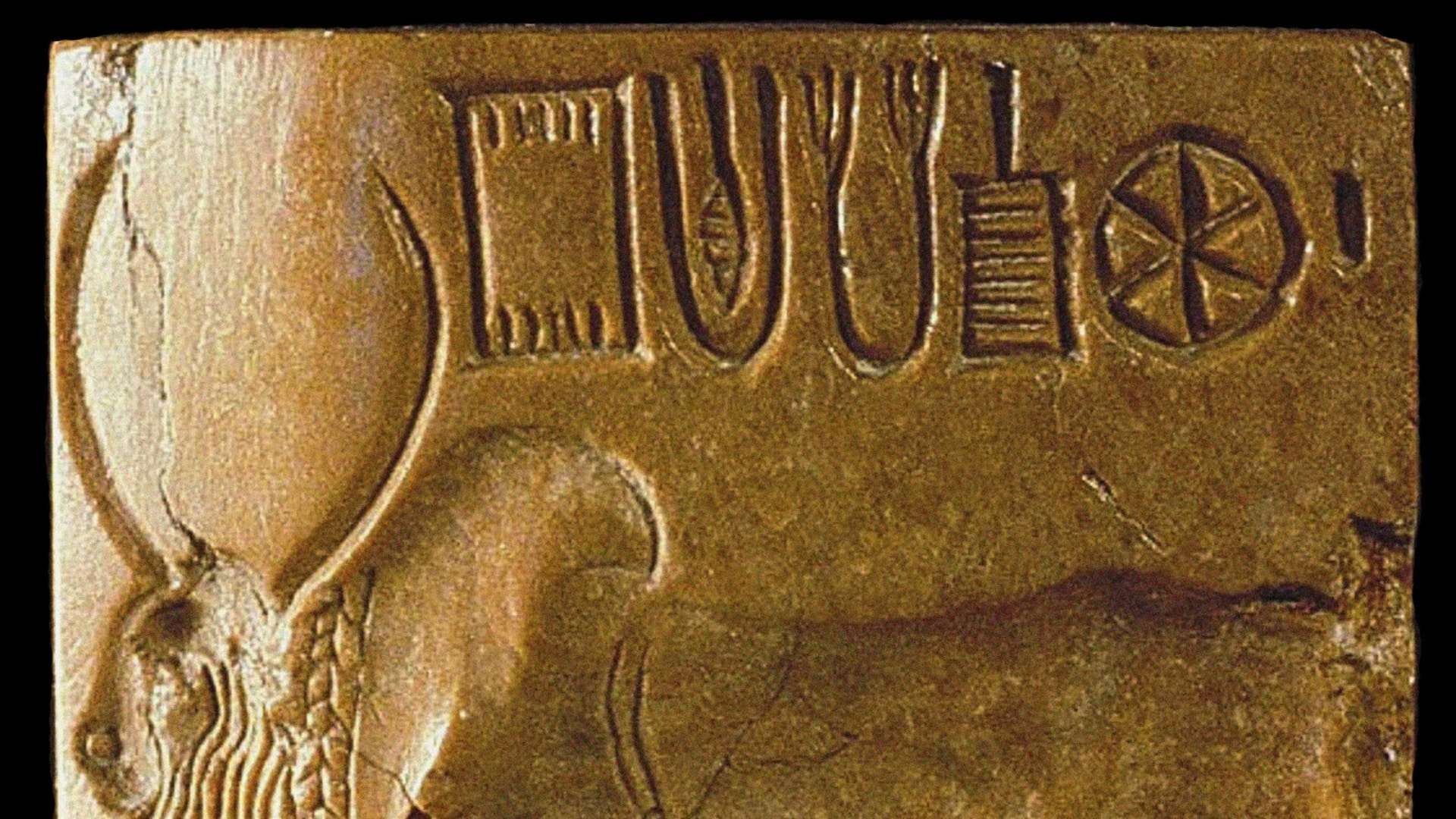
The state government of Tamil Nadu in India has declared a generous $1 million prize for anyone who can successfully translate the Indus script, one of the oldest and most puzzling written forms from the ancient world. This effort is aimed at unraveling the mysteries of a civilization that existed over 5,000 years ago in the territories now known as India and Pakistan.
The longstanding puzzle of the Indus script
The Indus Valley Civilization thrived from around 3300 to 1300 BCE, spreading across regions of present-day India and Pakistan. It stood alongside great ancient societies such as Mesopotamia and Ancient Egypt, renowned for its urban planning, advanced water management, and extensive trade networks.
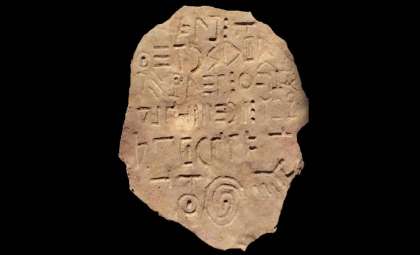
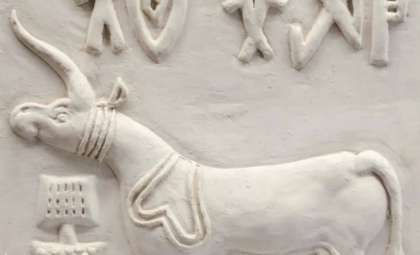
Despite these remarkable developments, much about the political, social, and religious aspects of the Indus people remains unknown. The key to understanding these may lie in their written symbols, found on objects like seals, ceramics, and stone tablets from sites including the prominent cities of Harappa and Mohenjo-daro.

More than 4,000 inscriptions have been recovered, yet the script has defied interpretation for multiple reasons:
- The longest inscriptions are very brief, with just 34 characters at most.
- There is no bilingual artifact, comparable to the Rosetta Stone, to serve as a linguistic bridge.
- The symbols show no obvious grammatical structure, leaving unanswered whether they represent a full language, an early proto-writing system, or symbolic religious or economic registers.
Some researchers propose the Indus inscriptions encode a Dravidian language, potentially an early form of Tamil and other southern Indian tongues. Others contend they might connect to early Sanskrit or a completely separate linguistic group. Without a clear key, these hypotheses remain open to debate.
Tamil Nadu’s bold move and its broader importance
Guided by Chief Minister M. K. Stalin, the Tamil Nadu government has launched an ambitious offer of a $1 million award to incentivize breakthroughs in decoding the script. Their motivation goes beyond mere scholarship, touching on significant cultural and political dimensions.
Numerous experts and historians in India see deciphering the Indus script as instrumental in clarifying the origins and interplay of linguistic and cultural identities within the country. The timeline and relationship between the Indo-Aryan and Dravidian language families remain contested, with some theories proposing Dravidian languages predate Indo-Aryan arrival.
New findings lend growing support to this idea. Analyses of 14,000 ancient pottery shards in Tamil Nadu reveal notable parallels between the Tamil-Brahmi script and Indus characters. Specialists suggest around a 60% similarity, implying a connection between the Indus civilization and South India’s cultural heritage.
This prize seeks to attract a diverse range of global experts—linguists, cryptanalysts, AI researchers, and historians—to collaboratively solve this ancient enigma. Confirming ties to Dravidian languages could challenge prevailing narratives about Indian civilization’s formation and linguistic development.
The significance of deciphering the Indus script
Unlocking the Indus script holds the potential to dramatically expand knowledge of the Indus Valley Civilization through:
- Insights into everyday life: Understanding the script could illuminate aspects of trade, governance, laws, and social customs in ancient times.
- Revelations about religion and politics: It might disclose information about deities, state systems, and cultural traditions.
- Clarification of historical links: Decoding might confirm if the Indus community spoke a Dravidian language, supporting arguments about South Indian language origins.
- Resolution of linguistic debates: Findings could offer firm evidence regarding which language group—Dravidian or Indo-Aryan—was prevalent first in India.
Earlier efforts to decode the script
Though many have attempted to interpret the Indus signs, the script remains an unsolved linguistic enigma. Various strategies have been employed over time including:
- Comparative linguistics: Scholars have explored possible links to Sumerian, Sanskrit, Tamil, and Chinese, but no conclusive matches emerged.
- AI and machine learning: Recent analyses deploy advanced technologies to detect patterns, yet definitive interpretations are still lacking.
- Statistical approaches: Data suggest ordering akin to spoken languages, though true meaning remains elusive without a key.
The quest continues
The Tamil Nadu government’s offer of $1 million has sparked renewed global enthusiasm for untangling the Indus script. Researchers from various fields, including independent enthusiasts and professional cryptographers, aspire to be the first to unravel this ancient code.
Success would mark one of the most significant linguistic breakthroughs ever, akin to the decipherment of Egyptian hieroglyphics or the Mycenaean Linear B script. Until such a breakthrough, the Indus script stands as one of history’s most profound mysteries, awaiting a fresh breakthrough.
- Categories:
- News











0 comments
Sign in to Comment