
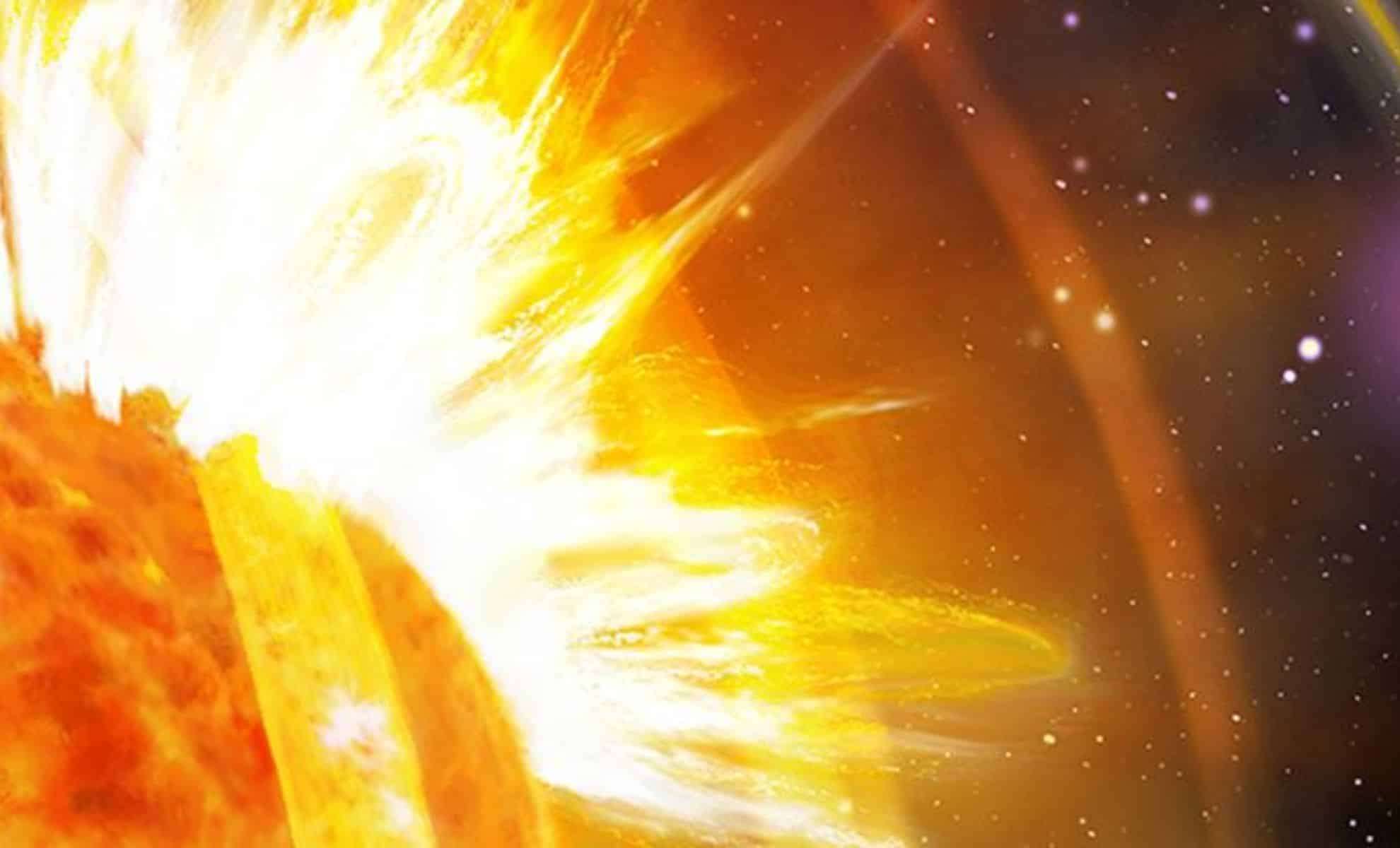
A recent breakthrough has unveiled fascinating details about the exoplanet HIP 67522b, offering scientists new perspectives on how planets can affect their parent stars. This advancement adds to growing knowledge about the dynamic interplay between stars and their orbiting planets. The findings, featured in Nature on May 22, 2025 [DOI: 10.1038/s41586-025-09236-z], reveal the energetic interactions between HIP 67522b and its star, HIP 67522, situated approximately 408 light-years from Earth. These new insights could reshape our understanding of how stellar and planetary environments evolve.
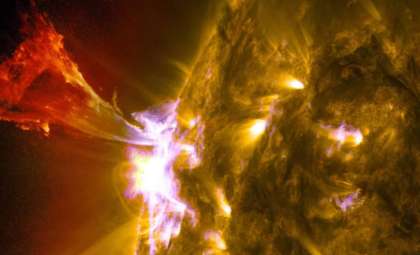
Scientists have discovered that HIP 67522b exerts a significant influence on its star’s magnetic environment, sparking powerful flares in a process previously thought unlikely. This phenomenon, observed over multiple years, sheds light on a novel mechanism governing star-planet interactions within the cosmos.
Impacts of the Tight Orbit on HIP 67522b
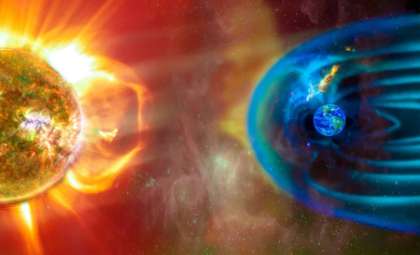
Central to this discovery is the exoplanet’s extremely short orbital period. About the dimensions of Jupiter, HIP 67522b completes a full revolution in just 6.95 days, positioning it exceptionally close to its host star. This close proximity causes magnetic field lines of the planet and star to interact intensely, generating waves that ignite massive bursts of stellar radiation. These eruptions are not merely peripheral phenomena; they actively erode the planet’s surrounding gaseous envelope, gradually stripping away its atmosphere.

For the first time ever, researchers have directly observed a planet influencing its star through magnetic interactions in this dramatic manner. “We’ve found the first clear evidence of magnetic star-planet interaction, where a planet triggers energetic flares on its host star,” notes Ekaterina Ilin, an astrophysicist with the Netherlands Institute for Radio Astronomy. “Remarkably, this interaction has continued for over three years, enabling detailed examination.”
The proximity to the star exposes HIP 67522b to intensified radiation levels. More than just stellar wind, the synergy of the planet’s and star’s magnetic fields amplifies flare activity, heating and gradually depleting the planet’s atmosphere. This rapid atmospheric loss distinguishes HIP 67522b from many other exoplanets studied to date.
Magnetic Flares as a Driver of Atmospheric Depletion
The magnetic flares associated with HIP 67522b are extraordinarily energetic. Over five years of observation, scientists have recorded 15 distinct flares triggered by waves traveling along magnetic field lines between the star and planet. “The planet appears to stimulate exceptionally intense flares,” Ilin explains. “While the initiating waves have moderate energy, they seem to trigger much larger explosions occurring within the star’s magnetic structure.”
This sustained activity profoundly affects the exoplanet’s atmosphere. Under a relentless barrage of high-energy radiation, the atmosphere is leaking away, similar to air escaping from a punctured balloon. Owing to its relatively delicate atmospheric composition, projections suggest HIP 67522b could contract to a size comparable to Neptune within a mere 100 million years. This ongoing loss threatens to gradually render the planet inhospitable.
Implications for Exoplanetary Science
The discovery of such an intense magnetic interaction opens new doors for astronomers exploring exoplanetary systems. HIP 67522b serves as a rare example where a planet actively ignites flares on its star, illustrating how close-orbiting planets can influence stellar activity and planetary atmospheres alike.
Looking ahead, researchers aim to investigate additional star-planet systems to determine the prevalence of these magnetic effects across the Milky Way. Uncovering other planets like HIP 67522b could deepen our understanding of how such interactions impact planetary habitability and the evolution of youthful star systems.
- Categories:
- News




0 comments
Sign in to Comment