
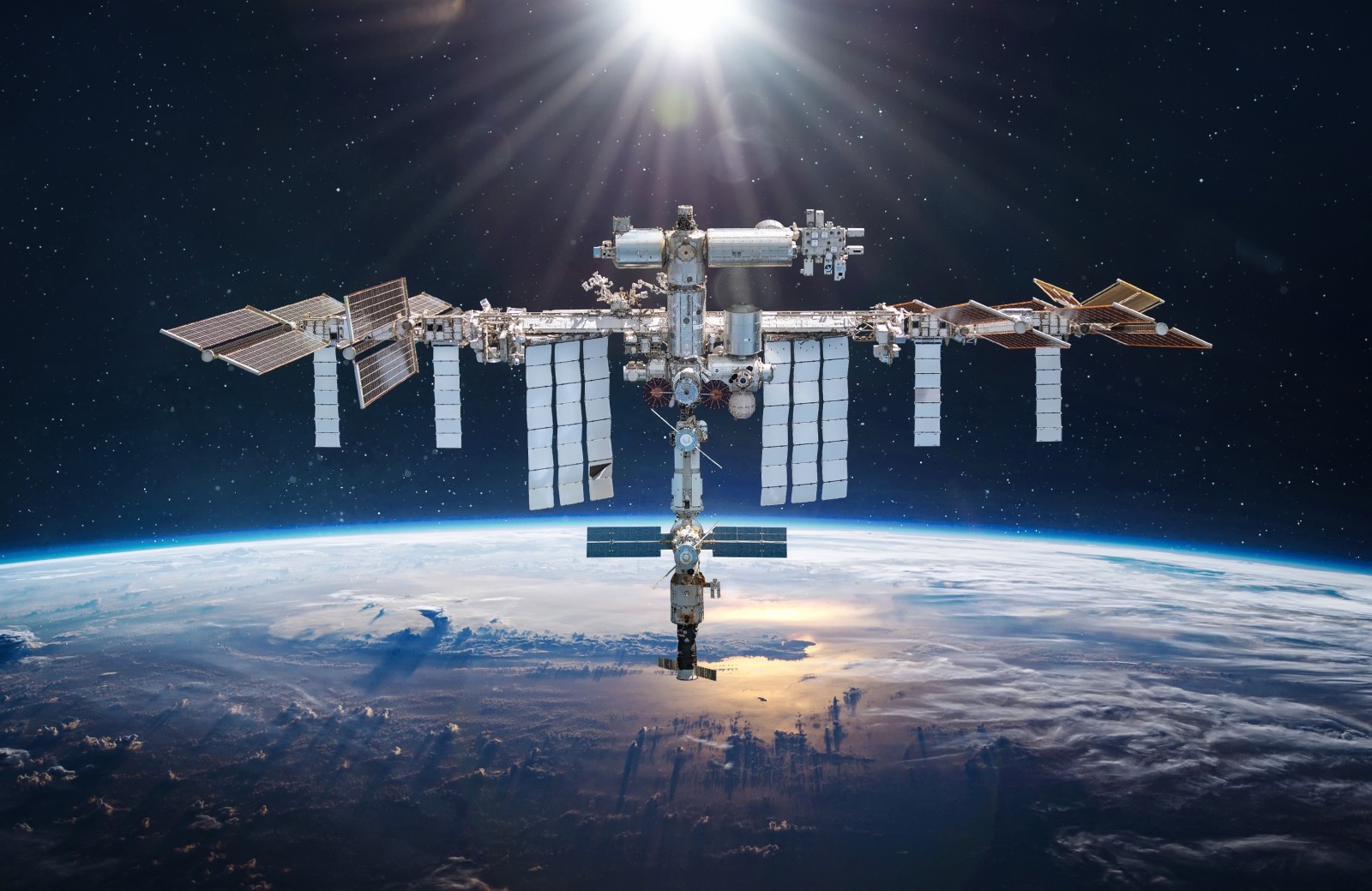
The International Space Station (ISS) has achieved an unprecedented feat in space operations by having all eight of its docking ports occupied at the same time. This milestone was reached following the redocking of Northrop Grumman’s Cygnus XL cargo craft to the Earth-facing port of the Unity module.
Unprecedented Docking Milestone Expands Collaborative Space Efforts
Fully populating every docking port on the ISS is more than a mere logistical success; it signifies an expansion in collaborative capabilities and the station’s potential for scientific research. Currently, the eight docked spacecraft include a diverse fleet of vehicles: two SpaceX Dragon capsules, the Cygnus XL cargo ship, Japan’s HTV-X1, along with two Russian Soyuz crew vehicles, and two Progress supply ships. This assortment illustrates how the ISS continues to evolve into a dynamic hub where international partners advance science and human presence in space.
As detailed by NASA, this full complement was made possible by strategically moving the Cygnus XL, initially relocated to accommodate the Soyuz MS-28 crewed spacecraft as it arrived on November 27, 2025. Cygnus XL is scheduled to remain attached until March 2026, at which point it will return to Earth, carrying discarded cargo for disposal.

Enhancing Scientific Endeavors Aboard the ISS
With all docking points engaged, the ISS can now support more extensive scientific experiments and cargo deliveries. NASA astronaut Chris Williams and Roscosmos cosmonauts Sergey Kud-Sverchkov and Sergei Mikaev are currently carrying out sophisticated studies focused on human physiology and space technology advancements. Notably, investigations into how microgravity influences the cardiovascular system continue to yield critical data about the effects of spaceflight on human health.
Beyond biomedical research, the ISS hosts physics experiments uniquely possible in microgravity conditions. For instance, NASA’s Mike Fincke is engaged in cryogenic fluid preservation research, while JAXA’s Kimiya Yui is focusing on the brain's regulation of blood circulation in space environments.
Looking Ahead: Sustaining ISS’s Vital Role in Space Science
The expanded docking capabilities are slated to support the ISS’s broad and growing portfolio of scientific and technological activities. With Cygnus XL docked through March 2026 and upcoming crew rotations, the station’s operational flexibility will be crucial. As global space agencies continue their cooperative efforts, the ISS remains a symbol of international partnership and scientific innovation, driving progress in our quest to explore beyond our planet.
- Categories:
- News











0 comments
Sign in to Comment