
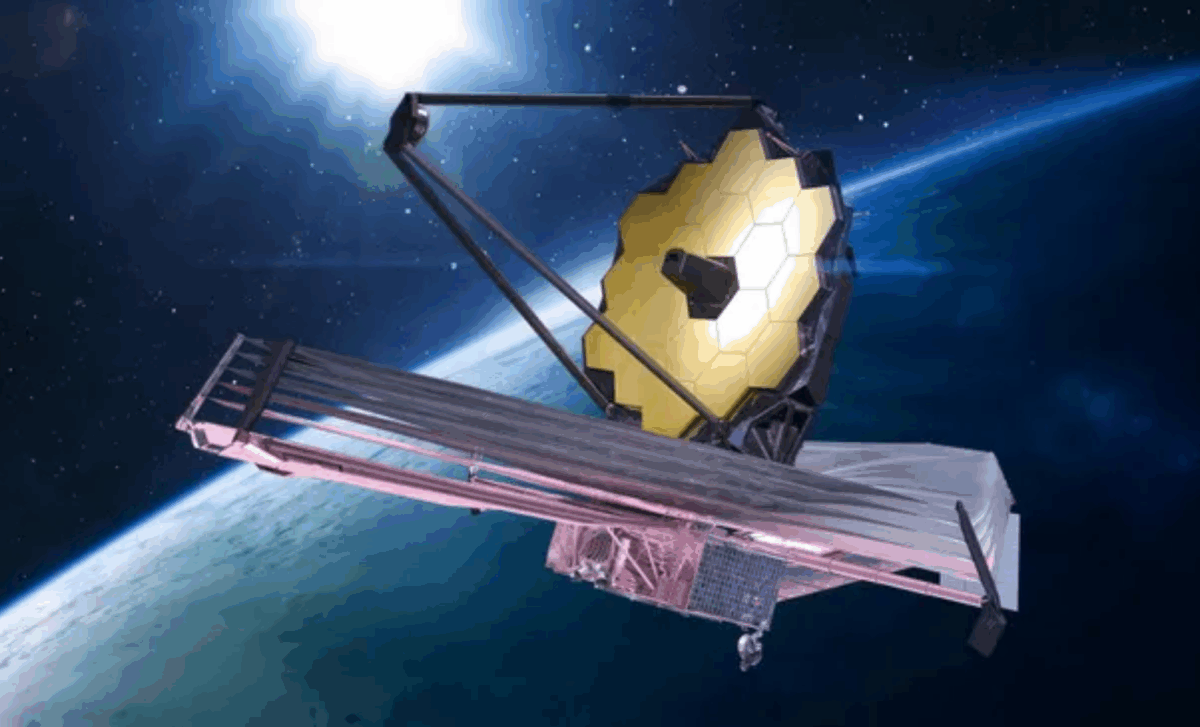
The James Webb Space Telescope (JWST) has recently identified unusual cosmic objects that might represent the elusive “dark stars.” These hypothetical stars, theorized to be fueled by dark matter instead of conventional nuclear fusion, could unlock new understanding of the universe's earliest epochs. Among several candidates found, one named JADES-GS-z14-0 has attracted significant attention, sparking debate within the scientific community as detailed in a PNAS paper released on September 30.
Decoding the Enigma of Dark Stars
Dark stars were first proposed in 2007 as some of the first star-like objects formed in the early cosmos. Unlike typical stars that generate energy through nuclear fusion, dark stars are believed to draw their power from dark matter interactions. This concept suggests that dark matter could interact with ordinary matter to create stars far larger and more radiant than known stars, potentially with masses up to a million times that of our Sun and shining billions of times brighter than today’s stars.
“Our initial name ‘dark star’ is a misnomer,” said Katherine Freese, a professor of physics at the University of Texas at Austin and one of the key proponents of the dark star hypothesis. “They’re neither made [entirely] of dark matter nor are they dark.”
Add Cosmo Herald as a Preferred Source

The prevailing theory posits that dark stars form from a combination of hydrogen, helium, and dark matter collapsing under gravity, resulting in luminous bodies that challenge existing models of early star formation.
Though still theoretical, confirming the presence of dark stars would profoundly reshape our picture of the universe’s beginnings. Such discoveries might clarify phenomena observed by the JWST, including the swift emergence of supermassive black holes. Uncovering these candidates means more than finding a new star class — it could offer critical clues about the nature of dark matter itself.
JWST’s Innovative Survey: Hunting for Signs of Dark Stars
The quest to find dark stars utilized data from the JWST’s Advanced Deep Extragalactic Survey (JADES). The telescope’s Near Infrared Spectrograph (NIRSpec) enables precise measurement of the light spectra emitted by distant galaxies, revealing details about their temperature, composition, and other characteristics.
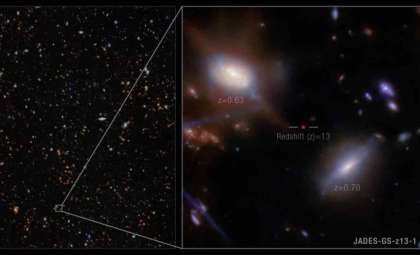
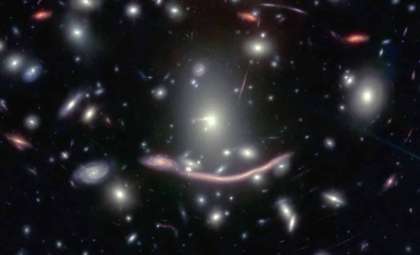
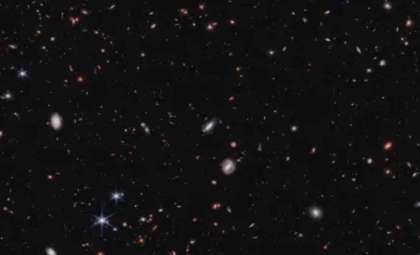
From this data, researchers pinpointed several possible dark star candidates, with four objects fitting the theoretical profile. The standout candidate, JADES-GS-z14-0, lies over 13 billion light-years away and is the second-farthest object the JWST has observed. Its light spectrum contains a unique absorption feature at 1640 angstroms, linked to singly ionized helium—something never before detected in other distant cosmic objects.
“No other known high redshift objects are expected to produce such an absorption feature,” the study authors noted, strengthening the argument that JADES-GS-z14-0 could be a genuine dark star. This finding boosts hopes that dark stars may soon be confirmed through JWST’s advanced instrumentation.
Scientific Debate: Dark Stars or Massive Primordial Stars?
The prospect of discovering dark stars has triggered lively discussion within astrophysics. Some scientists remain cautious, questioning the feasibility of these objects and the dark matter interactions that would create them. Cosmologist Daniel Whalen from the University of Portsmouth highlights that the current research does not definitively separate dark stars from supermassive primordial stars — a type of early universe star that might share similar attributes.
The crucial distinction lies in their predicted lifetimes: dark stars, powered by dark matter, are expected to persist far longer than their fusion-fueled primordial counterparts. This longevity could increase the likelihood of observing dark stars if their identifying characteristics are correctly recognized. Discerning this difference will be vital in understanding the true nature of these mysterious celestial bodies.
As Katherine Freese comments,
“It’s a probe, not just a new kind of star, so these candidates are very encouraging to us.” The confirmation of dark stars would open unprecedented opportunities to investigate dark matter and provide a fresh glimpse into the universe’s earliest stages, potentially answering long-standing cosmological questions.
- Categories:
- News




0 comments
Sign in to Comment