
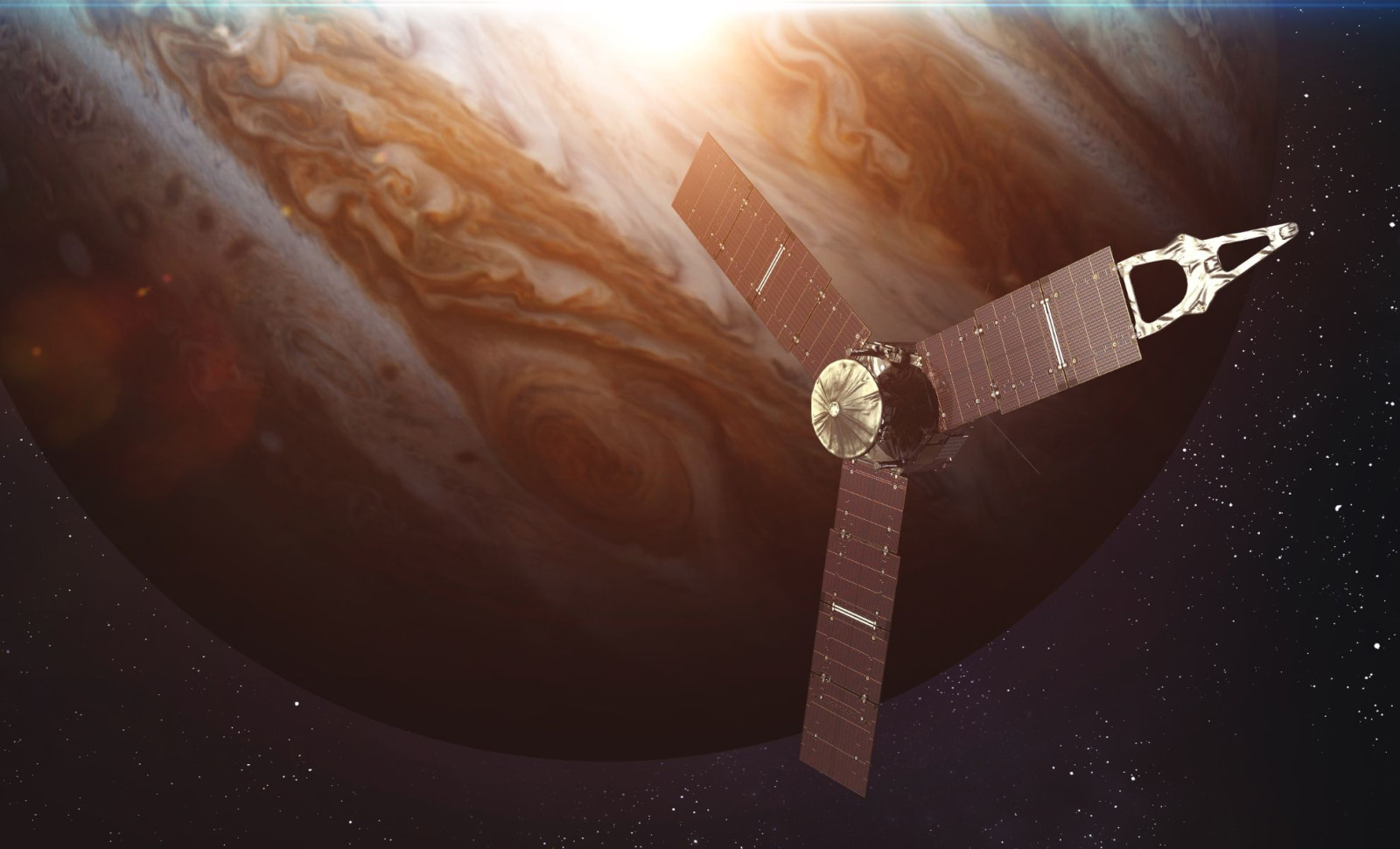
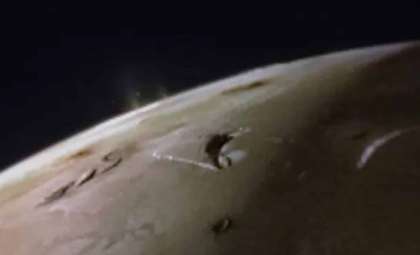
For many years, researchers have sought to understand the source of the intense volcanic eruptions on Jupiter’s moon Io. Recent close encounters by NASA’s Juno spacecraft reveal that Io’s 400 active volcanoes are powered by separate magma chambers rather than a singular, vast magma ocean beneath the surface, solving a puzzle persisting for over four decades.
Known as the most volcanically dynamic object in our solar system, Io has intrigued scientists ever since NASA’s Voyager missions first observed towering volcanic plumes there in 1979. The latest insights gleaned from Juno’s flybys conducted in 2023 and 2024 have brought us closer to understanding these extraordinary volcanic phenomena.
Unraveling a Four-Decade Enigma
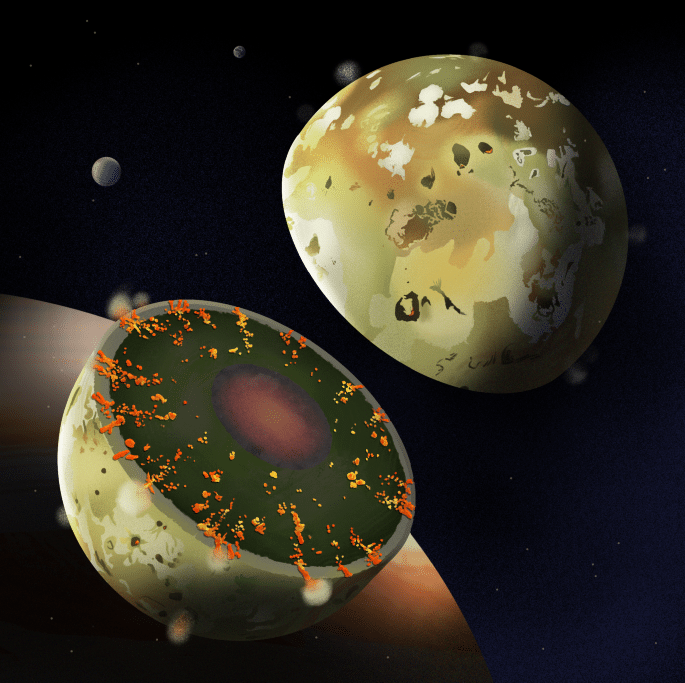
After Io’s volcanic activity caught the attention of astronomers, two major hypotheses emerged. One proposed a global subsurface ocean of molten rock fueling the eruptions, while the other suggested that each volcano tapped into its own discrete magma reservoir. Recent findings published in Nature suggest a middle ground: Juno’s precise measurements indicate that volcanic activity on Io stems from separate magma chambers beneath each volcano.

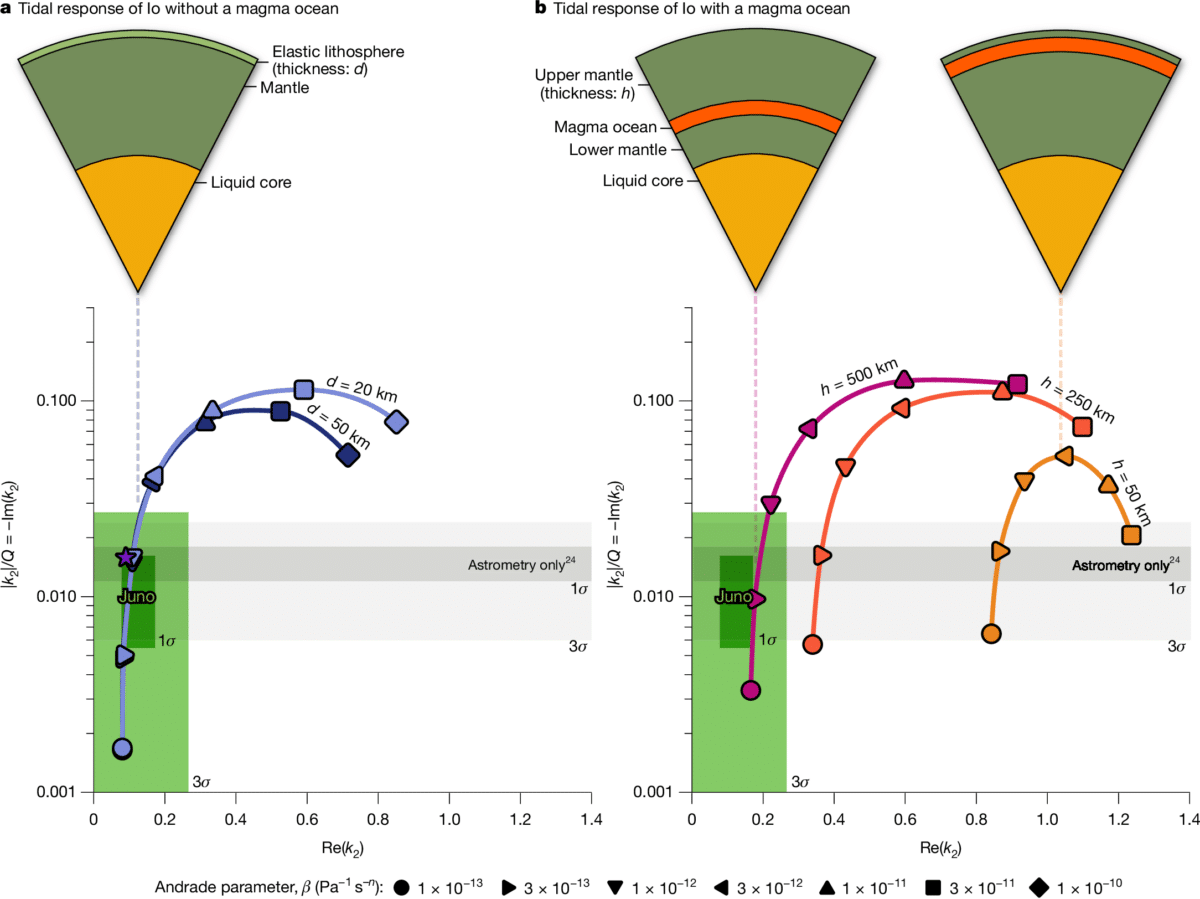
This conclusion is drawn from Juno’s detailed observations of variations in Io’s gravitational field, which offer valuable clues into the moon’s interior composition. As the spacecraft’s trajectory was influenced by gravity, scientists could infer the configuration of molten regions within Io.
The results effectively disprove the hypothesis of a vast subterranean magma ocean and provide a clearer understanding of how Io’s volcanic eruptions are fueled.
Jupiter’s Gravitational Grip Drives Io’s Volcanism
Io’s extreme volcanic activity is largely a consequence of its elliptical orbit around Jupiter. Because Io’s path is highly elongated, it experiences changing gravitational pulls that stretch and compress it, generating substantial internal friction.
This process, known as tidal flexing, produces significant heat inside Io, which powers its volcanic eruptions. Scott Bolton, leading the Juno mission, explained:
“This constant flexing creates immense energy, which literally melts portions of Io’s interior.”
If Io housed a continuous magma ocean beneath its surface, larger tidal distortions would be expected. Instead, evidence points to a stiffer interior featuring isolated pockets of magma, in line with the concept of individual magma chambers feeding the volcanoes.
Insights from Io Inform Broader Planetary Science
Discoveries from NASA’s Juno mission expand our knowledge not only of Io but of planetary processes across the solar system. Ryan Park, a Juno co-investigator, emphasized:
“It has implications for our understanding of other moons, such as Enceladus and Europa, and even exoplanets and super-Earths. Our new findings provide an opportunity to rethink what we know about planetary formation and evolution.”
These results encourage reevaluation of existing models regarding how planets and moons develop and evolve over time.
- Categories:
- Space


0 comments
Sign in to Comment