
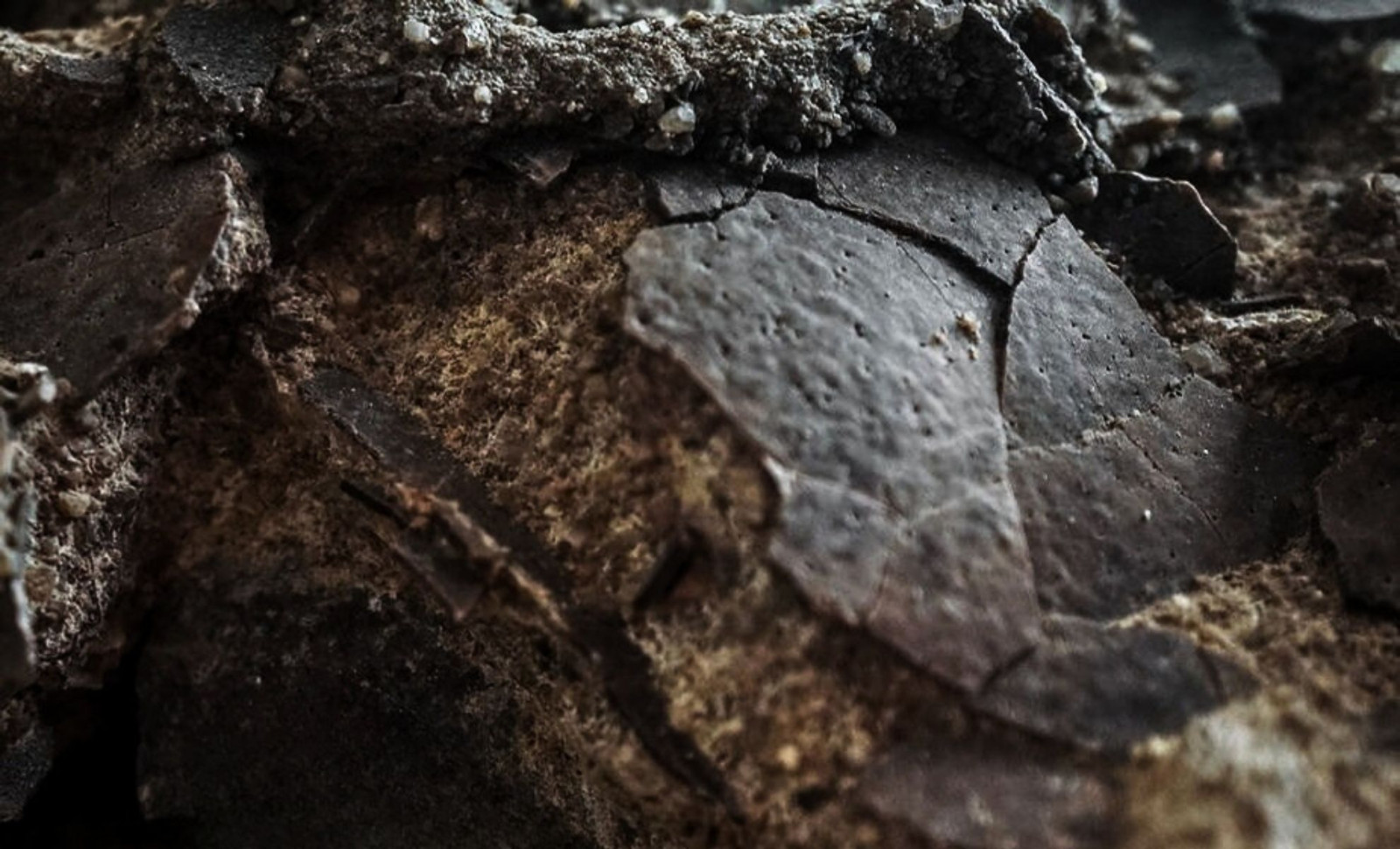
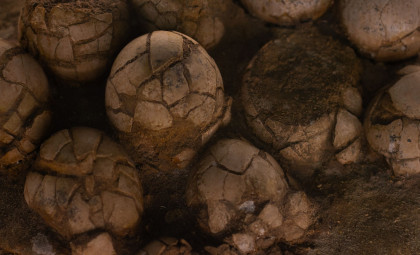
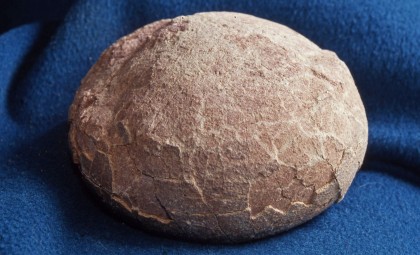
Layers of rock at Santa Cruz beach have concealed an extraordinary secret for 150 million years. Encased in a sandstone block, a clutch of dinosaur eggs lay undisturbed since the Jurassic period, surviving through the formation of the North Atlantic and human history. When paleontologists from the Torres Vedras Natural History Society uncovered the specimen during routine surveys, they discovered evidence that reshapes understanding of predator nesting habits in that era.
Unlike remains displaced by ancient water currents or geological shifts, the eggs were preserved in situ, arranged naturally as though still in their original nest. However, the sediment enveloping them—a gritty sandstone—was unusual, pointing to environmental factors rarely linked to fossilized dinosaur eggs.
Insights from a Nest Holding Ten Eggs Illuminate Jurassic Reproductive Strategies
During paleontological fieldwork along the cliffs, scientists from Ci2Paleo at the Torres Vedras Natural History Society uncovered the intact nest, as detailed in the official report on the Jurassic dinosaur egg find. The group confirmed that the eggs originated in the Upper Jurassic, some 150 million years ago.

Researchers noted the eggs’ orderly pattern ruled out transportation by water, while the granular sandstone suggested a nesting site near a riverbank. This find has attracted worldwide media, with agencies such as Xinhua among outlets highlighting this rare dinosaur nesting discovery.
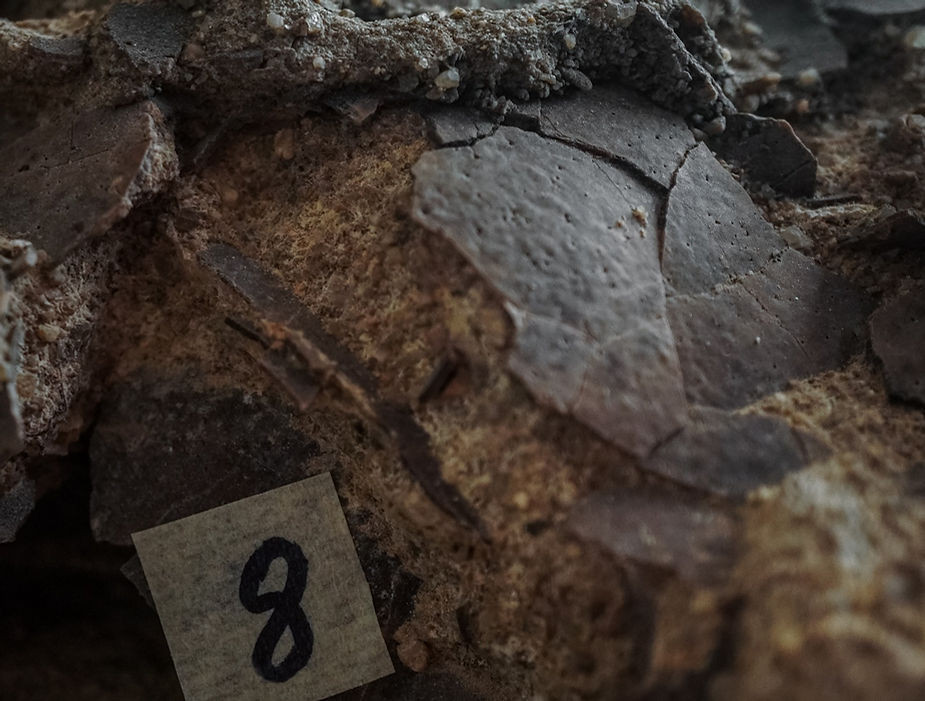
Based on shell morphology and porosity, paleontologists infer these eggs were laid by a meat-eating dinosaur. According to experts cited by the society, Portugal ranks among the few global sites yielding Upper Jurassic dinosaur nests and eggs.
Successful Hatching Indications and Potential Embryo Remnants
Bruno Camilo, the society’s director and a scientist at Instituto Superior Técnico, shared details on the nest’s state. Nearly all the offspring seem to have hatched successfully, inferred from shell displacement patterns that show minimal sideways scattering.
Camilo also suggested that remnants of embryonic remains could still be ensconced within the sediment block, which hasn’t yet been sliced open for inspection. Unlike other fossil nests suggesting surface laying, this discovery hints the eggs might have been partially buried.
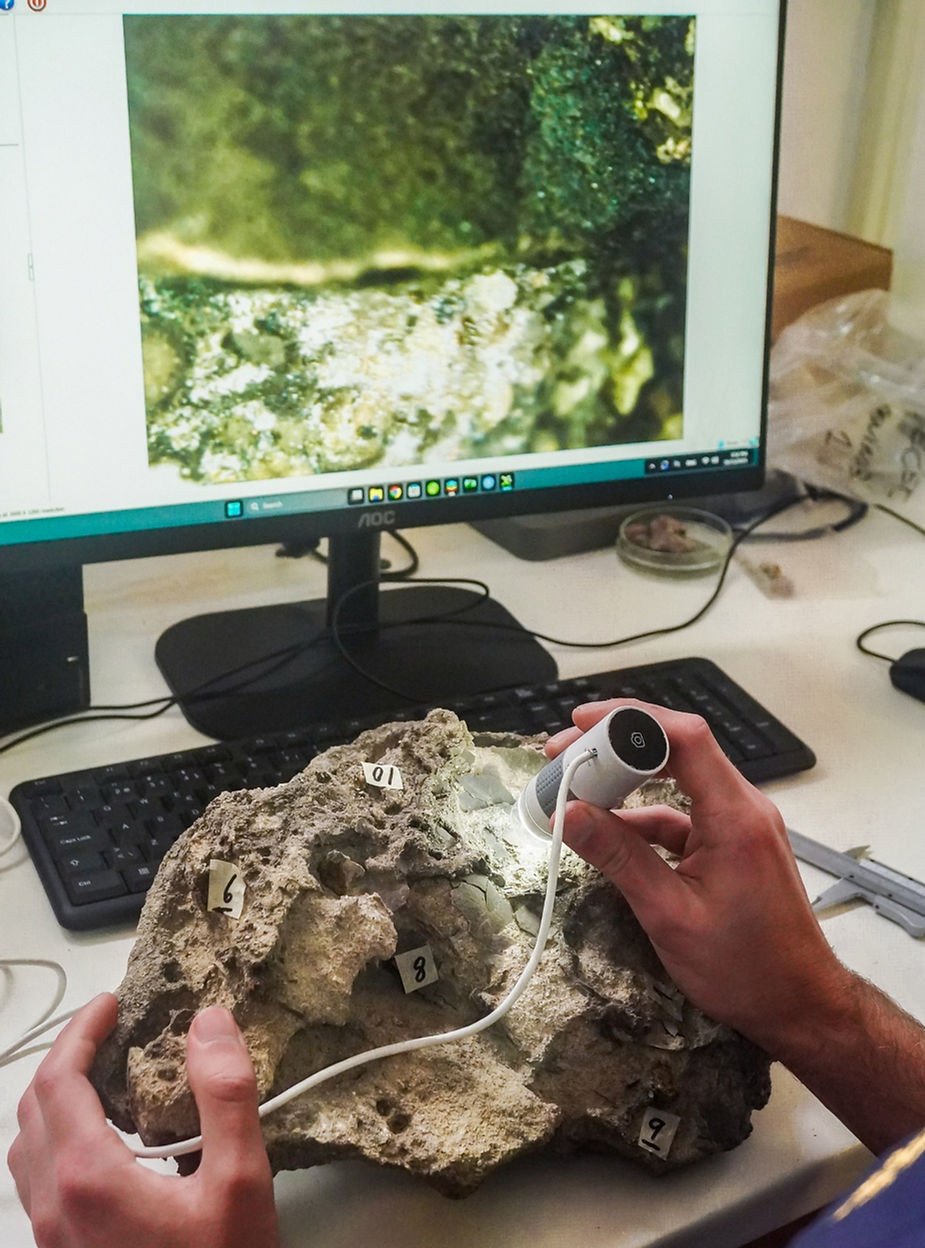
The specimen will soon undergo CT scanning to reconstruct a 3D interior model and evaluate possible embryo preservation. Additionally, microscopic shell analysis is planned.
Exceptional Three-Dimensional Preservation in Uncommon Sandstone
The fossilized eggs exhibit remarkable three-dimensional preservation within the sediment, with preliminary studies using advanced lighting and digital zoom already underway. The Lusa News Agency reported that lab investigations will proceed imminently, employing CT technology to clarify embryo presence.
Researchers expressed surprise at the nest’s compact dimensions and the atypical sandstone matrix, departing from typical dinosaur egg fossil sediment and pointing towards a riverbank nesting environment.
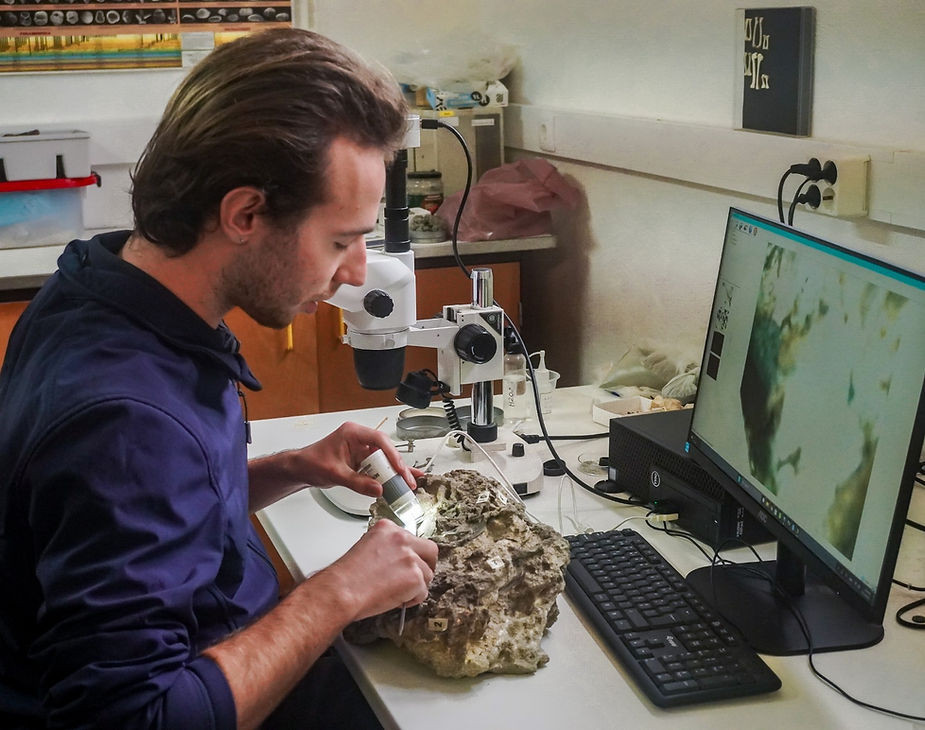
Should the scans reveal bone-like or embryonic structures, subsequent meticulous excavation might target these areas mechanically. Because no cross-section is currently visible on the outer rock, the potential embryo contents remain a mystery.
Jurassic Fossils Continue to Surface Along Portugal’s Western Cliffs
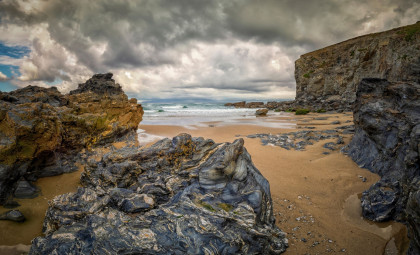
This discovery enriches the growing collection of Late Jurassic vertebrate fossils uncovered along Portugal’s coastal cliffs, where erosion persistently reveals fossil-laden layers. The geological context preserves sediments from when the Iberian Peninsula occupied a vastly different position on the prehistoric map.
Coastal paleontologists face time-sensitive challenges due to tidal erosion and storm activity, which aggressively wear away fossiliferous cliffs. Fieldwork at Torres Vedras combines discovery with urgent documentation efforts to rescue fossils before nature reclaims them.
- Categories:
- Science

0 comments
Sign in to Comment