
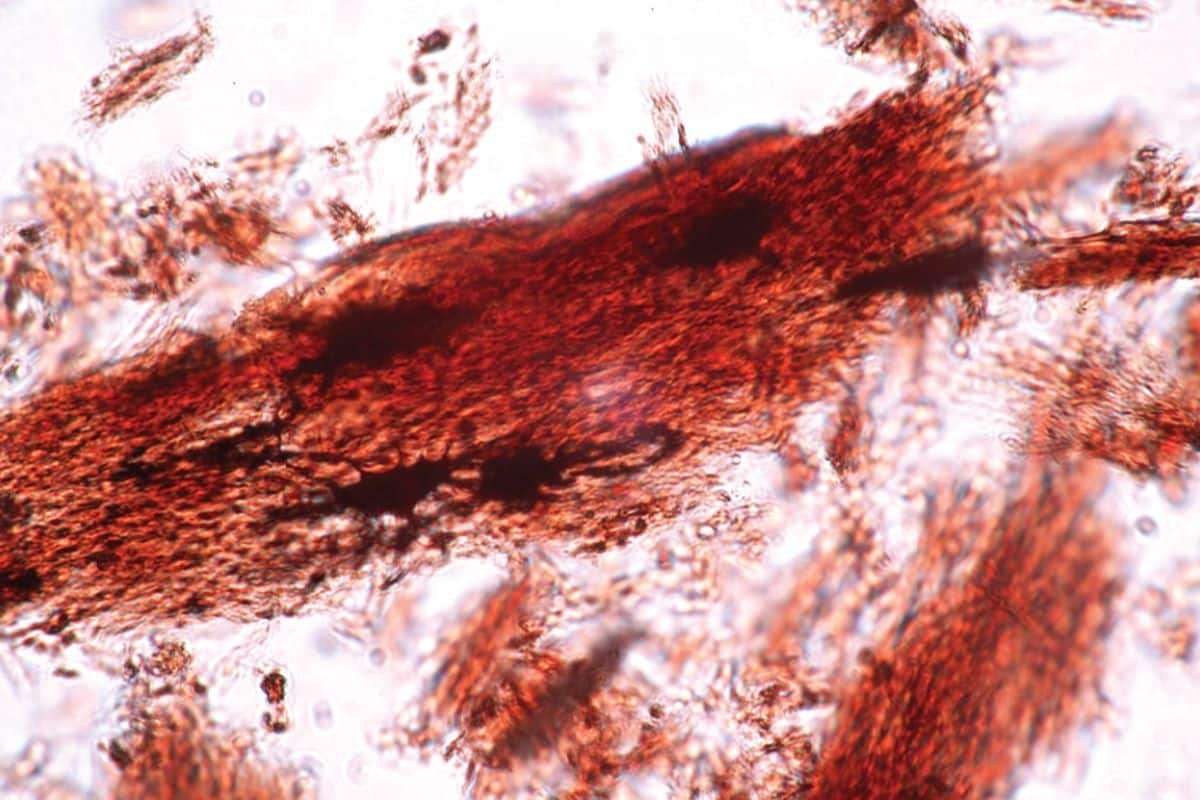
Back in 2005, a groundbreaking finding transformed how scientists interpret the fossil record. Researchers uncovered dinosaur bones containing what seemed to be soft tissues, blood vessels, and even cells—biological materials previously believed impossible to persist for millions of years.
Led by Dr. Mary Schweitzer, this revelation challenged established views and set off a new wave of exploration into the longevity of biomolecules over geological time.
A Milestone That Redefined Paleontology
Prior to this discovery, paleontologists largely concentrated on hard, fossilized parts such as bones, teeth, and shells to study ancient organisms. It was widely accepted that delicate structures such as proteins, lipids, and sugars would degrade shortly after death.
The prevailing belief held that over millions of years, fragile elements like cells and blood vessels would be obliterated by environmental and microbial processes.

However, Dr. Schweitzer’s team made a startling observation in a Tyrannosaurus rex specimen: blood vessels and cells seemingly preserved after 68 million years.
Initially met with doubt and controversy, further research eventually confirmed these findings, expanding scientific understanding and prompting debates on how biomolecules might endure under certain conditions through deep time.
This breakthrough sparked new inquiries into the mechanisms behind molecular preservation within fossils.
Exploring the Boundaries of Biomolecular Persistence
Following the 2005 revelation, scientists embarked on a comprehensive investigation across many dinosaur fossils, as reported in varied specimens. It became evident that these instances were part of a larger pattern, revealing complex preservation pathways. This led to the development of cutting-edge techniques for isolating and examining biomolecules in ancient fossils.
One major hurdle in this field is confirming that these ancient structures are authentic and free from modern contamination. To address this, researchers implemented sophisticated imaging systems and chemical profiling methods.
Advanced microscopy and spectrometry unveiled specific molecular fingerprints of proteins and lipids still intact in the samples. Moreover, emerging biochemical methods now enable the recovery and study of genetic fragments from fossilized remains.
Insights Gained from Dinosaur Soft Tissues
Analysis of prehistoric cells and soft tissues is illuminating aspects of the physiology and evolution of extinct species. The discovery of preserved blood vessels and cellular structures offers rare windows into how these ancient animals functioned biologically within their environments.
Scientists can investigate metabolic processes, behavioral interactions, and evolutionary changes. Additionally, Nature reports that genetic materials retrieved from these tissues provide vital clues about the evolutionary lineage of life on our planet.
This knowledge draws connections between long-extinct organisms and their modern descendants, enabling tracing of species' origins across millions of years. Beyond paleontology, these advances are influencing astrobiology.
Understanding biomolecular survival in extreme Earth environments informs the search for life in harsh extraterrestrial settings, like the icy surface of Europa or the dry Martian deserts.
Future Directions for Ancient Molecule Research
Advancing preservation technologies and increasingly precise molecular investigations are expected to drive this field forward.
The ability to extract and decode ancient DNA and other genetic elements from fossils holds great promise for reconstructing the genomes of extinct creatures.
These insights will deepen understanding not only of their evolutionary history but also of their behavioral traits and environmental adaptations.
- Categories:
- Science


0 comments
Sign in to Comment