
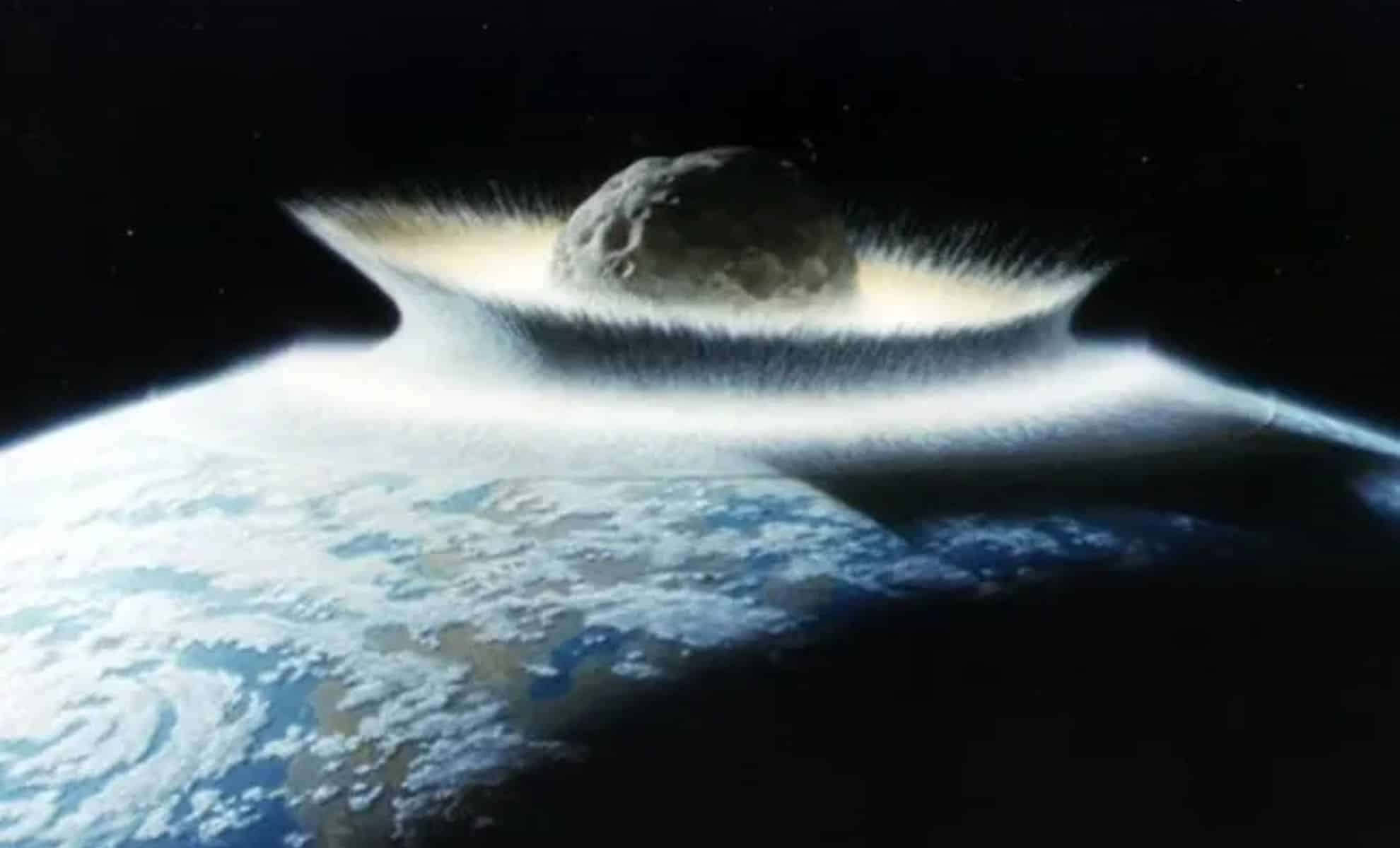
Recent advances in meteorite research reveal that over 70% of meteorites landing on Earth derive from just three asteroid clusters.
The breakthrough, reported in Nature and Astronomy and Astrophysics, reshapes our knowledge of these cosmic visitors’ provenance and enhances understanding of solar system mechanics.
The Key Asteroid Clans Delivering Meteorites
Historically, pinpointing the origins of meteorites was limited, with just about 6% traced back to known sources such as the Moon, Mars, or asteroid Vesta. However, new investigations by the European Southern Observatory (ESO) and the CNRS highlight that three relatively young asteroid families—Karin, Koronis, and Massalia—are the predominant suppliers of meteorites reaching Earth. These groups were created by massive collisions within the main asteroid belt approximately 5.8, 7.5, and 40 million years ago, respectively.

The Massalia group is the most significant source, contributing 37% of identified meteorite fragments. These pieces originated from asteroid collisions occurring between the orbits of Mars and Jupiter, with portions eventually traveling toward Earth.
Deciphering the Meteorite Delivery Process
The prominence of these asteroid families in meteorite flux is tied to their youth. Newly formed asteroid clusters contain numerous small fragments resulting from recent breakups. These pieces frequently collide, generating debris that makes its way to Earth through a process known as a “collisional cascade.” Older asteroid families, having lost most of their fragments over time, do not contribute as much material.
Michaël Marsset, a European Southern Observatory research fellow and lead author, explained to Gizmodo, “The most recent collisional events that happened in the asteroid belt are completely dominating the flux of material to our planet.” He added, “You might think that the meteorite flux should be a blend of all the compositional classes we observe in the asteroid belt but it’s not at all the case; it’s dominated by three asteroids that fragmented recently.” The term “flux” here refers to the continuous stream of meteorites traveling from space towards Earth.
Marsset’s research sought to close the gap in understanding between Earth-based meteorite finds and asteroid belt sources. Prior to this, only about 6% of meteorites had confirmed origins from locations like the Moon, Mars, and Vesta, leaving many unexplained.
Innovative Techniques for Pinpointing Meteorite Sources
The investigation combined detailed spectral surveys of asteroid families in the main belt with sophisticated computer models simulating their collisional and dynamical evolution. By correlating meteorite chemical signatures found on Earth to those of parent bodies, researchers accurately traced their origins.
This approach has successfully assigned sources to more than 90% of known meteorites, a substantial improvement over the previous 6%. Besides tracing ordinary chondrites, the technique also linked carbonaceous chondrites to specific asteroid families and holds promise in identifying origins of kilometer-sized asteroids that could threaten Earth.
Using Meteorites to Unlock Solar System History
Meteorites carry critical information about the early solar system. As debris from the protoplanetary disk—the gas and dust cloud that birthed planets—they provide vital clues about primordial conditions and planetary formation processes.
These discoveries enrich our understanding of Earth’s cosmic environment and aid in reconstructing the chemical and thermal gradients of the early solar system, helping to unravel how planets like Earth originated.
Ongoing research focuses on identifying the source of the remaining 10% of meteorites and investigating asteroid families formed within the past 50 million years.
- Categories:
- Astronomy ,
- News






0 comments
Sign in to Comment