
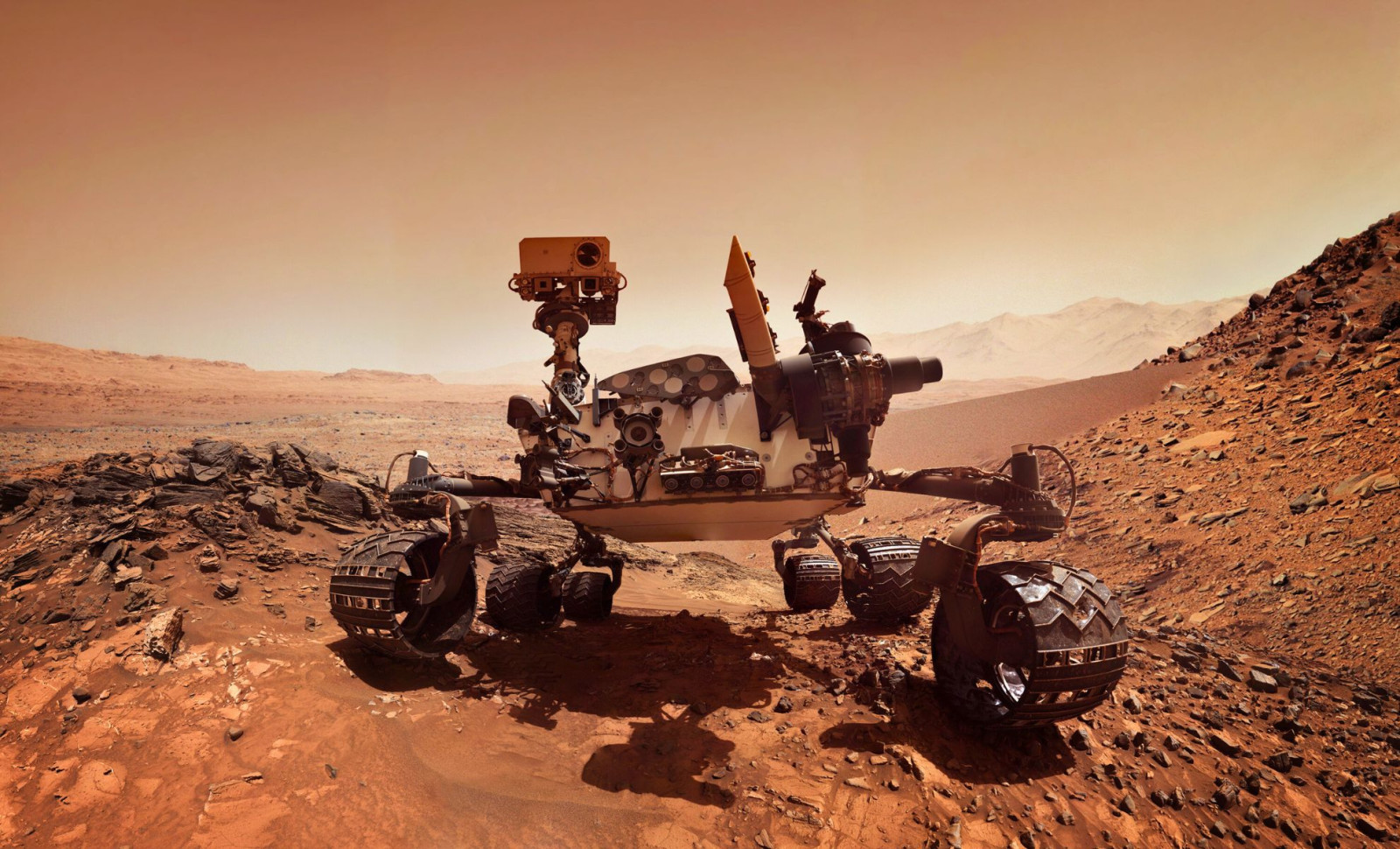
NASA's Perseverance rover has achieved a groundbreaking feat by completing its initial journeys on Mars through entirely AI-driven route planning. Operating autonomously in the challenging landscape of Jezero Crater, this marks a significant leap forward in robotic exploration using artificial intelligence.
Historically, Martian rovers have depended on human teams to map out travel routes, carefully selecting waypoints spaced less than 330 feet (100 meters) apart to circumvent obstacles like rocks, sand dunes, and inclines. Due to communication delays stemming from Mars’ mean distance of 140 million miles (225 million kilometers) from Earth, direct real-time rover control is impossible, necessitating meticulous prior planning.
Artificial Intelligence Maps a Secure Course Across Mars
NASA’s Jet Propulsion Laboratory (JPL) recently experimented with generative AI to automate these planning tasks. According to NASA, the AI reviewed detailed images from the HiRISE camera on the Mars Reconnaissance Orbiter alongside slope data from digital elevation models to design a continuous route with waypoints, substituting the manual efforts traditionally performed by mission controllers.

Utilizing vision-language models, the AI detected significant terrain features like boulder clusters, bedrock, rock outcrops, and sand ripples to establish waypoints for Perseverance. Prior to transmitting commands, NASA validated the route using a digital twin—a virtual rover replica—to cross-check more than 500,000 telemetry data points ensuring seamless compatibility with the rover’s operational software.
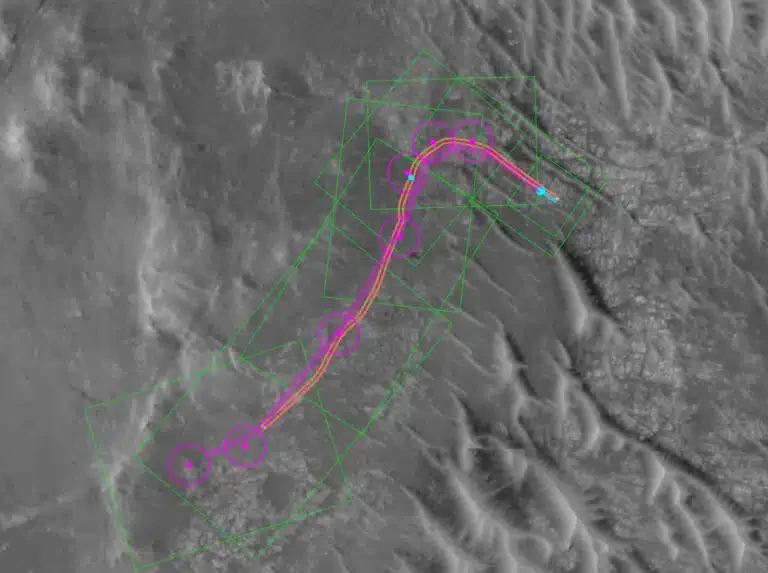
Initial AI-Driven Rover Traverses Mars Surface
In the trial runs, Perseverance covered 689 feet (210 meters) on December 8 and 807 feet (246 meters) on December 10. NASA notes that the AI managed essential navigation functions, including situational awareness, positioning, and path planning. Vandi Verma, a robotics expert at JPL, emphasized the technology’s potential not only for extended autonomous drives but also for autonomously identifying scientifically valuable terrain features amid large data sets.
Matt Wallace, head of JPL’s Exploration Systems Office, highlighted the demonstration as proof-of-concept for deploying intelligent systems across various planetary missions.
“Imagine intelligent systems not only on the ground at Earth, but also in edge applications in our rovers, helicopters, drones, and other surface elements trained with the collective wisdom of our NASA engineers, scientists, and astronauts.”
This achievement signifies a crucial move towards developing autonomous infrastructure supporting future human missions to the Moon and ultimately Mars.
- Categories:
- News







0 comments
Sign in to Comment