
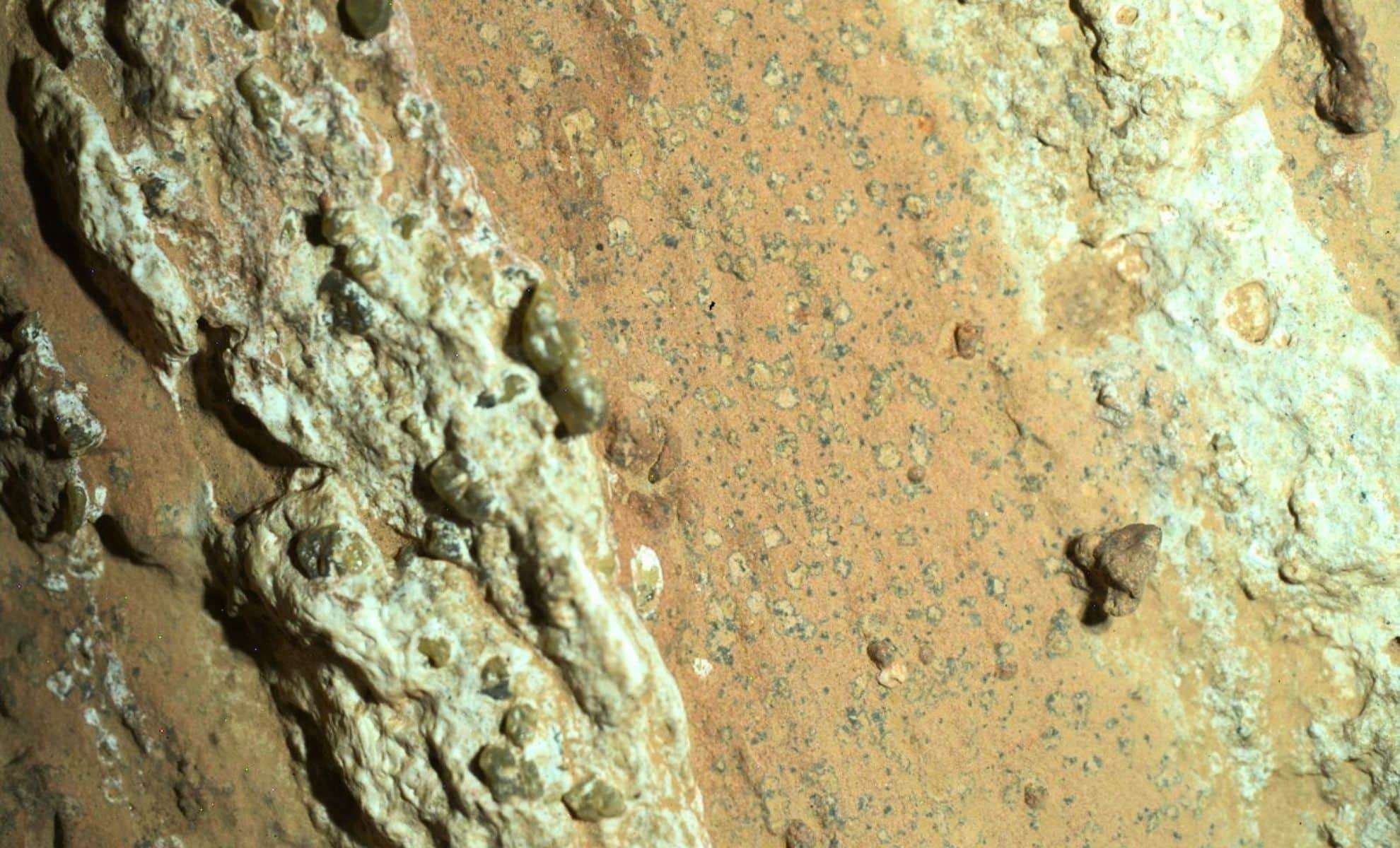
A rock sample gathered by NASA’s Perseverance rover on Mars has been found to contain chemical indicators that could point to early microbial life, according to a newly published peer-reviewed article in Nature. This discovery stands as a significant advancement in Mars research, prompting renewed discussions about the planet’s capability to host life billions of years ago.
The investigation focused on a finely textured rock, named Sapphire Canyon, which was collected in July 2024 from the Bright Angel region within Jezero Crater. This location, once a lake connected to ancient river systems, has been a prime target for researchers studying Mars’ wetter periods. Analysis with onboard instruments revealed distinct chemical patterns within the rock that may signify former biological activity.
Evidence of Redox Reactions Suggests Past Microbial Presence
Central to the discovery was the identification of two iron-based minerals—vivianite and greigite—within sedimentary mudstone. On Earth, such minerals typically arise in oxygen-poor settings where microorganisms break down organic matter, leaving unique chemical traces. Their detection on Mars in similar geological formations raises the prospect that these could act as a potential biosignature, though additional confirmation is necessary.

“This represents our most compelling indication yet toward life on Mars,” stated Joel Hurowitz, a planetary scientist at Stony Brook University and lead author of the study in Nature. “These minerals are known to be linked with microbial metabolism on Earth, yet this result remains preliminary.”
A crucial aspect enhancing the finding’s credibility is the absence of conditions like intense heat or strong acidity that would otherwise explain the mineral formation by non-living chemical processes. The rocks appear largely unaltered, preserving chemical evidence dating back over 3.5 billion years shortly after lake sediments were laid down.
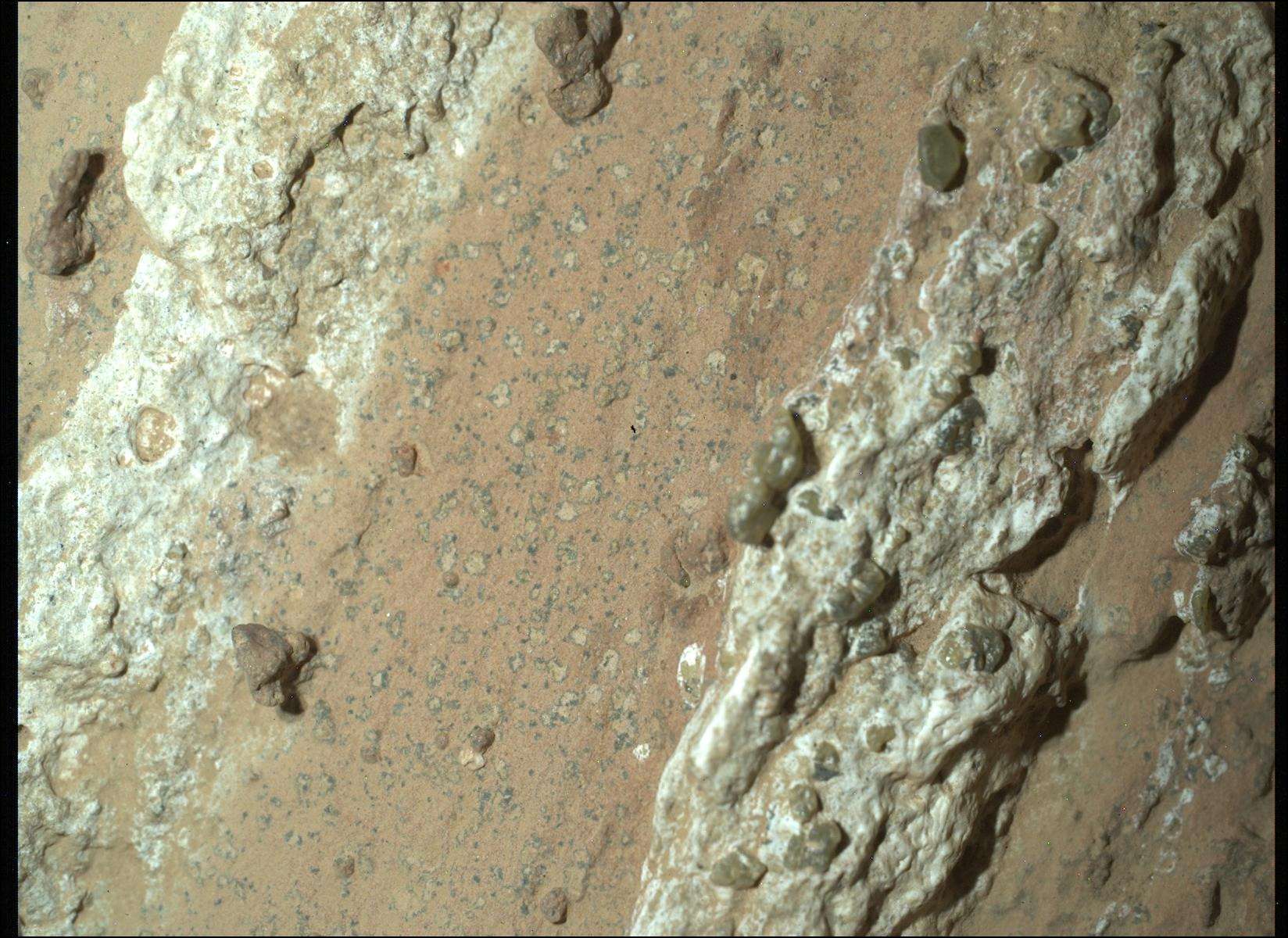
These findings concur with a NASA briefing issued Wednesday, which highlighted that chemical processes seen in the Cheyava Falls rock — source of the Sapphire Canyon sample — occurred under conditions that could support microbial life. Katie Stack Morgan, the mission's deputy project scientist at NASA’s Jet Propulsion Laboratory, commented, “Claims of past life require extraordinary proof. This discovery is an important step but stops short of a definitive conclusion.”
Detecting Organic Carbon and Ancient Lakebed Features
Since its arrival on Mars in early 2021, the Perseverance rover has been probing Jezero Crater’s layered landscape for clues to ancient biology. Once a lake, the crater remains a focal point for astrobiological investigations.
In this study, researchers also identified organic carbon compounds using SHERLOC, an instrument designed to detect life-related molecules. The co-occurrence of these organic compounds alongside minerals such as vivianite and greigite strengthens the notion that biological processes might have influenced the rock’s makeup.
High-resolution images reveal “leopard spot” reaction zones—round patterns indicating chemical interactions between sediments and organic material. Comparable formations are found in Earth’s marine sediments, reinforcing the likelihood that Mars once exhibited redox gradients necessary for microbial life.

According to a NASA mission update, these chemical reaction patterns are not random but imply in-place chemical changes rather than alterations occurring after sediment deposition. Additionally, the redox signatures are absent in deeper or older rock layers—suggesting Mars may have sustained habitable conditions longer than previously thought.
Maintaining Scientific Prudence
Although mineral and chemical evidence aligns with potential biological activity, researchers stress caution in interpreting these results. Both vivianite and greigite might form through abiotic reactions involving certain organic substances or low-temperature geochemical processes.
The study carefully eliminated multiple non-biological formation possibilities. It concludes that “the textures, mineralogy, and redox patterns observed merit serious consideration as potential biosignatures,” though conclusive proof awaits further investigation, optimally with laboratory analyses on Earth.

Hurowitz and his team emphasize that returning Martian samples for detailed study remains the best strategy to confirm these findings. NASA’s planned Mars Sample Return (MSR) mission aims to bring collected cores back to Earth. The Sapphire Canyon rock is among 27 samples amassed thus far, many selected for their potential to reveal past life.
Still, some experts remain skeptical. Independent planetary geochemists caution that abiotic processes involving organic compounds and iron-rich sediments could mimic biosignatures, especially on an ancient, chemically altered world like Mars. Rigorous peer review, replication, and continued exploration are essential before establishing a firm scientific consensus.
- Categories:
- Science








0 comments
Sign in to Comment