
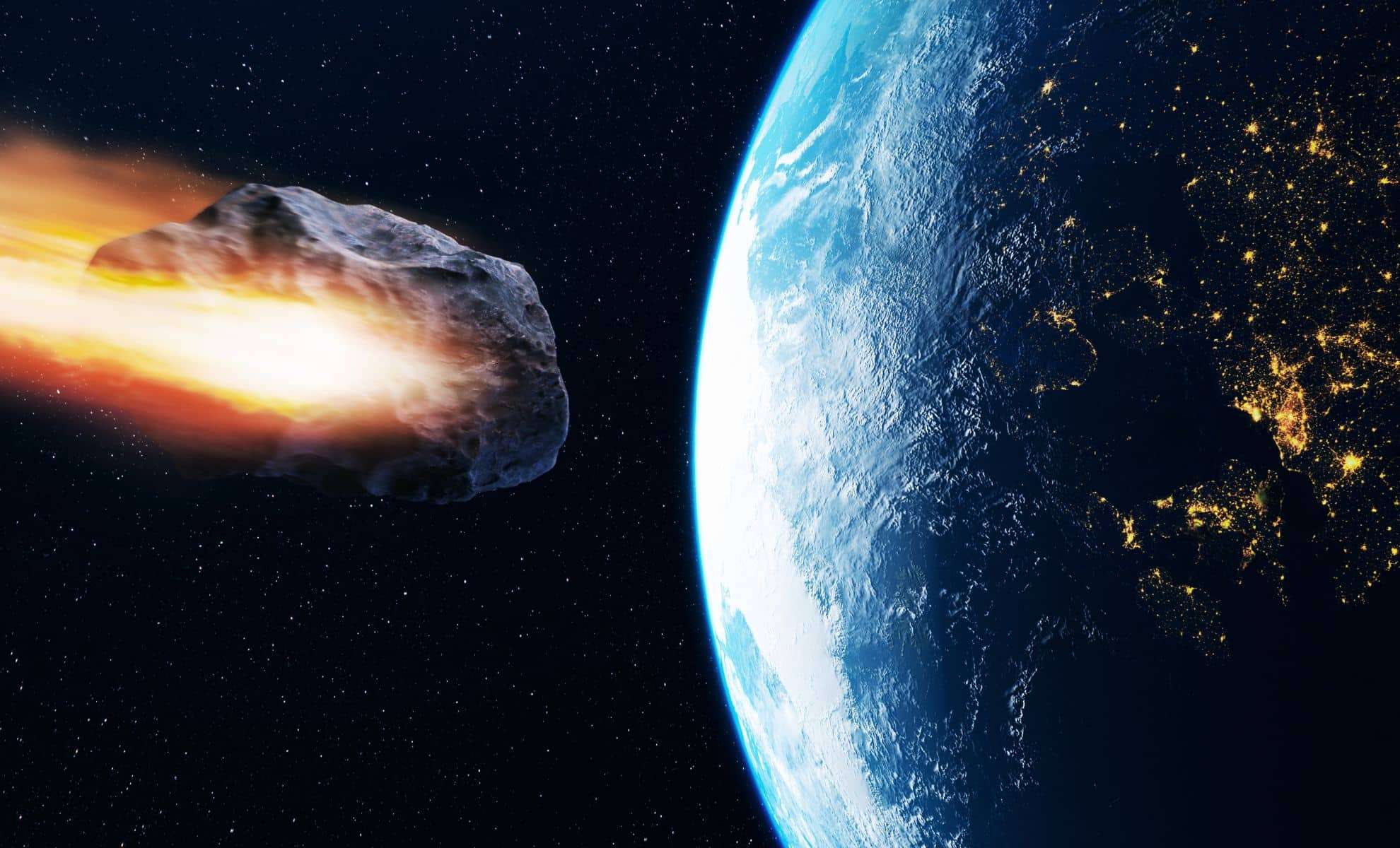
While the world gears up for Christmas Eve festivities, the night sky is preparing a remarkable display. A sizable asteroid is scheduled to pass near our planet, offering a rare chance for scientists to gather valuable data on these space objects. Although near-Earth asteroids aren’t uncommon, this event has drawn significant interest due to its timing and the asteroid’s notable dimensions.
This close encounter draws attention to the potential hazards posed by near-Earth objects (NEOs) and showcases the ongoing efforts by astronomers to track such bodies. What do we currently understand about this asteroid? Is there any risk involved? And what insights does its orbit provide regarding protecting Earth?
An Asteroid Comparable to a Building
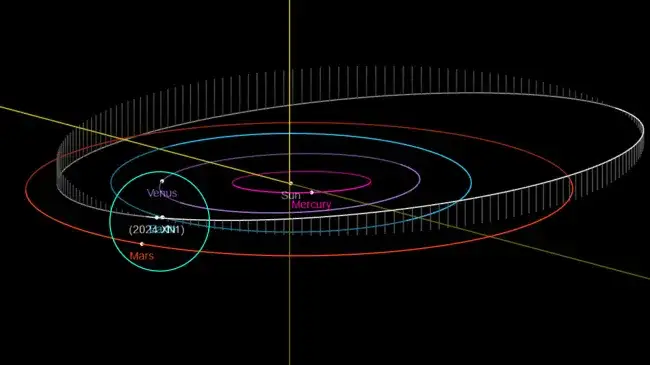
Asteroid 2024 XN1 exemplifies the type of near-Earth objects that are closely observed to better comprehend their trajectories and characteristics. This asteroid offers a fascinating glimpse into the complex dynamics within our solar system.

Given its large dimensions and rapid speed, 2024 XN1 could have severe consequences if it were on a collision course. Nonetheless, experts confirm this asteroid does not pose any danger as it passes by.
"It will remain at a considerable distance, around 18 times farther than the Moon, so it won't come close enough to impact Earth," stated Jess Lee, an astronomer affiliated with the Royal Greenwich Observatory.
Insights from Past Asteroid Impacts
When studying objects like 2024 XN1, scientists often reference historical asteroid events that emphasize the necessity of monitoring near-Earth objects. One key example is the Tunguska Event in 1908, when an asteroid of comparable size detonated above Siberia, flattening an estimated 80 million trees across roughly 830 square miles, demonstrating the immense destructive potential of relatively small asteroids.
"To put it in perspective, the Tunguska asteroid in 1908 was roughly the same size as this one," Lee explained. "It exploded mid-air, toppling 80 million trees in its wake."
While the Tunguska impact caused widespread devastation, it also serves as a critical case study driving current asteroid monitoring efforts. Events like the Christmas Eve flyby help scientists enhance tracking precision and improve risk assessment of future near-Earth objects.
Advancements in Tracking Near-Earth Asteroids
Today’s capability to accurately forecast an asteroid’s trajectory represents a milestone in astronomical research. Space agencies such as NASA and global partners employ sophisticated technology to monitor the orbits of thousands of near-Earth objects.
NASA determines these orbits by calculating the best-fitting elliptical path using all observational data gathered over time, sometimes spanning many years. This ongoing data collection window allows for more accurate future predictions.
"Each object's orbit is computed by fitting an elliptical path through all known observations, which can cover several orbits and years," explains NASA. "With additional observations, orbit accuracy improves substantially, enabling predictions of an object’s location years or decades ahead—and identifying any potential close approaches to Earth."
This precision not only safeguards the public but also enriches our understanding of asteroid behavior and composition, directly informing planetary defense initiatives.
- Categories:
- News









0 comments
Sign in to Comment