
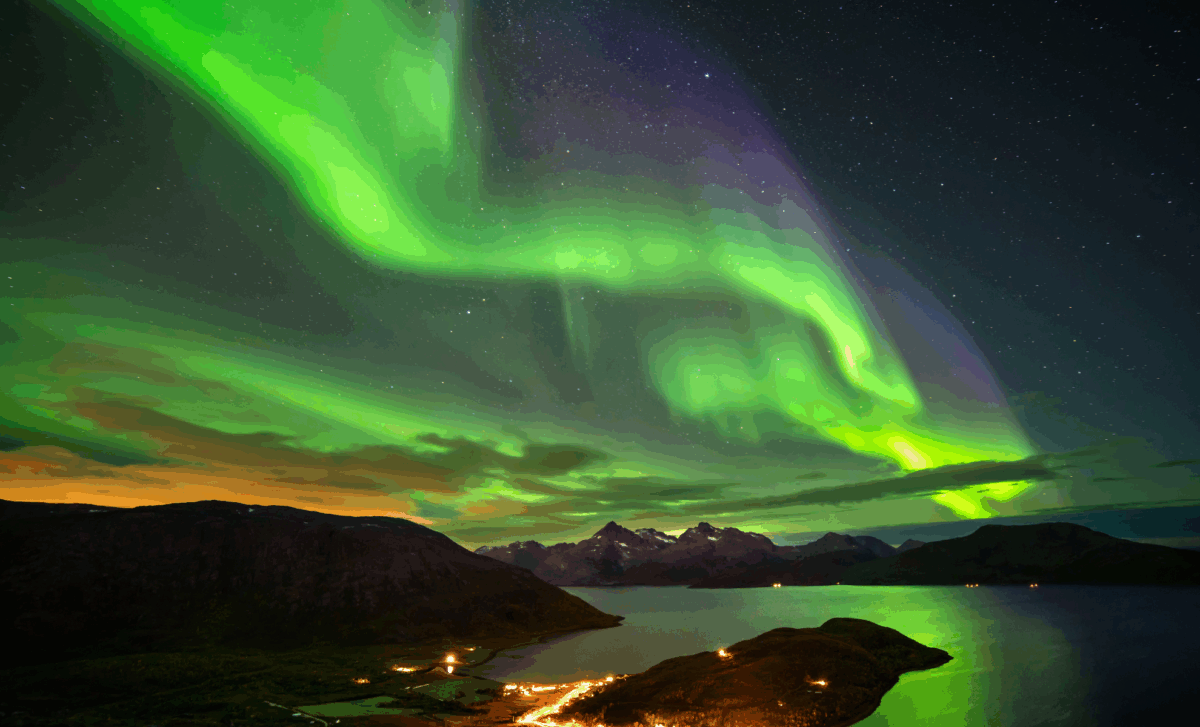
A spectacular cosmic event is poised to light up night skies in the United States. From Alaska to Illinois, residents in 22 states may soon enjoy breathtaking views of the Northern Lights, prompted by an intense solar eruption. This solar activity has amplified geomagnetic disturbances, pushing auroral displays far south of their usual range. The National Oceanic and Atmospheric Administration (NOAA) indicates this phenomenon could continue through November 6-7, 2025, providing a rare chance for many to witness the auroras.
Powerful Solar Flares Spark Intense Activity
On November 4, 2025, the Sun released two major X-class solar flares, the most significant in recent months. These energetic eruptions, classified as X1.1 and X1.8, sent bursts of electromagnetic energy towards Earth, causing brief radio signal interruptions. X-class flares are the strongest category, capable of disrupting communications and satellite functions. Beyond their visual spectacle, these flares impact Earth’s magnetic environment, triggering geomagnetic storms that can produce auroras.
Solar flares emit vast amounts of energy in the form of X-rays and ultraviolet rays that travel at light speed. Within minutes, these radiation bursts can interfere with radio transmissions and GPS systems, particularly over sun-facing regions. Although they pose no direct threat to life, these disruptions may cause temporary communication blackouts. The event’s most captivating aftereffect comes from associated coronal mass ejections (CMEs), massive clouds of solar plasma that follow the flares.

Where in the US Will Observers See the Northern Lights?
Based on NOAA’s Kp index, which gauges geomagnetic activity, 22 U.S. states fall within the predicted aurora visibility zone during this event. The anticipated geomagnetic storm is expected to create optimal conditions for aurora sightings in states ranging from Alaska all the way to Illinois, including:
- Alaska
- Washington
- Oregon
- Idaho
- Montana
- Wyoming
- North Dakota
- South Dakota
- Nebraska
- Minnesota
- Iowa
- Wisconsin
- Illinois
- Indiana
- Ohio
- Michigan
- New York
- Pennsylvania
- Vermont
- New Hampshire
- Massachusetts
- Maine
While auroras are inherently unpredictable, the current forecast suggests activity strong enough to produce impressive light shows even in regions south of their normal reach. If you reside in any of these states, this week provides an excellent chance to experience this stunning natural phenomenon.
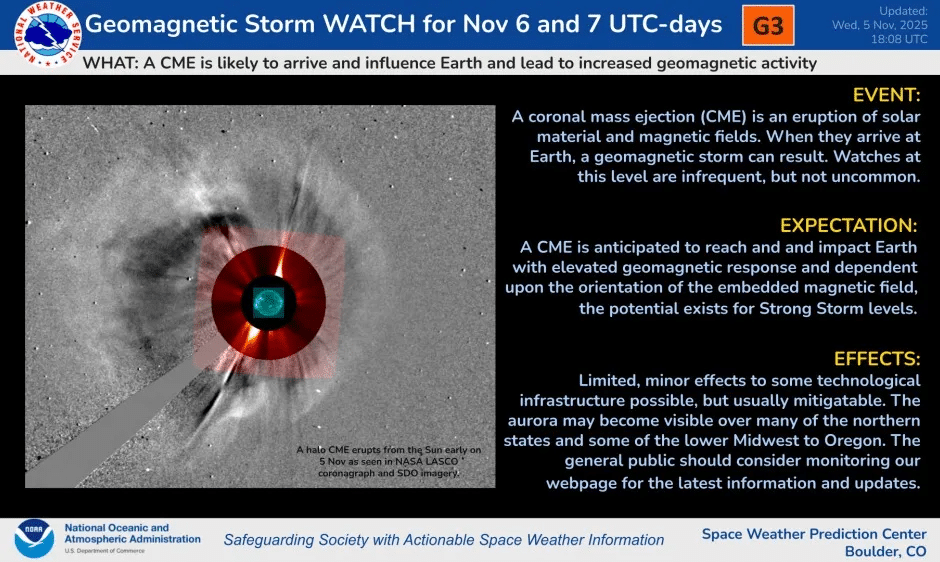
Understanding Geomagnetic Storms and Their Significance
Geomagnetic storms arise when solar-generated disturbances disrupt Earth's magnetic field. Primarily caused by CMEs—huge expulsions of charged particles from the Sun—these storms affect Earth’s magnetosphere when the particles collide with it. The intensity of geomagnetic storms varies from mild (G1) to extreme (G5), with moderate to strong storms (G3 and G4) often drawing attention. Intense geomagnetic activity can interfere with satellite communications, GPS signals, and power infrastructures, especially in higher latitudes where the magnetic field is more influential.
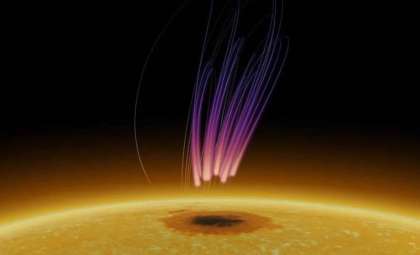
Despite their potential to disrupt technology, geomagnetic storms are responsible for the mesmerizing auroras. Charged solar particles interacting with Earth’s atmosphere produce dynamic light displays. During powerful storms, these auroras can be seen much farther away from the poles than usual.
Why the Northern Lights Are a Spectacular Natural Marvel
The Northern Lights, or aurora borealis, are among Earth’s most captivating natural wonders. Typically centered near the poles, these ethereal lights can expand their reach during potent geomagnetic storms, making them visible farther south. The ongoing solar activity is thrilling for enthusiasts and casual observers alike, as locations unaccustomed to auroras might soon observe them.
If you are in northern parts of the U.S., Canada, or northern Europe, now is an opportune time to watch the skies. Forecasts indicate a strong chance of auroral displays on November 6 and 7, 2025, as charged particles from recent solar flares interact with our planet’s magnetic environment. Predictions suggest as many as 14 U.S. states may witness these nighttime light shows this week.
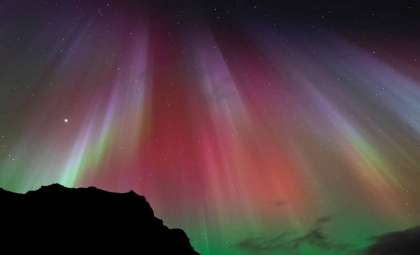
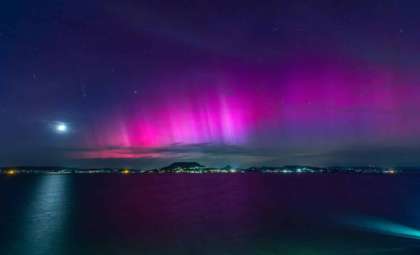
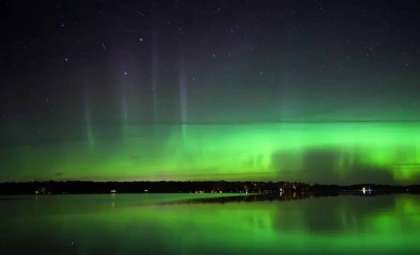
The vivid colors of the auroras are caused by solar particles colliding with atmospheric gases like oxygen and nitrogen. These collisions excite the gases, producing luminous hues that range from greens and reds to purples, depending on the gas type and altitude of interaction.
- Categories:
- Astronomy






0 comments
Sign in to Comment