
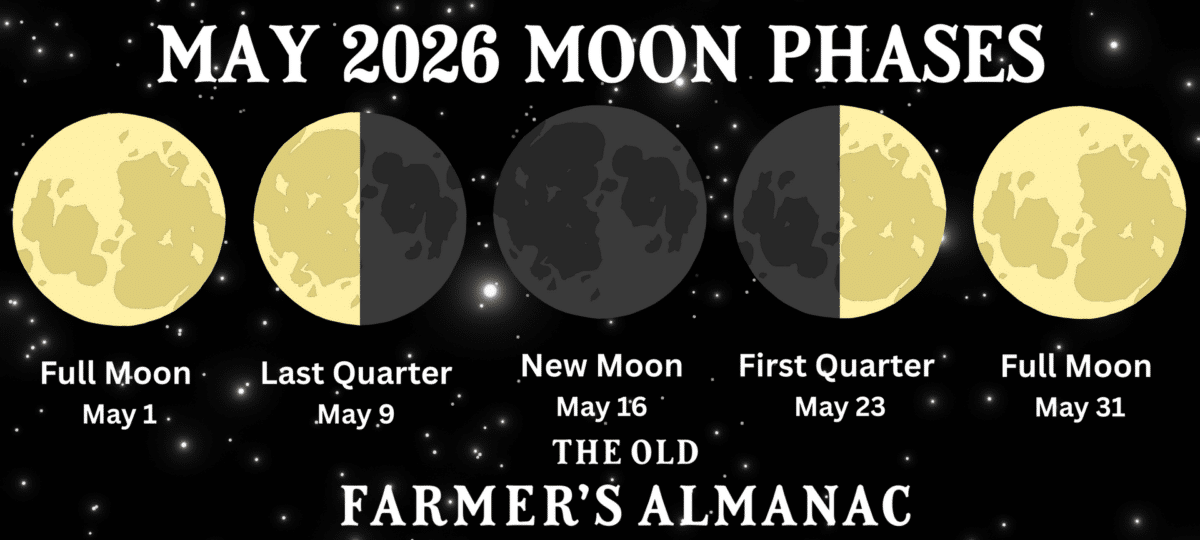
In May 2026, sky enthusiasts will be treated to a rare lunar event featuring two full moons in a single month, a phenomenon spotlighted by the Old Farmer’s Almanac. Such occurrences happen infrequently, revealing the intricate timing of the Moon’s orbit and offering a unique chance to experience a full lunar cycle bookended by two luminous phases.
Two Full Moons Mark the Month of May
The first full moon will appear on May 1, known traditionally as the flower moon. This name originates from North American seasonal observations, where spring wildflowers are in full bloom. The term has roots in the naming customs of Algonquin cultures, linking lunar cycles to natural and agricultural rhythms.
The month will close out with a second full moon on May 31, often called a blue moon. This term denotes the unusual event of having two full moons within one calendar month, unrelated to the moon’s color. This timing arises because the lunar cycle, lasting approximately 29.5 days, can occasionally fit two full moons into a single month.

As a result, May 2026 begins and concludes with bright full moons, creating an exceptional lunar pattern that intrigues casual viewers and astronomers alike.
The Story Behind the Blue Moon Term
The idea of a blue moon has transformed over the years and currently describes this kind of rare lunar timing. There are two main definitions: the event in May 2026 is a calendrical blue moon, happening when two full moons occur in one calendar month. The other, the seasonal blue moon, happens when a season includes four full moons rather than the usual three.
Per the Old Farmer’s Almanac, these patterns reappear every few years due to shifts between the lunar orbit and calendar months.
This dynamic between celestial mechanics and our calendar system regularly yields extraordinary yet foreseeable phenomena like the twin full moons slated for May 2026.
Why This Rare Lunar Event Deserves Your Attention
The occurrence of two full moons within a single month is a fascinating event that stands out due to its timing. Each full moon follows the Moon’s steady cycle, but when their timing aligns to fall twice in a month, it becomes a special occurrence noted throughout history.
For anyone interested in astronomy, May 2026 provides a perfect chance to see both full moons in one month, offering insight into the Moon’s ongoing cycle and how it aligns with our calendar.
These moments emphasize the reliable movement of celestial bodies while demonstrating that even predictable patterns can reveal surprising and noteworthy events when viewed through the calendar’s framework.
- Categories:
- News








0 comments
Sign in to Comment