
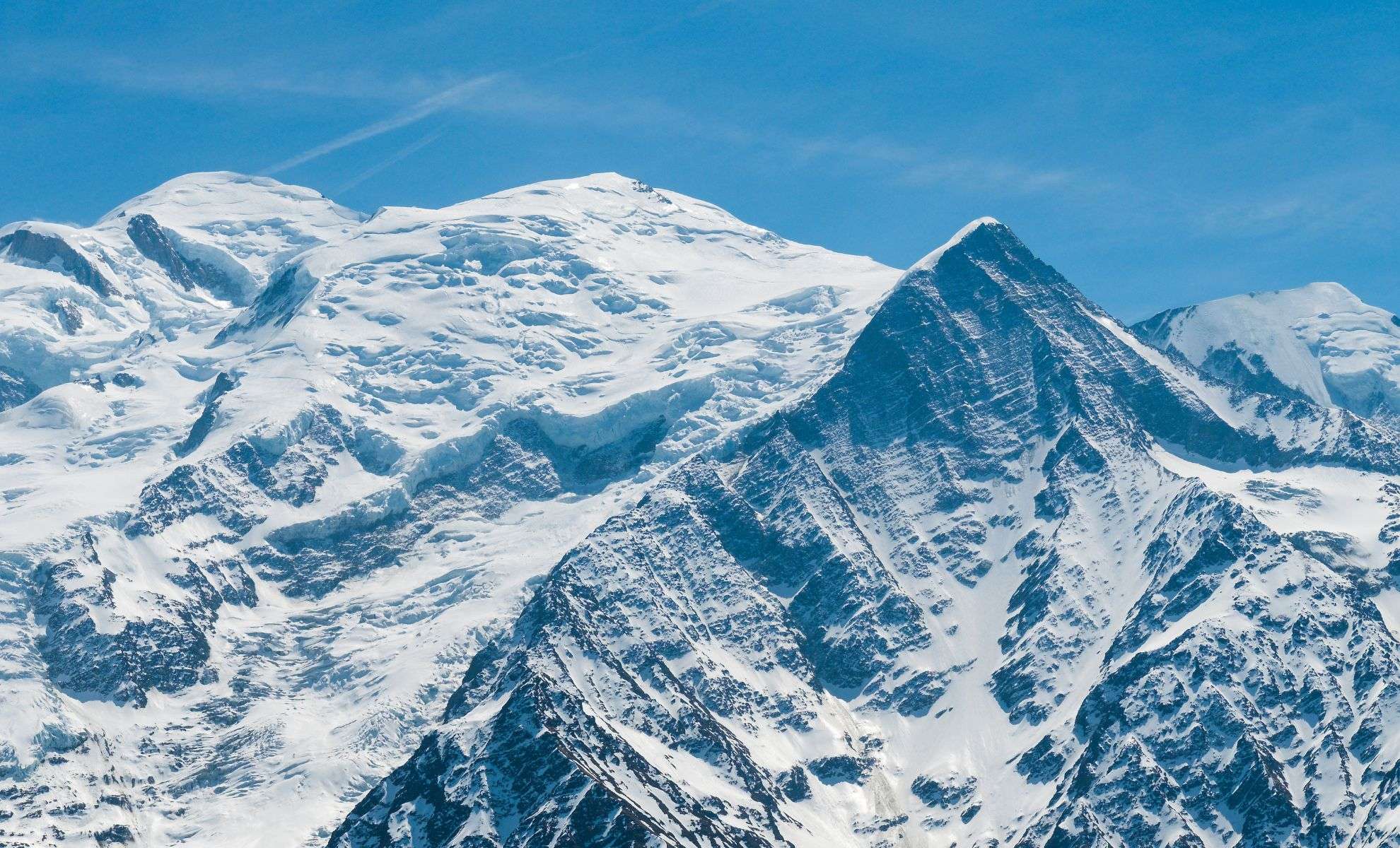
An exceptional ice core recovered from Mont Blanc offers an unbroken record of atmospheric and climate data stretching back more than 12,000 years, representing the oldest alpine glacier ice sampled in Western Europe.
A Glacial Archive from the Heart of the Alps
Extracted from the Dôme du Goûter glacier located on Mont Blanc’s slopes, the 40-meter core preserves layers of chemical markers, aerosol particles, and pollen grains. These embedded elements act as a historical archive of desert dust, volcanic emissions, wildfire remnants, and human impacts trapped in the atmosphere over thousands of years.
Scientists from the Desert Research Institute (DRI) alongside partners from France and Germany analyzed the ice core’s layer-by-layer record. Published in PNAS Nexus June 2025, their work confirms the glacier contains a complete atmospheric archive spanning from the Mesolithic era to modern times.

Europe’s Most Ancient Alpine Climate Record Revealed
Initially drilled during a 1999 expedition, the ice core was kept frozen in France for over two decades before researchers transferred it to DRI’s Ice Core Laboratory in Reno, Nevada. There, specialized continuous flow analysis techniques were employed to meticulously analyze each ice layer’s chemical profile.
Through radiocarbon dating methods, the team verified that the core’s deepest sections date back beyond 12,000 years, capturing climate data from the end of the last glacial period. This represents the earliest alpine ice core discovered in Europe, pushing the boundaries of known ice age records in mountainous regions.
“Discovering an alpine ice core from the European Alps with an unbroken climate history reaching from the end of the last ice age through our current warm period is truly remarkable,” commented Susanne Preunkert, coauthor and original field investigator.
Stark Local Differences in Ice Age Preservation
What makes this find even more striking is that an ice core taken fewer than 100 meters away at Col du Dome contains ice only about 100 years old, despite being extracted deeper. Researchers suggest strong wind patterns around Mont Blanc influence ice preservation by favoring accumulation in some spots while causing erosion in others.
Although climate warming occurred during the 20th century, the glacier’s high elevation—exceeding 14,000 feet—helped retain cold conditions, preventing significant ice melt. “We were encouraged to find the glacier remained largely preserved despite unusually warm recent conditions,” said study coauthor Nathan Chellman.
New Insights Into Historical Climate Trends
The investigation also monitored phosphorus levels, which stayed low during the Ice Age, increased during the early to mid-Holocene alongside forest expansion, and then decreased in the late Holocene as agriculture and land clearing intensified.
The sea salt dataset indicated stronger westerly winds during glacial times, inferred from greater sea salt deposits, highlighting aerosol impacts on clouds and Earth’s radiation balance.
Moreover, dust levels were as much as eight times higher during the Ice Age compared to the Holocene, likely reflecting increased Saharan dust transport. “This ice core captures a comprehensive record of natural and human-driven environmental change right at Europe’s center, a cradle of Western civilization,” stated Joe McConnell, director of DRI’s Ice Core Lab and study coauthor.
- Categories:
- News








0 comments
Sign in to Comment