
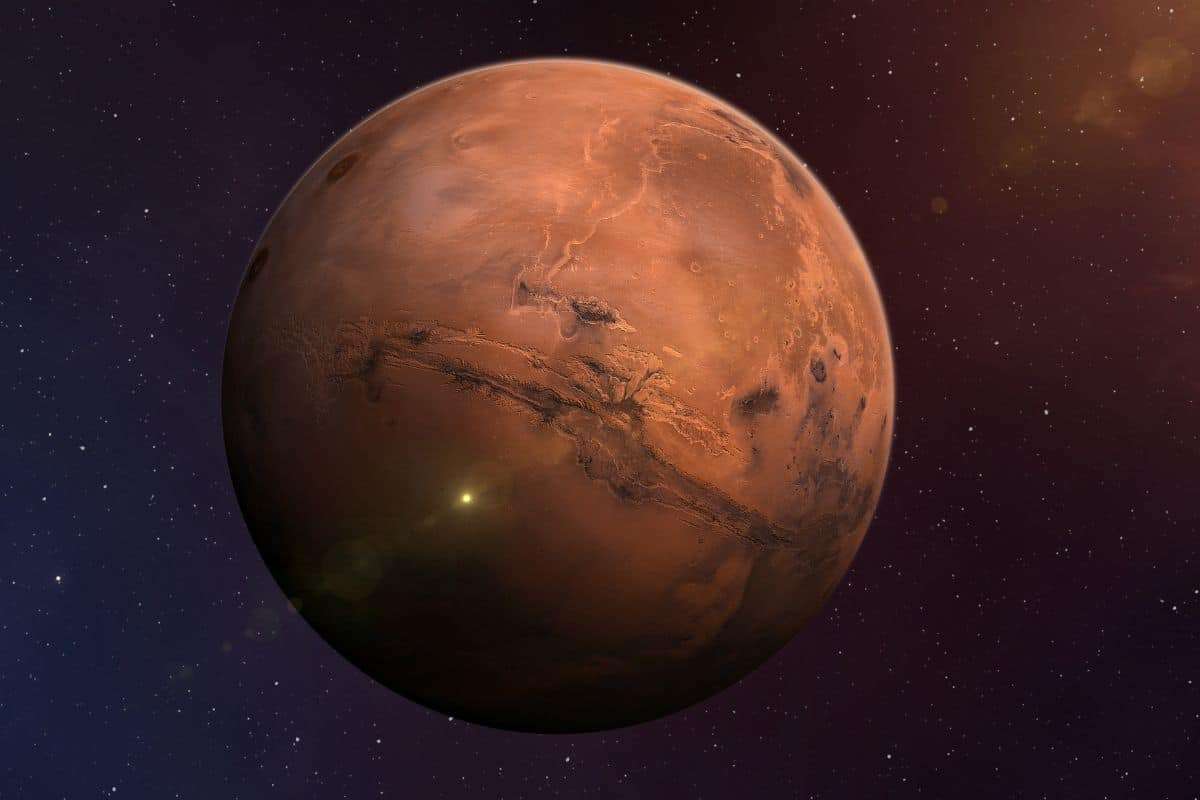
NASA’s Perseverance rover has employed an inventive method on Mars—compressing a rock—to unlock hidden geological clues. This novel strategy has uncovered important information about serpentine minerals, hinting at Mars’ watery past and its potential to have supported life.
Unearthing Hidden Details Beneath Mars’ Surface
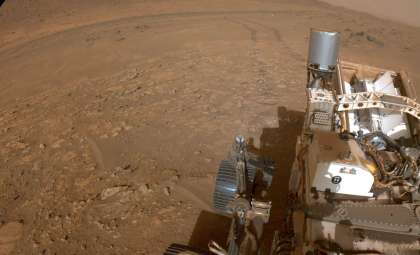
The latest achievement from Perseverance comes courtesy of its SHERLOC instrument, an advanced device designed to study minerals and seek out organic materials on the Martian surface. Gathering such data has long been complicated due to Mars’ intense ultraviolet rays and oxidizing environment, which degrade exposed materials over time.
Scientists typically target fresh rock layers for analysis, but accessing these is often difficult. While the rover usually drills or scrapes rocks to reach untouched interiors, this time the team opted for a fresh tactic—physically pressing the fragmented rock to create a smoothed surface for examination.

Innovating with Rock Compression
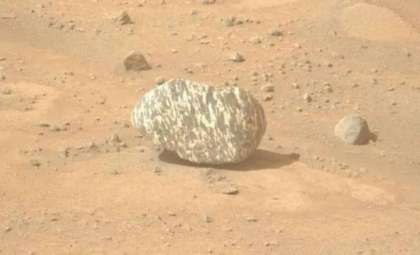
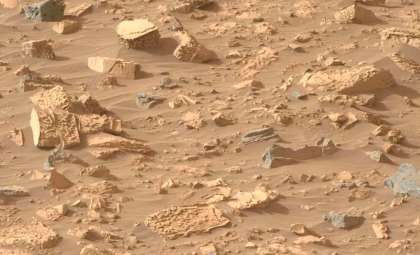
Following a drilling session on a rock dubbed Green Gardens, noted for its high serpentine levels—a mineral commonly associated with water-rock reactions—a mound of loose rock bits was created, unsuitable for SHERLOC’s fine analysis.
To address this, NASA engineers innovatively used the rover’s contact sensor, usually employed to sense drilling touchpoints, to press down and compact the tailings, forming a stable, flat surface ideal for SHERLOC’s detailed scans.
The Significance of Serpentine on Mars
Serpentine forms through chemical interactions between water and ultramafic rocks rich in iron and magnesium. On Earth, these reactions emit hydrogen gas, which can sustain microbial ecosystems—raising the prospect that similar processes on Mars could have supported life.
SHERLOC’s spectral analysis of the Green Gardens tailings confirmed serpentine presence, signaling past water activity. This discovery suggests Mars may have once hosted favorable chemical conditions for life.
Expanding the Capabilities of Perseverance’s Instruments
This approach demonstrates NASA’s flexibility in maximizing the rover’s scientific capabilities. Although the contact sensor wasn’t designed for surface alteration, it proved crucial in enhancing SHERLOC’s ability to perform precise mineral analysis.
These creative adaptations continually provide new avenues for exploration, showcasing how engineering ingenuity fuels extraterrestrial scientific advancements.
Future Plans for Perseverance
Building on this success, Perseverance is advancing westward toward the region known as Witch Hazel Hill. There, it will investigate older geological strata that might offer additional proof of water’s role on Mars and further clarify the planet’s habitability history.
This case illustrates how inventive problem-solving can unlock key scientific revelations. By continuing to evolve its methods, the Perseverance mission highlights how even modest actions, like compacting rock fragments, can yield profound insights into Mars’ past.
- Categories:
- News







0 comments
Sign in to Comment