
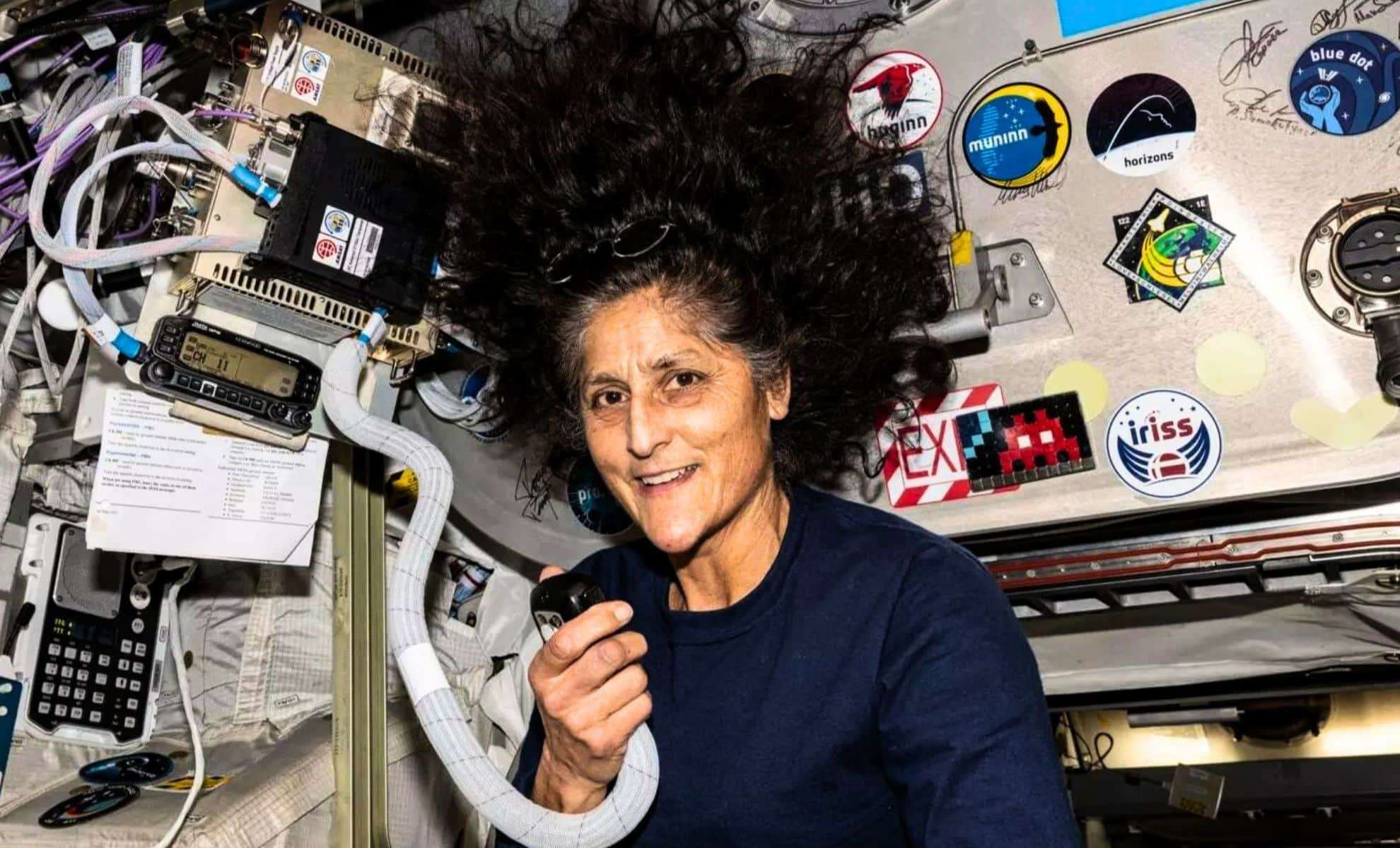
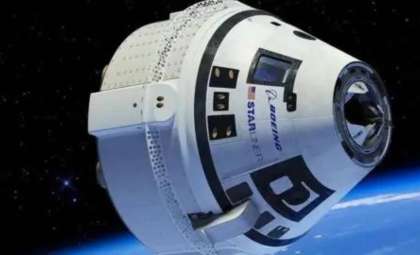
In June 2024, astronauts Sunita “Suni” Williams and Barry “Butch” Wilmore took off aboard Boeing’s Starliner with plans for a brief eight-day mission to the International Space Station (ISS). However, unforeseen technical glitches turned their brief trip into an extended ordeal, keeping them in orbit far longer than anticipated.
Repeated setbacks in the Starliner’s system have postponed their journey back to Earth. After spending more than seven months aboard the ISS, the astronauts are now projected to return next month, though the prolonged time in space has already left a noticeable impact on their physical well-being.
Suni Williams Opens Up About Mobility Challenges After Prolonged Weightlessness
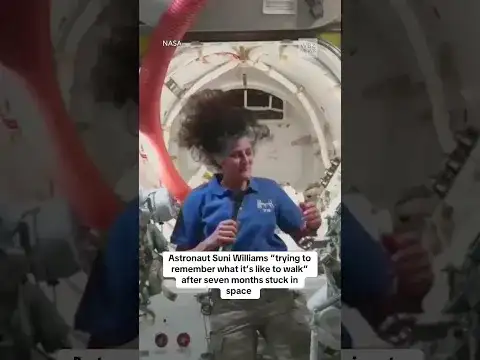
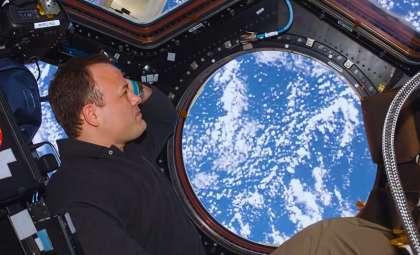
Weightlessness in space drastically affects the human body’s muscle and bone structure, a reality Williams has felt deeply. During a live video discussion with students from Needham High School in Massachusetts, the 59-year-old astronaut revealed a startling personal struggle:

“I’ve been up here long enough, right now I’ve been trying to remember what it’s like to walk. I haven’t walked. I haven’t sat down. I haven’t laid down.”
This admission underscores a major hurdle faced by astronauts after extended missions: the deterioration of muscles and bones due to the absence of gravity. The lack of natural resistance causes significant weakening of the lower back and leg muscles, complicating routine movements such as walking and standing after re-entry.
Even ordinarily simple tasks like sitting in a chair will feel unfamiliar to Williams once she returns to Earth's surface.
Extended Space Missions Reveal Hidden Health Risks
The unplanned lengthening of Williams and Wilmore’s journey has raised alarms about their physical condition, particularly after images showed them appearing noticeably thinner.
Medical expert Dr. Vinay Gupta noted that Williams’ hollowed cheeks indicate a serious caloric deficiency and overall weight loss. Although the ISS maintains a constant food supply, eating in microgravity presents challenges, including:
- Decreased appetite interfering with adequate calorie intake.
- Limited food variety due to storage constraints, with few fresh options.
- Elevated energy needs as the body expends extra effort to function without gravity.
These factors contribute to a decline in muscle mass, fatigue, and general health deterioration—challenges the astronauts will need to overcome after their return.
NASA’s Measures for Astronaut Health Maintenance
NASA has emphasized that Williams and Wilmore are under constant medical observation. The agency regularly assesses their muscle and bone integrity, cardiovascular condition, and immune system function while onboard.
Despite their lengthy stay, the astronauts recently completed a joint spacewalk to fix a malfunctioning antenna and gather samples for microbial study. This demanding activity demonstrated their physical endurance and proficiency despite the extended mission duration.
Getting Ready for a Long-Awaited Homecoming
NASA is currently partnering with SpaceX to organize a secure return for the two astronauts. On January 29, the agency posted that it is working diligently to ensure their safe descent while preparing for the imminent Crew-10 ISS mission.
After landing, both Williams and Wilmore will begin a thorough rehabilitation program, which will include:
- Physical therapy to restore walking and standing abilities
- Strength training to mitigate bone and muscle degeneration
- Continuous monitoring of cardiovascular and neural function
For Williams, reacclimating to Earth’s gravity will involve relearning fundamental movements such as balancing and sensing body weight.
Although frustratingly delayed, this prolonged mission has yielded critical insights into how human physiology adapts to extended space exposure—vital knowledge for future journeys to destinations like Mars.
Meanwhile, Williams and Wilmore continue their work aboard the ISS, eagerly anticipating the moment they can set foot on Earth again. For Williams, however, that first step may be the most difficult one yet.
- Categories:
- Space







0 comments
Sign in to Comment