
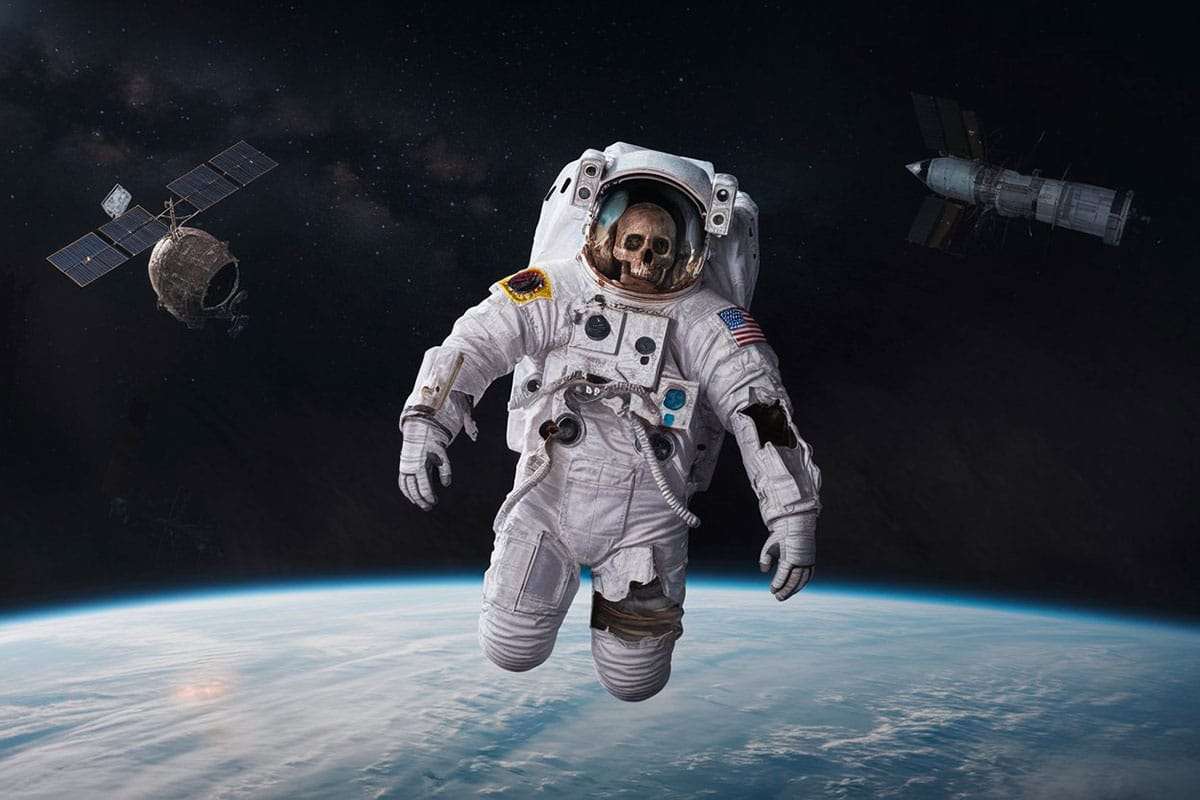
The environment of space differs drastically from Earth's, profoundly impacting how decomposition takes place. With no oxygen present and temperatures swinging wildly, the usual decay process is disrupted. In the vast vacuum of space, decay as we know it on Earth cannot occur naturally.
Several key elements influence decomposition beyond our planet:
- Absence of atmospheric pressure
- Severe thermal variations
- Lack of oxygen
- Constant exposure to cosmic radiation
Under these conditions, biological materials behave in ways unlike those on Earth, causing decay to slow dramatically and potentially preserving remains for lengthy durations.

Interestingly, cosmic radiation’s effect on human tissues resembles certain aspects theorized for what might happen if someone were to fall into a black hole, though on a much gentler scale. Both situations involve intense environmental forces acting on organic matter in complex, still poorly understood ways.
Role of microbes in the vacuum of space
On our planet, decomposition heavily relies on bacterial action. But the harsh conditions of space seriously hinder microbial survival. The absence of oxygen means many bacteria are unable to thrive, greatly slowing down decomposition.
Dr. Jack Gabel, an associate physics professor at Creighton University, notes: “Bacteria typically need oxygen to decompose material, although some can operate anaerobically. However, in space, oxygen scarcity often prevents this process.”
Regarding human remains in space, the body's internal bacteria might start degrading tissue to some extent, but this would be exceptionally slow due to the dryness and oxygen deficiency in space.
How space location influences decomposition
The specific area within space plays a significant role in how decomposition unfolds. Materials orbiting in low Earth orbit undergo different effects compared to those in deep space, leading to varied rates and characteristics of breakdown.
In low Earth orbit, objects encounter minor atmospheric drag, which gradually wears them down, though at a much slower pace than on Earth. Traveling at about 18,000 mph, these items collide with sparse air molecules, resulting in a slow degradation process.
Farther afield in deep space, the absence of such particles means even longer preservation times. In these regions, the main factors affecting disintegration include:
- Intensity of solar radiation
- Influence of solar wind particles
- Impacts from micrometeorites
These elements slowly erode materials over millennia, with effects diminishing the farther an object drifts from the sun, extending its lifespan.
Space exploration and the challenge of managing remains and debris
Gaining insight into how decomposition occurs in space is vital for both ongoing extraterrestrial exploration and handling the growing problem of space debris. Currently, thousands of defunct satellites and tens of thousands of space fragments orbit the planet, and their slow decay creates a mounting hazard.
As humanity ventures further into space, the possibility of fatalities beyond Earth rises, provoking important discussions about the treatment of human remains in orbit. With bodies potentially preserved for extended periods, ethical and logistical considerations become increasingly relevant for future missions.
Additionally, the persistence of space debris poses a significant risk to spacecraft and operational satellites. Longer-lasting materials increase collision potential, jeopardizing missions and highlighting the urgent need for sustainable space stewardship and innovative debris reduction technologies.
Ultimately, the ways organic and inorganic matter break down in the cosmos present extraordinary phenomena and challenges. Understanding these processes is essential to protect and sustain humanity’s efforts as we continue to explore the final frontier.
- Categories:
- Space




0 comments
Sign in to Comment