
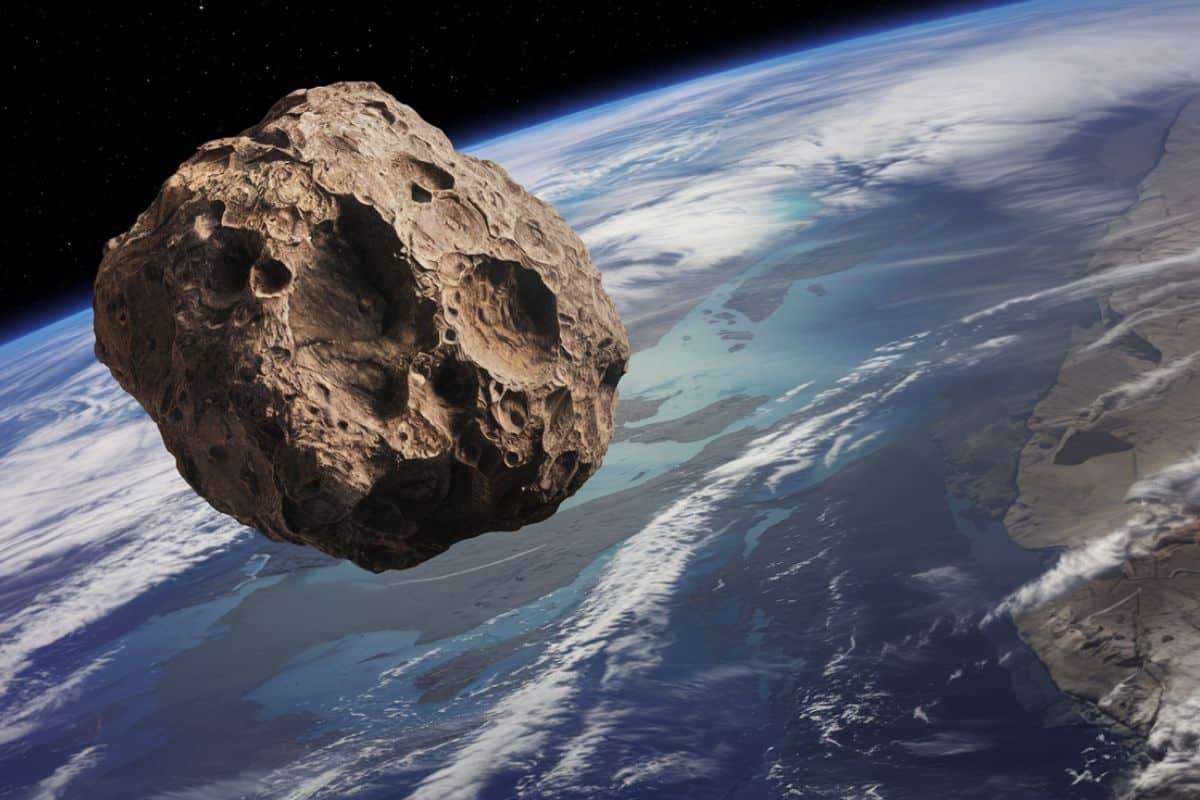
Scientists at NASA are closely observing a recently identified asteroid, 2024 YR4, due to its estimated 1.2% probability of striking Earth on December 22, 2032. This object could unleash energy comparable to 500 Hiroshima bombs if an impact occurs. While it poses no extinction-level danger, the potential devastation to a large urban area raises significant planetary defense concerns.
A Powerful Cosmic Warning
Detected on December 27, 2024, by NASA's Asteroid Terrestrial-impact Last Alert System (ATLAS), 2024 YR4 is approximately 55 meters (180 feet) in diameter. Its size is insufficient to threaten global survival but is large enough to cause extensive regional harm, as the impact could release about 8 megatons of explosive energy, capable of destroying an entire city.
NASA tracks many near-Earth objects (NEOs), but 2024 YR4 stands out because of its relatively elevated impact likelihood. The 1-in-83 chance (or 1.2%) is substantial in the context of asteroid impact probabilities.
To put it into perspective, winning the Powerball jackpot has odds of 1 in 292 million, making an impact by 2024 YR4 millions of times more probable than hitting the lottery.

December 2032: A Critical Moment
The asteroid’s most significant close pass is projected for December 22, 2032. According to the asteroid’s trajectory data, NASA’s Torino Impact Hazard Scale assesses threat levels from 0 (no hazard) to 10 (certain disaster). Currently, 2024 YR4 is rated Level 3, indicating the need for continued surveillance but no immediate emergency response.
It is important to note that asteroid impact risk evaluations often evolve. As astronomers collect additional observations, the calculated risk frequently diminishes with more accurate orbital determinations.
Potential Consequences of Impact
If 2024 YR4 were to strike Earth, the effects would vary depending on location. An ocean impact could generate enormous tsunamis, wreaking havoc on coastlines. A land collision would destroy everything within multiple miles, creating a crater and igniting widespread fires.
The event shares similarities with the 1908 Tunguska incident, when an asteroid or comet roughly the same size exploded over Siberia.
That explosion flattened about 2,000 square kilometers (770 square miles) of forest, roughly the size of a large city. Thankfully, the remote impact zone prevented casualties, but an event over a populated area today would have catastrophic consequences.
Advancing Planetary Defense Efforts
The discovery of 2024 YR4 underscores the critical need for asteroid deflection capabilities. Worldwide space agencies are developing methods to address potential asteroid threats. NASA’s 2022 Double Asteroid Redirection Test (DART) demonstrated that altering an asteroid’s orbit is achievable with sufficient lead time.
If the risk posed by 2024 YR4 remains significant, NASA and partners may explore intervention tactics including:
- Kinetic impactors — spacecraft collisions designed to nudge the asteroid off course;
- Gravity tractors — spacecraft using gravitational attraction to gradually adjust trajectory;
- Nuclear deflection — deploying nuclear devices as a last measure to shift the asteroid’s path.
Assessing the Level of Concern
Despite alarming headlines, experts advise against panic. 2024 YR4 will be monitored carefully over the next several years, and ongoing observations will provide clearer risk assessments.
Many asteroids initially seen as threats eventually have their odds of impact lowered thanks to improved orbit data. The appearance of 2024 YR4 is a timely reminder that Earth remains susceptible to asteroid strikes and highlights the necessity of vigilance and preparedness.
Space agencies will keep tracking the asteroid’s movement to ensure that any needed response happens with adequate warning. Meanwhile, scientists remain alert, ready to update strategies as new data emerges.
- Categories:
- Space









0 comments
Sign in to Comment