

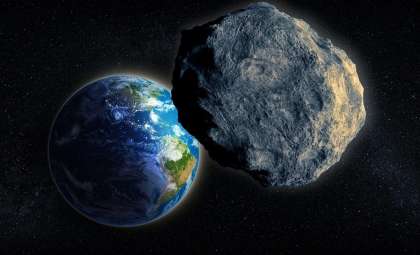
Today, May 2, 2025, NASA is closely observing an asteroid roughly the size of a house hurtling toward Earth at a striking speed of 42,300 miles per hour. Known as 2025 HJ5, this space rock measures between 49 and 111 feet across and will pass within about 477,000 miles of our planet. This approach, highlighted by NASA’s Jet Propulsion Laboratory (JPL), underscores the growing vigilance in monitoring near-Earth objects (NEOs) due to their potential risks.
Though 2025 HJ5 poses no immediate threat to Earth, its size and distance emphasize the critical need for continuous surveillance of asteroids. The closest approach is expected today, and the asteroid will safely bypass Earth. This event allows researchers to enhance detection techniques and improve predictions for encounters with similar objects in the future.
Details of 2025 HJ5’s Flyby
The asteroid will travel within approximately 477,000 miles from Earth—nearly twice the distance separating Earth from the Moon. While this might sound vast, it’s relatively close compared to many other objects that skirt Earth's orbit. Tracking efforts by NASA’s JPL will help sharpen classification methods and risk assessments for future NEOs.

Although there is no collision risk this time, this event serves as a timely reminder of the many near-Earth objects that regularly pass near our planet. Recent years have seen NASA improve its precision in locating these objects, a crucial step given that some asteroids have the capacity to cause significant damage if an impact were to occur, despite the chances remaining slim.
Additional Asteroid Watchlist Objects
2025 HJ5 is just one of several asteroids under NASA’s scrutiny. Others, such as 2024 BF and 2025 GT1, are slated for close passes later this week. These asteroids, ranging from 110 to 140 feet in diameter, will fly by at distances between 2.2 and 2.6 million miles. Even though the likelihood of these impacting Earth is negligible, monitoring them offers scientists crucial insights into their behavior and helps advance asteroid tracking technologies.
One asteroid, 2024 YR4, initially had a calculated impact risk, which was later reduced to a mere 0.004 percent after further observations. This iterative process of continuous monitoring and updating risk assessments is vital for maintaining Earth's planetary defense readiness.
Why Monitoring Near-Earth Objects Matters
Asteroids like 2025 HM4 offer important clues about the origins of our solar system and the processes that shaped planetary formation. As space exploration evolves, including ambitions to collect samples and potentially mine asteroids, these celestial bodies become scientifically valuable. Understanding their composition could unlock secrets of early planetary development and provide essential resources, all while highlighting the importance of managing the hazards they might present.
NASA, alongside international space organizations, maintains vigilant observation to detect any potential threats well before they could pose a danger. Although the probability of an asteroid impact is low, continuing progress in observation tools and asteroid mitigation strategies is crucial to safeguarding Earth’s future.
- Categories:
- News








0 comments
Sign in to Comment