
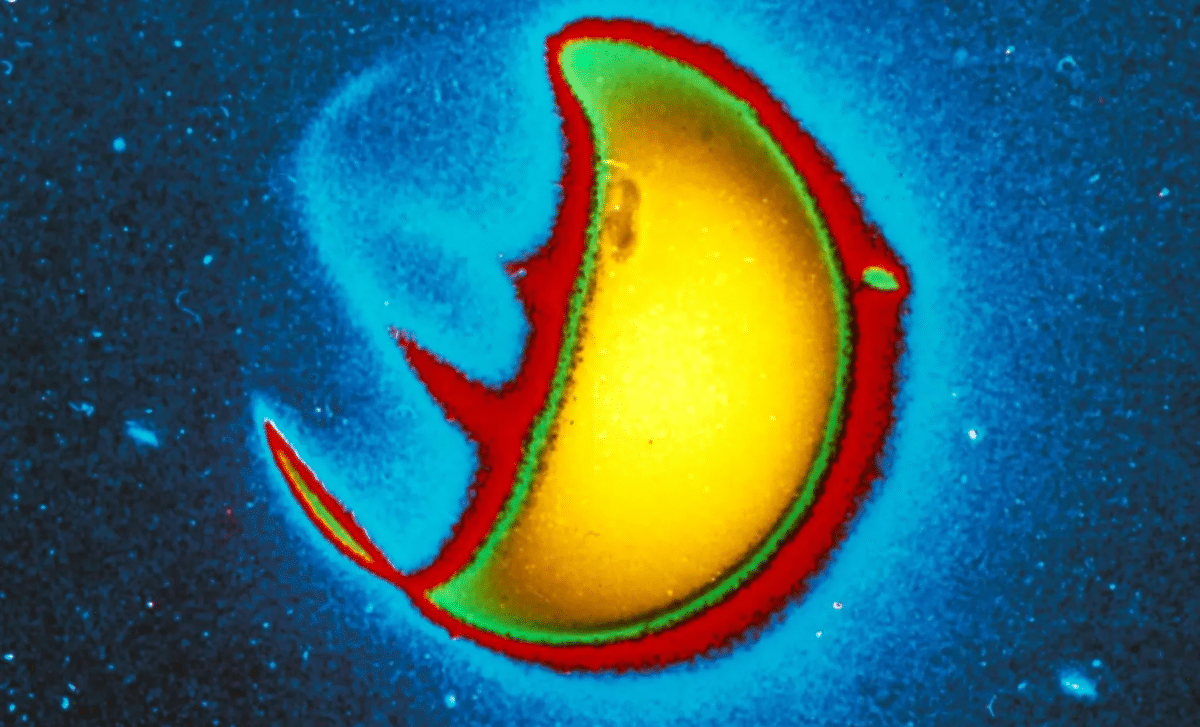
NASA’s Carruthers Geocorona Observatory represents a pioneering effort to explore Earth’s outermost atmospheric envelope, known as the exosphere. This mission will deliver unprecedented imaging of this nearly invisible layer, enhancing our understanding of how solar and space weather phenomena affect our planet.
Exploring Earth’s Outermost Layer: The Exosphere and the Carruthers Initiative
The exosphere is Earth’s tenuous outer atmospheric boundary, difficult to study due to its faint nature. Launched in 2025, NASA’s Carruthers Geocorona Observatory will offer continuous, detailed observations of this elusive domain, tracking its behavior and how it responds to solar influences. By imaging the exosphere’s full extent, the mission aims to provide vital information that could improve space weather predictions and deepen our knowledge of planetary atmospheres and their evolution. This endeavor holds promise for shielding astronauts on deep-space missions and clarifying why Earth’s atmosphere endures while others dissipate.
Understanding Earth’s Atmospheric Fringe: What Constitutes the Exosphere?
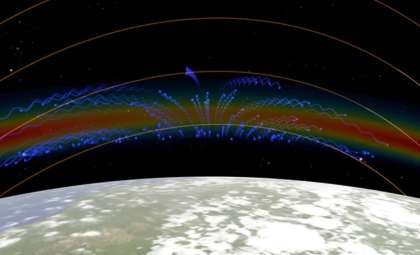
Beginning roughly 300 miles above Earth’s surface, the exosphere consists mainly of sparse hydrogen and helium atoms. Its particles are so diffuse that conventional detection is nearly impossible. Scientists have previously studied its subtle ultraviolet glow, termed the geocorona, as the only observable signature. Until now, no mission has focused solely on capturing high-resolution, continuous data of this region. Carruthers fills this observational void by delivering comprehensive images that allow examination of the exosphere’s form, makeup, and solar-driven changes like never before.

Tracing Back: Apollo 16’s Early Vision of Earth’s Gaseous Halo
While the Carruthers mission breaks new ground, its legacy stretches back decades. The geocorona was first imaged during the Apollo 16 mission in 1972. Dr. George Carruthers, the visionary scientist behind the current observatory, created a specialized ultraviolet camera that captured these inaugural lunar-based images of Earth’s hydrogen halo.
“The camera wasn’t far enough away, being at the Moon, to get the entire field of view,” said Lara Waldrop, principal investigator for the mission. “And that was really shocking that this light, fluffy cloud of hydrogen around the Earth could extend that far from the surface.”
These initial glimpses ignited curiosity about Earth’s uppermost atmosphere, but only the Carruthers mission now enables comprehensive analysis of this atmospheric phenomenon.
The Carruthers Observatory: Revolutionizing Exospheric Imaging
Launched in September 2025, NASA’s Carruthers Geocorona Observatory boasts state-of-the-art ultraviolet cameras designed for detailed exosphere observation. Unlike the narrower images from the Apollo 16 mission, Carruthers will monitor the whole exosphere from Lagrange Point 1 (L1), approximately one million miles from Earth. Equipped with both near-field and wide-field ultraviolet imagers, the spacecraft provides close and panoramic views of the exosphere. “We’ve never had a mission before that was dedicated to making exospheric observations,” explained Alex Glocer, the mission’s lead scientist. “It’s really exciting that we’re going to get these measurements for the first time.” This mission promises to transform our grasp of the exosphere’s influence on space weather and atmospheric loss.
Why Exosphere Studies Matter for Space Weather and Protection
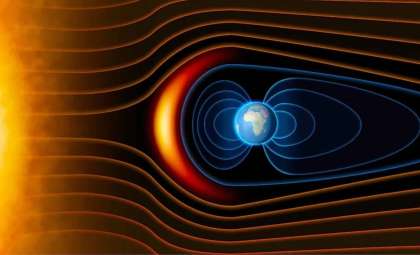
Grasping the exosphere’s dynamics extends beyond curiosity; it is crucial for space weather forecasting and planetary safety. Acting as Earth’s first shield against solar events—like flares and coronal mass ejections—the exosphere interacts with incoming charged particles before they reach denser atmospheric layers. Carruthers will gather fresh information about how these solar disturbances affect Earth’s atmosphere and space operations, helping protect satellites, spacecraft, and astronauts venturing outside Earth’s magnetic shield. Enhanced forecasting capabilities will be critical for future manned missions to the Moon, Mars, and beyond.
Hydrogen Escape and Earth's Water: Insights from the Exosphere
The exosphere plays a vital role in understanding atmospheric gas loss, particularly hydrogen, an essential element of water. Earth’s ability to maintain its water supply contrasts sharply with planets like Venus and Mars, which have lost much of theirs. By studying hydrogen particles as they escape via the exosphere, the Carruthers mission aims to unravel how Earth’s water has endured over time. “Understanding how that works at Earth will greatly inform our understanding of exoplanets and how quickly their atmospheres can escape,” said Waldrop. These findings could prove pivotal in assessing exoplanet habitability throughout the galaxy.
Voyage to Lagrange Point 1: A Unique Vantage for Atmospheric Observations
Following deployment, the Carruthers spacecraft will journey to Lagrange Point 1 (L1), a stable position roughly one million miles from Earth. This vantage point provides uninterrupted views of both Earth and the Sun, enabling comprehensive monitoring of the exosphere’s most distant reaches. From L1, the observatory will track hydrogen atoms escaping into space, offering key insights into atmospheric loss processes. This knowledge also has immense relevance for understanding the atmospheres of planets beyond our solar system.
- Categories:
- Nasa






0 comments
Sign in to Comment