
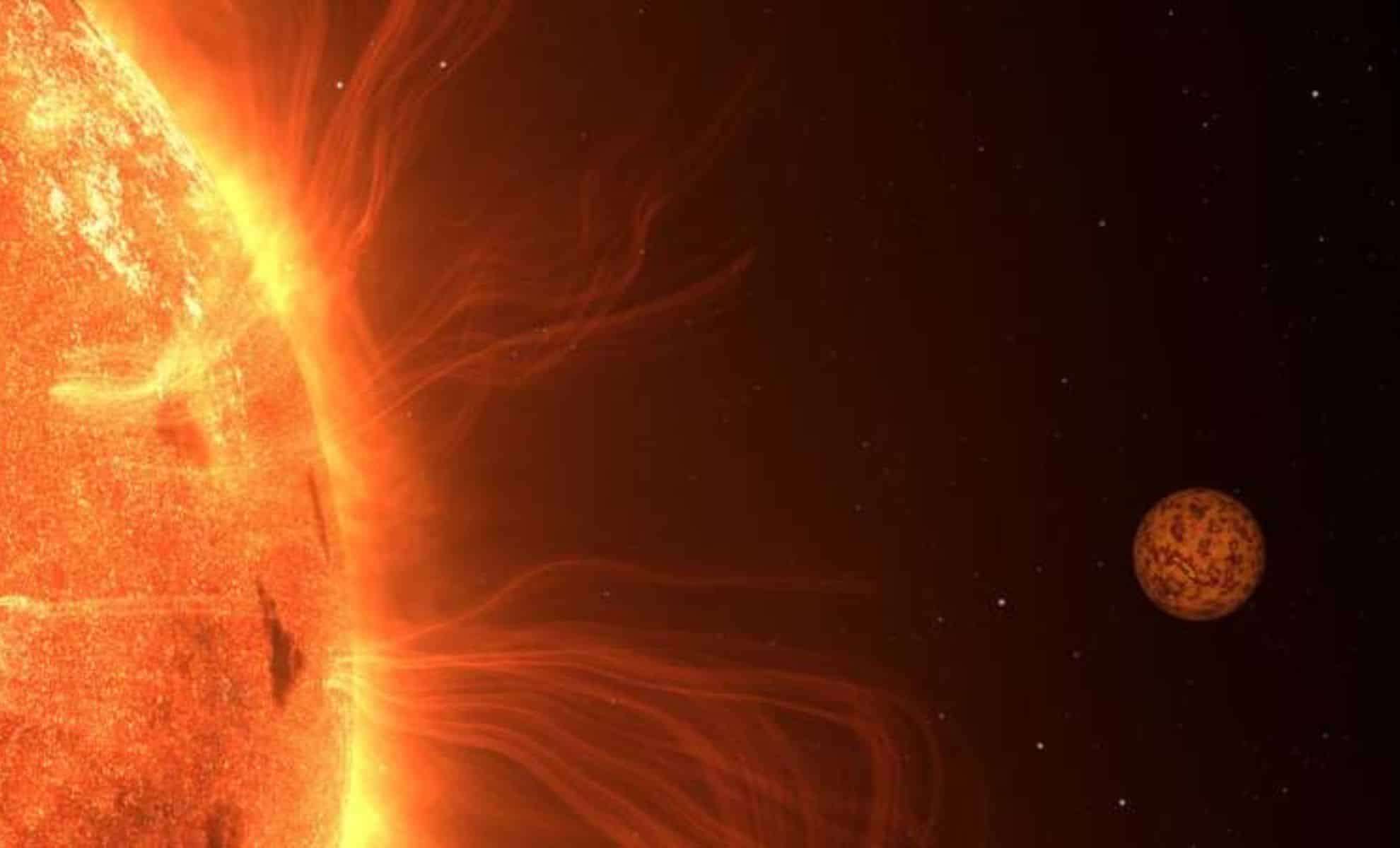
Scientists are excited by surprising new data on the intriguing exoplanet TRAPPIST-1b, a world orbiting a red dwarf star approximately 40 light-years away. Previously assumed to be a dry, airless rocky planet, fresh insights from the James Webb Space Telescope (JWST) indicate the presence of either a dense carbon dioxide atmosphere or active volcanic processes resurfacing the planet. This breakthrough showcases advanced astronomical technology’s role in deepening our knowledge of planets beyond our solar system. TRAPPIST-1b offers researchers a unique chance to investigate the formation and evolution of rocky planets in red dwarf systems.
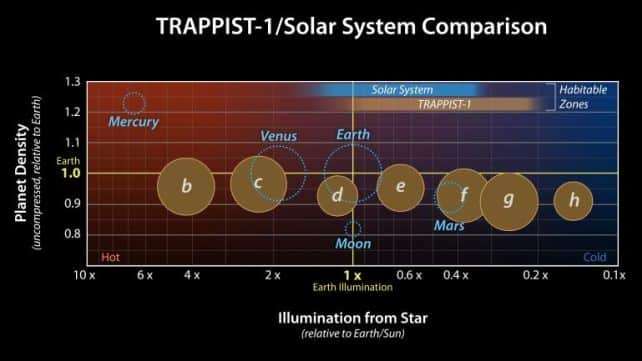
The TRAPPIST-1 star system, home to seven Earth-sized planets discovered in 2017, continues to captivate astronomers. Although some planets within this system exist in the habitable zone, TRAPPIST-1b is situated so close to its star that intense radiation precludes Earth-like life. Nevertheless, its close orbit makes it ideal for studying atmospheric and geological features of rocky exoplanets. Utilizing JWST’s infrared instruments, scientists have measured heat patterns and surface details, suggesting two main explanations: either a volcanic surface constantly renewed by internal activity or a thick carbon dioxide atmosphere with unfamiliar characteristics.
JWST’s Advanced Infrared Data Transforms Atmospheric Research
JWST has revolutionized the investigation of rocky exoplanets by capturing infrared emissions emitted by TRAPPIST-1b as it circles its star. Mapping temperature changes across its surface enables researchers to infer the presence or absence of an atmosphere. Without gaseous layers, the side facing the star would become extremely hot while the opposite side stays freezing, whereas an atmosphere would distribute heat more evenly.

“Emission measurements quickly became the preferred method for analyzing rocky planets around red dwarfs during JWST’s initial two years,” explains Pierre Lagage, co-lead of the study and head of astrophysics at the Commissariat aux Énergies Atomiques (CEA) in Paris. “On TRAPPIST-1, emission data provides initial clues because separating the atmospheric signal from stellar noise during transit is still challenging.” This novel technique has already delivered important revelations, giving scientists a clearer understanding of TRAPPIST-1b’s environment.
Early measurements characterized the planet as a dull, lifeless rock. Yet, new data collected at diverse wavelengths complicates this view. Carbon dioxide in the atmosphere combined with haze that causes temperature inversion could clarify why heat readings differ across the planet. Such thermal inversions, where temperatures rise with altitude, are common on certain solar system bodies like Saturn’s moon Titan. “Thermal inversions appear frequently in Solar System atmospheres, with Titan’s hazy environment as a close analog,” says Dr. Michiel Min from the SRON Netherlands Institute for Space Research. “However, TRAPPIST-1b’s atmospheric chemistry is expected to be unlike Titan’s or any rocky planet we know, presenting a potentially never-before-seen atmospheric type.”
Geological Activity or Atmospheric Phenomenon? The Ongoing Investigation
An alternative interpretation from JWST data is that TRAPPIST-1b hosts active volcanism, with magma continually rejuvenating its crust. Strong tidal forces from its star and neighboring planets could generate internal heating sufficient to keep the interior molten, fueling volcanic emissions. The detection of young volcanic surfaces supports this idea, contrasting with the weathered terrains expected if the planet were geologically inactive.
Interestingly, temperature patterns observed on TRAPPIST-1b fit both possibilities: either a dense carbon dioxide atmosphere or a volcanically refreshed airless surface. Decisive conclusions await further examination of the planet’s phase curve, which charts temperature changes as it orbits.
“While both options remain plausible, new phase curve data from TRAPPIST-1b will be critical to unraveling its mysteries,” states Professor Michaël Gillon, co-director of the JWST program alongside Dr. Elsa Ducrot. She adds, “Assessing how effectively heat is spread on the planet enables us to infer atmosphere presence; an atmosphere redistributes heat beyond the day side, while without one, extreme temperature differences remain.”
Broader Impact on Exoplanet Research and Habitability Studies
The TRAPPIST-1 system offers an unparalleled opportunity to explore the diversity of rocky exoplanets. For researchers, TRAPPIST-1b represents a critical case study in understanding atmospheric dynamics on temperate planets orbiting red dwarfs. “Rocky planets around red dwarfs represent our best chance to directly study atmospheres of worlds receiving moderate stellar energy, comparable to planets between Mercury and Mars in our solar system,” notes Dr. Elsa Ducrot, astronomer at CEA. “TRAPPIST-1’s planets form an ideal natural setting for these transformative investigations.”
Ongoing and future JWST observations combined with next-generation telescopes may soon reveal definitive details about TRAPPIST-1b’s atmosphere, geology, and habitability prospects. These insights will significantly enhance our understanding of this intriguing world and broaden the overall quest to find life beyond Earth.
- Categories:
- Astronomy ,
- News ,
- Nasa






0 comments
Sign in to Comment