
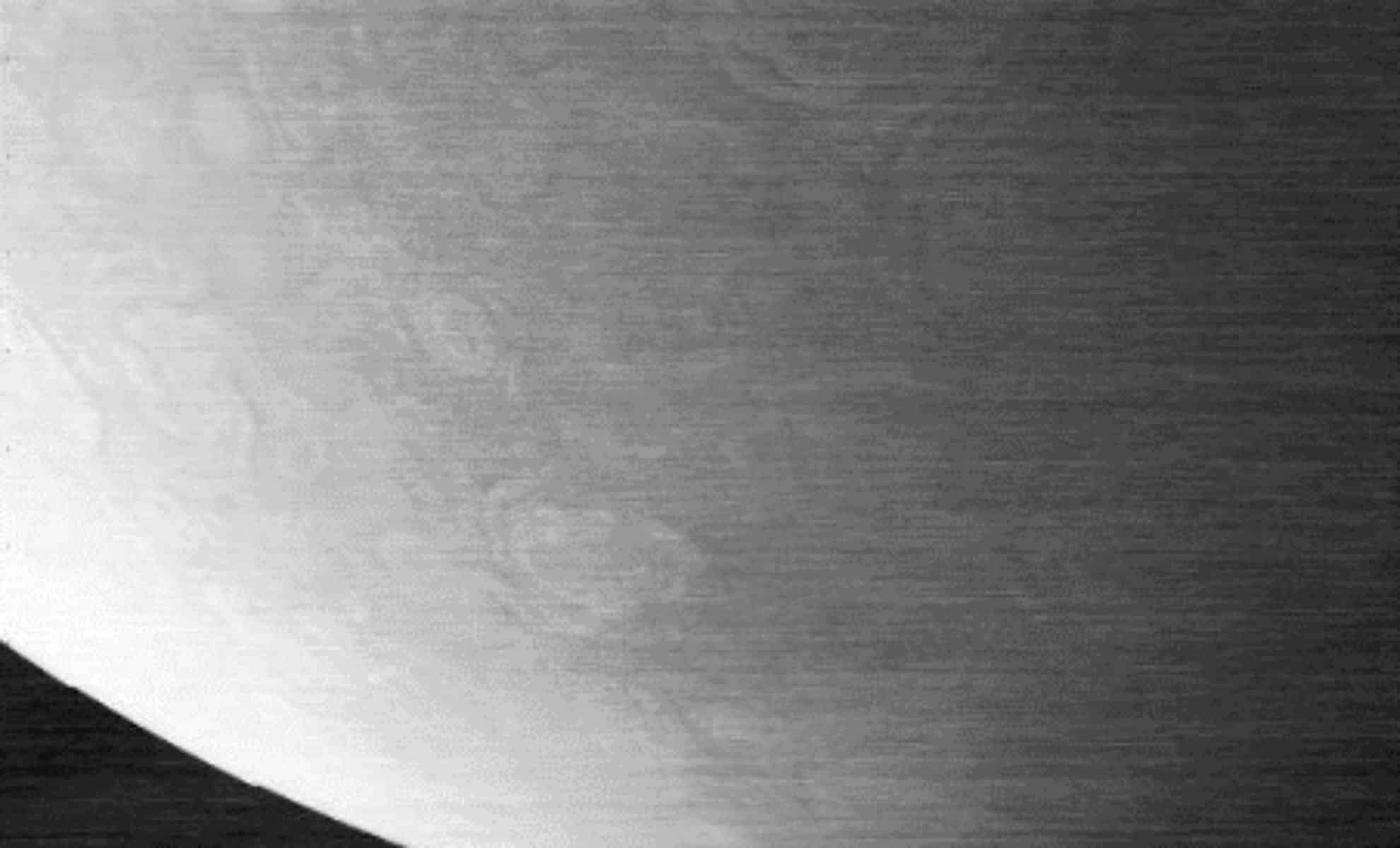
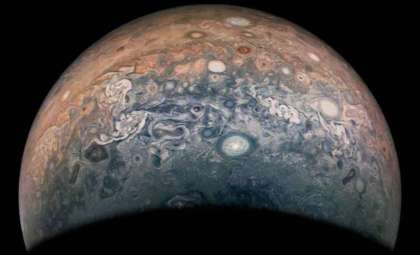
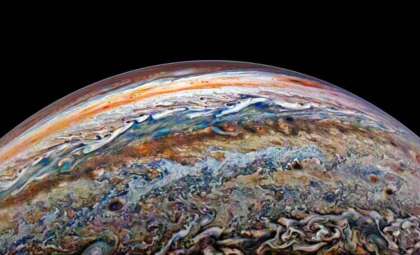
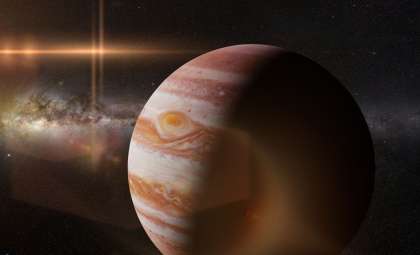
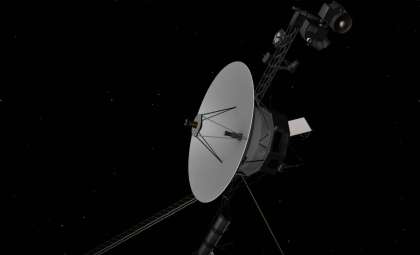
NASA’s Juno spacecraft continues to unveil Jupiter’s secrets, but during its 57th close approach to the gas giant in December 2023, its JunoCam camera encountered a severe radiation-related malfunction. An inventive repair method called annealing was employed to revive the camera’s functionality.
The successful recovery was showcased on July 16, 2025, at the IEEE Nuclear & Space Radiation Effects Conference in Nashville.
Confronting Intense Radiation Challenges
Juno’s mission, designed to explore Jupiter and its satellites, faced an unforeseen challenge. The spacecraft’s color imaging instrument, JunoCam, critical for delivering vivid images of Jupiter’s moons, was always exposed to the extreme radiation levels that dominate the Jovian environment.

The camera operated flawlessly throughout the initial 34 orbits, but by the 47th orbit, performance issues appeared. By the 56th orbit, image data were largely corrupted, signaling radiation-induced damage. Unlike many of Juno’s other instruments protected inside a titanium radiation vault, the camera’s optical unit was more exposed.
The damage was traced to a faulty voltage regulator, essential for powering JunoCam. Diagnosing and addressing this problem remotely, across over 370 million miles, required innovative technical approaches.
Employing Annealing: A Bold Repair Strategy
In response to the critical failure, NASA engineers decided to use annealing, a process involving controlled heating and gradual cooling, commonly used in materials science. This approach was unprecedented for spacecraft equipment, aiming to reverse radiation damage within silicon components.
The JunoCam’s sole heater was activated to elevate the camera’s temperature to 77 degrees Fahrenheit, well above its normal operating range. The team waited anxiously as this untested method was implemented, hoping it would restore the camera’s functionality. After completion, JunoCam began producing sharp, clear images once again.
Capturing Io’s Volcanic Activity in Stunning Detail
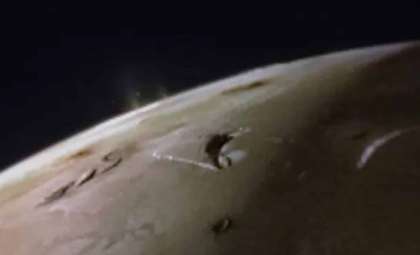
Shortly after the annealing procedure, Juno flew within 930 miles of Jupiter’s volcanic moon, Io. The renewed camera sent back images of exceptional quality that rivaled those taken early in the mission, highlighting Io’s north polar region. These images revealed dramatic geological features, including sulfur dioxide frost-covered mountains and newly identified lava-spewing volcanoes. These detailed shots provide valuable insights into the solar system’s most volcanically active moon.
The successful revival of JunoCam serves as a testament to human ingenuity, proving that even in the most hostile conditions, advanced space instruments can be repaired and continue to deliver critical scientific data. This achievement marks a significant advance for future deep space missions, demonstrating spacecraft resilience against extreme environments.
Implications for Future Spacecraft Durability
The capability to restore JunoCam remotely opens new possibilities in spacecraft design. Although annealing acted as a temporary solution, it highlights how radiation-tolerant engineering strategies could improve durability for missions operating in intense radiation fields like Jupiter’s vicinity. This technique also has the potential to enhance the longevity of satellites orbiting Earth, which face persistent radiation challenges.
- Categories:
- News





0 comments
Sign in to Comment