
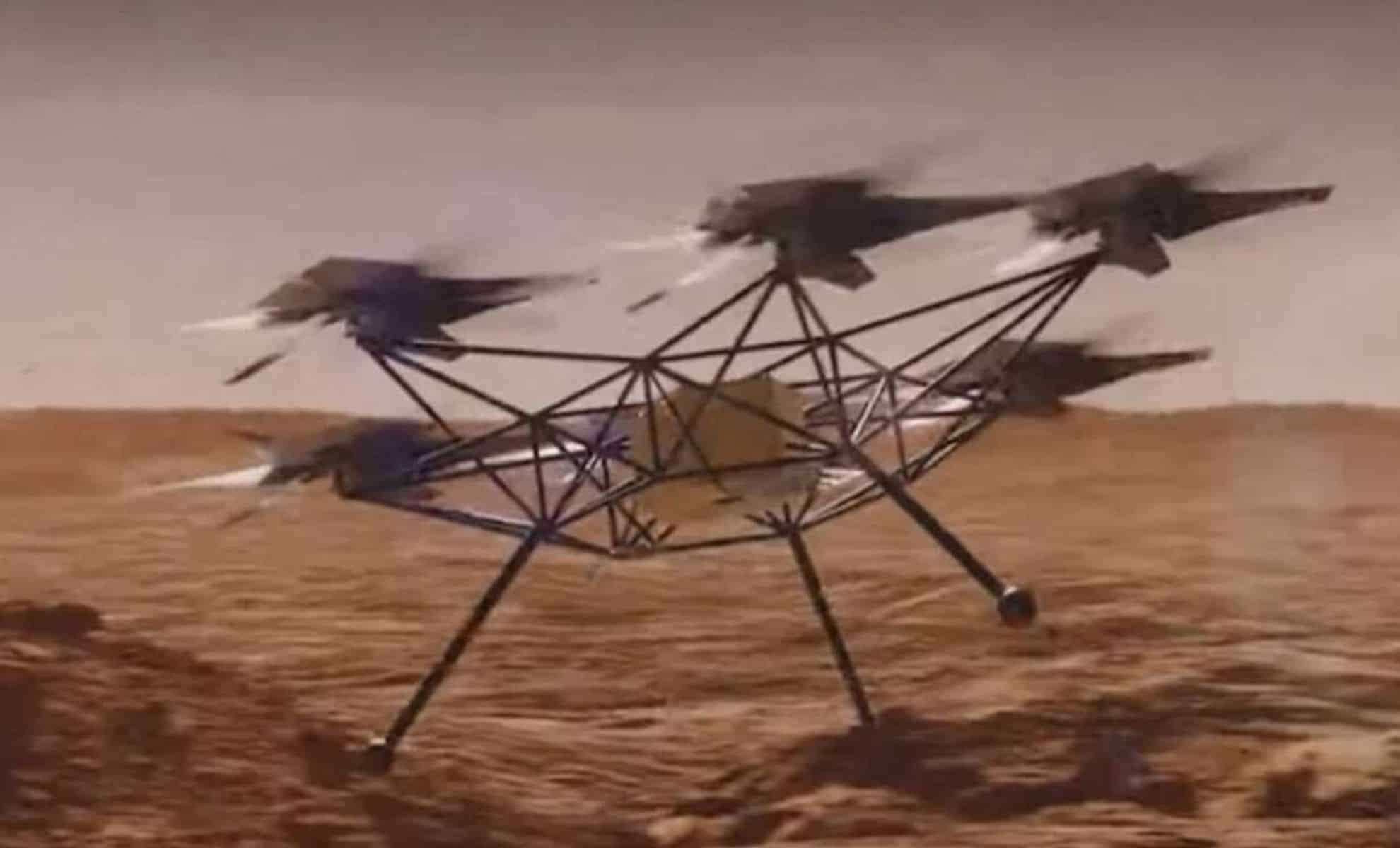
NASA is set to advance its extraterrestrial exploration with the introduction of the innovative Nighthawk helicopter, designed to conduct detailed studies of Mars' rugged landscape. This mission will focus on the Eastern Noctis Labyrinthus, an area renowned for its complex geological formations.
This region is of great interest due to its potential to reveal critical information about Mars’ ancient water presence, volcanic activity, and the intriguing possibility of past life.
Goals Behind the Nighthawk Mission
Guided by Pascal Lee and his team from the SETI Institute, the concept for Nighthawk was unveiled at the Lunar and Planetary Science Conference. Experts emphasized its importance in piecing together Mars' geological and environmental history.

The mission’s major objectives include exploring the Noctis Landing site, a candidate zone for human missions. Nighthawk will evaluate the terrain to determine its viability for astronaut landings and operations.
Additionally, the helicopter will examine the vestiges of the Noctis Volcano and nearby glacial ice fields, which are crucial for understanding volcanic activity and Martian climate changes over time.
“Nighthawk is a concept for a NASA Mars Chopper mission to explore Eastern Noctis Labyrinthus’ ancient giant volcano, recent lava flow, canyons, glacier remains, H2O evolution, mineral deposits, potential for life, and suitability for human landing and exploration,” said the team of researchers, led by Pascal Lee, in the paper.
Enhanced Capabilities Compared to Ingenuity
Nighthawk signifies a major improvement over the pioneering Ingenuity, the first ever aircraft to operate beyond Earth. Unlike Ingenuity, which relied heavily on the Perseverance rover for control and support, Nighthawk will be autonomous, utilizing the advanced design of the upcoming Mars Chopper, a larger and more capable model.
“Nighthawk’s science mission would not be achievable with an Ingenuity-class helicopter, but could be accomplished with the larger, more capable NASA Mars Chopper currently under design,” the researchers explained.
This six-rotor, six-blade aircraft is optimized for Mars' thin atmosphere, far different from Earth's. This design upgrade enables Nighthawk to undertake ambitious scientific goals previously out of reach.
Scientific Instrumentation and Flight Potential
Nighthawk will carry three advanced scientific instruments to conduct comprehensive surface studies. The OCCAM system will provide color images for navigation and geological mapping, NIRAC is a spectrometer and camera that will analyze surface minerals, and PMWS (Puli Mars Water Snooper) is a neutron detector tasked with mapping underground water deposits.
Mission plans indicate Nighthawk can ascend to heights of up to 1,500 meters (4,920 feet) and cover flights as long as 3 kilometers (1.86 miles). It aims to complete around 100 flights over 240 Martian days (sols), gathering extensive data on Mars' geological timeline and habitability.
“The Mars Chopper’s expected flight range, flight altitude AGL (above ground level), and payload capacity would allow Nighthawk to accomplish its vast range of science,” the team concluded.
Probing the Deep Mysteries of Mars
Nighthawk stands to revolutionize our knowledge of Mars by delivering invaluable data from one of its most geologically intriguing regions.
The mission's findings will illuminate Mars’ volcanic phenomena, historical water reservoirs, and surface-shaping processes spanning millions of years. “If the Nighthawk proposal gets accepted, it would provide a deeper understanding of a scientifically rich and diverse region of Mars,” the research team stated.
- Categories:
- Space






0 comments
Sign in to Comment