
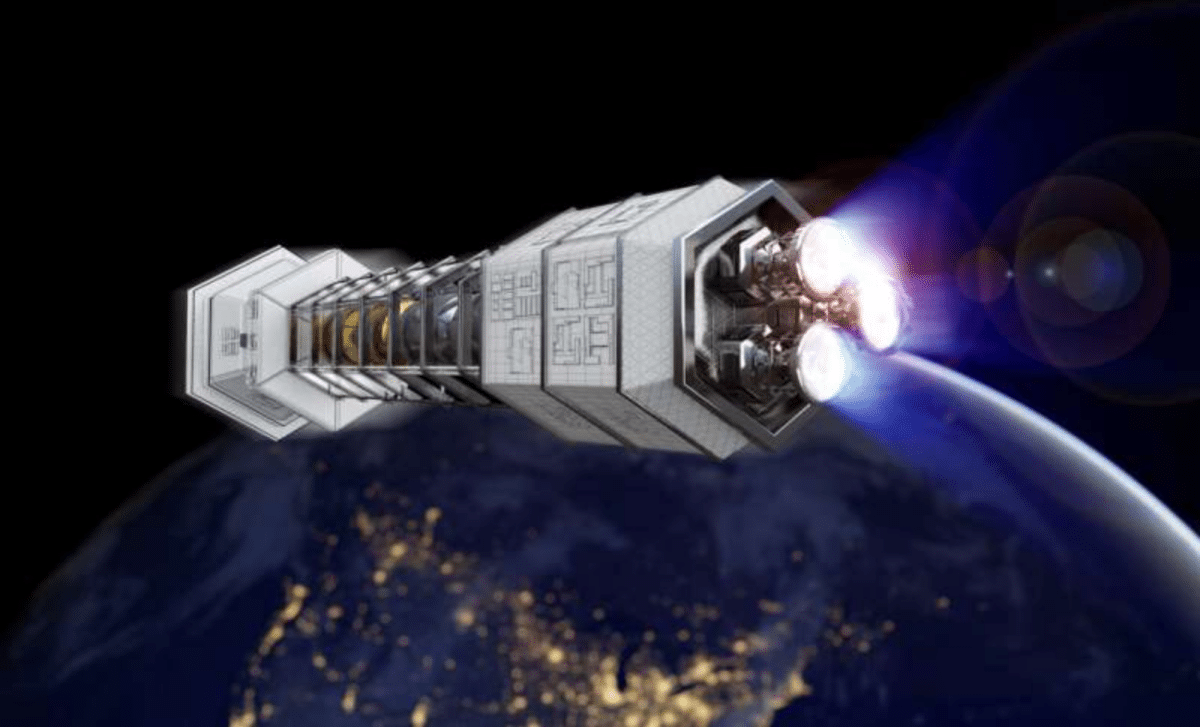
Power sources are indispensable across all aspects of life, but in the realm of space exploration, reliable energy becomes crucial for mission success and astronaut survival. The United States is advancing nuclear reactor technology designed to support upcoming missions to the Moon and Mars. A recent Idaho National Laboratory paper details how nuclear fission reactors could empower extended space exploration efforts and expand human presence beyond Earth.
Advancing Nuclear Energy for Space Missions
Securing dependable energy for space travel remains a significant hurdle for explorers journeying far from home. As crews cannot rely on Earth’s resources, they must utilize self-sustaining power solutions to operate life-support, equipment, and maintain contact with mission control. Previously, radioisotope thermoelectric generators powered missions like NASA’s Voyager spacecraft and Mars rovers. However, these devices provide limited energy and have short operational lifespans. To overcome these restrictions, the U.S. is focusing on utilizing fission reactors to deliver far greater power for future missions.
Nuclear fission reactors leverage controlled splitting of atomic nuclei to generate energy, offering much higher power levels than current systems. This advancement stands to dramatically improve mission capabilities and pave the way for permanent human outposts on the Moon and Mars. As Sebastian Corbisiero, the Department of Energy’s Space Reactor Initiative national technical director, explains,

“It might sound like science fiction, but it’s not. It is very realistic and can significantly boost what humans can do in space because fission reactors provide a step increase in the amount of available power. What we need now is a clear path forward.”
Overcoming Obstacles in Space Reactor Development
Creating nuclear reactors suitable for space involves overcoming several unique challenges not faced by Earth-based systems. Weight is a critical design limitation—every pound must be justified since all equipment launches from Earth via rockets. Therefore, these reactors must be low-mass while maintaining safety, power output, and reliability. In addition, the harsh conditions encountered in space, including intense radiation, temperature swings, and microgravity, require reactors to be built with materials engineered for extreme environments.
Unlike terrestrial nuclear plants, which undergo refueling and maintenance every 18 to 24 months, space reactors must be engineered to function autonomously for up to a decade without repairs. Durability is paramount, demanding reactor cores and supporting components that can withstand prolonged exposure to space’s rigors. Corbisiero remarks,
“We’re potentially on the cusp of a major step forward regarding nuclear power for space applications. To be a part of an effort like this—that is as exciting as it gets. That’s something you tell your grandkids.”
Idaho National Laboratory’s Vital Contribution to Space Power Innovation
Idaho National Laboratory (INL) is a key player in the U.S. effort to harness nuclear power for space. As the lead institution dedicated to space reactor development, INL spearheads research, testing, and advancement of critical technologies. Their expertise in nuclear systems, coupled with facilities like the Transient Reactor Test Facility, equips INL to drive forward space nuclear breakthroughs.
INL’s recent report, titled “Weighing the Future: Strategic Options for U.S. Space Nuclear Leadership,” presents multiple strategies aimed at securing America’s position at the forefront of space nuclear innovation. By fostering partnerships with federal organizations, private industry, and national labs, INL is designing reactors poised to power missions beyond Earth. According to Corbisiero, these initiatives represent transformative potential:
“That’s something you tell your grandkids”—referring to the exciting possibilities that these technologies could unlock for the future of space exploration.
- Categories:
- Space








0 comments
Sign in to Comment