
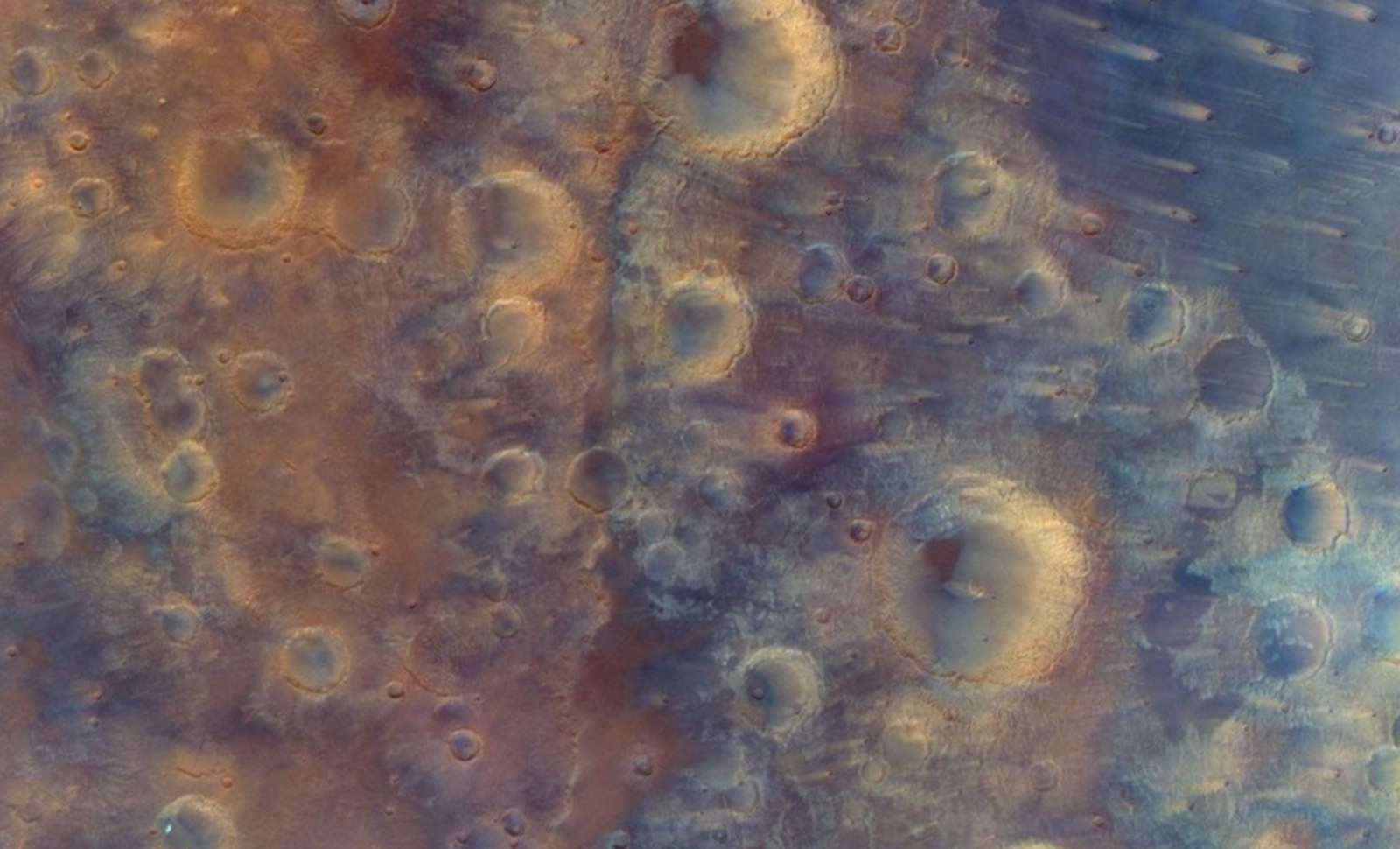
NASA’s Psyche spacecraft recently completed a close flyby of Mars, acquiring important scientific data and unique imagery during a gravity assist maneuver that is propelling it toward the metal-rich target asteroid Psyche. The July 2026 pass offered the team a chance to calibrate instruments in a planetary setting and collect more information about the Red Planet, NASA officials said.
A Crucial Mars Flyby Sets Stage for 2029 Asteroid Encounter
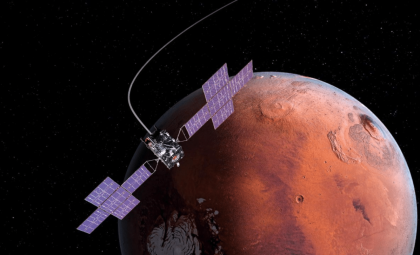
During its Mars flyby, the Psyche mission used the gravitational pull of the planet both as a navigational tool and a scientific test before continuing its path toward asteroid Psyche, expected in 2029. The gravity assist adjusted the spacecraft’s route to enable a future rendezvous with the asteroid sharing the spacecraft’s name.
The encounter allowed scientists to observe Mars from a novel vantage point, comparing new readings with extensive existing data. Critical instruments – the imager, magnetometer, and the gamma-ray and neutron spectrometer – were powered on to capture data from this distinct perspective beyond orbiters.

NASA shared that the information obtained will aid in validating spacecraft performance and refining scientific methods for the upcoming asteroid phase. While primarily focused on system assessments during this flyby, the observations provided helpful confirmation that all systems functioned as designed.
“The mission’s imager, magnetometer, and gamma-ray and neutron spectrometer teams worked overtime to make full use of this planetary encounter, and all instruments delivered great results,” said Lindy Elkins-Tanton, principal investigator for Psyche at the University of California, Berkeley. “We didn’t anticipate big discoveries, given how extensively the planet has been studied, but we did complement Mars science with the data we collected through Psyche’s unique perspective.”
The flyby acted as a dress rehearsal for upcoming deep space challenges, enabling each instrument to collect data under conditions mimicking those expected near the asteroid Psyche.
New Data from Psyche’s Suite of Instruments Around Mars
A key component of the mission’s Mars encounter was testing the gamma-ray and neutron spectrometer, crafted to analyze surface materials. During the approach, the spectrometer recorded neutron signals linked to Mars’ environment, confirming its operational readiness.
“Near Mars’ closest approach, the neutron spectrometer observed the expected increase in count rates, which was thrilling,” said David Lawrence, lead scientist for the spectrometer at the Johns Hopkins Applied Physics Laboratory in Laurel, Maryland. “Although gamma rays from Mars weren’t detected as anticipated, the instrument performed admirably through this test.”
The magnetometer also documented magnetic fluctuations as the spacecraft traversed Mars’ bow shock region, where solar winds collide with the planet’s magnetic field, offering an ideal environment to study instrument response to variable magnetic forces.
“As the spacecraft passed close to Mars, the magnetometer saw an intense uptick in magnetic field corresponding to the bow shock region, where the solar wind slams into the planet’s magnetic field,” said Ben Weiss, Psyche’s deputy principal investigator and the magnetometry investigation lead at Massachusetts Institute of Technology in Cambridge. “This flyby calibration effort validated the instrument’s performance under dynamic conditions while also revealing the fascinating physics of planetary magnetism.”
These insights are key for preparing the spacecraft’s instruments for the substantially different environment it will encounter at asteroid Psyche, believed to be metal-rich.
Distinctive Mars Images Preview Future Exploration Techniques
The Psyche imager captured several remarkable views during the flyby, proving its capability to function under difficult light conditions and supporting techniques required for asteroid reconnaissance.
The spacecraft snapped photos of Mars’ moons Phobos and Deimos from afar, helping the team assess its capacity to detect small nearby bodies—skills that will be critical when searching for potential moons orbiting asteroid Psyche.
“The imager performed brilliantly, delivering some rarely seen views of the Red Planet,” said Jim Bell, the Psyche imager instrument lead at Arizona State University in Tempe. “Besides the obvious beauty of the photos, we were also able to fully test its calibration and sensitivity to scattered light, including picking out the Martian moons Phobos and Deimos from very far away as a part of a practice for the satellite search that we’ll use at the asteroid Psyche to look for any moonlets there.”
This imaging effort demonstrated the spacecraft’s ability to gather meaningful data while traversing space, which will be essential for detailed study once Psyche arrives at its asteroid destination.
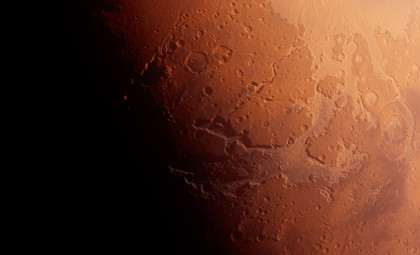
Unlike orbiters designed to remain around Mars, Psyche’s brief but productive flyby provided a novel viewpoint, collecting focused observations before continuing outward in the solar system.
Precise Gravity Assist Keeps Psyche’s 2029 Goal on Course
The Mars gravity assist marked a significant milestone, with the spacecraft achieving the required trajectory adjustments to reduce fuel use and set it on target for the asteroid encounter.
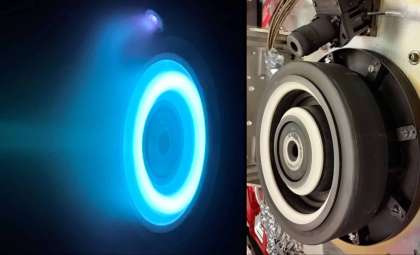
“This gravity assist was years in the making, and the navigation team nailed it — Psyche flew by Mars on exactly the trajectory we needed to set us on a path to rendezvous with the asteroid in the summer of 2029,” said Bob Mase, Psyche’s project manager at NASA’s Jet Propulsion Laboratory in Southern California. “The spacecraft is in great shape, and we’re on schedule to resume sustained thrusting with the solar-electric propulsion system later this fall.”
After the successful Mars assist, Psyche will continue its cruise phase propelled by its efficient solar-electric propulsion system. The team will monitor spacecraft systems while preparing for the demanding asteroid exploration ahead.
The 2029 arrival at asteroid Psyche will usher in a new chapter, as scientists investigate this metal-dominated world to understand whether it represents the core remnants of an early planetary building block, shedding light on rocky planet formation processes.
This Mars flyby was a pivotal step, combining navigation, instrument testing, and scientific observations into one planetary encounter that strengthens the mission’s preparation toward its historic asteroid study.
- Categories:
- Nasa







0 comments
Sign in to Comment