
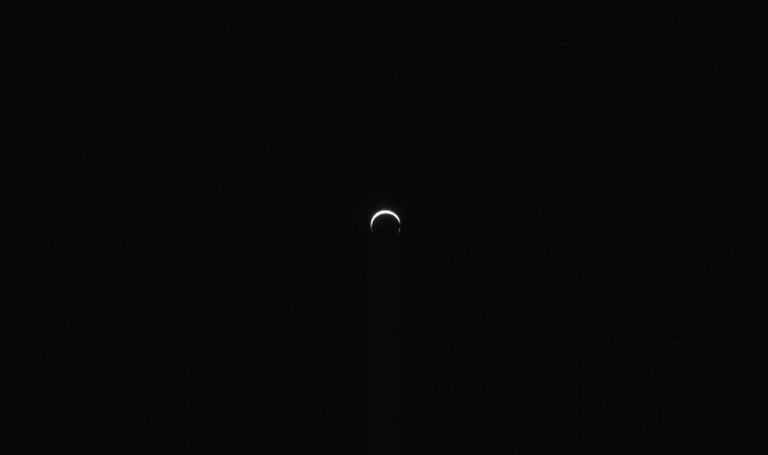
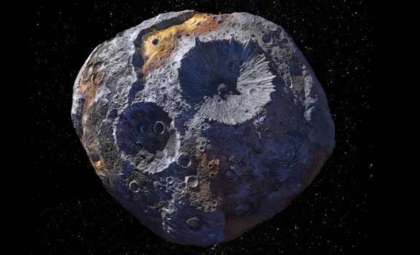
On May 3, 2026, NASA’s Psyche spacecraft snapped an extraordinary shot of Mars from a distance of 3 million miles, just days ahead of a vital gravity assist scheduled for May 15. This maneuver is crucial for adjusting the spacecraft’s course toward the asteroid Psyche, which it aims to reach in 2029. The image provides fresh insight into Mars’ atmosphere and surface features, offering essential information for the mission's next phases.
The Psyche mission, focused on investigating the rare metallic asteroid Psyche, is taking an indirect path to its target. Having launched successfully in 2023, the spacecraft has been leveraging gravity assists to fine-tune its velocity and trajectory. Its upcoming Mars flyby will deliver the momentum needed to push it forward on its journey.
Seeing Mars as a Thin Crescent
From a high observational angle, the spacecraft captured Mars appearing as a slim crescent, similar to the new moon phase of Earth’s Moon. NASA reports that this image was taken with the spacecraft’s multispectral imager, utilizing a panchromatic filter and an extremely short exposure time of just 2 milliseconds.

Although the exposure was brief, Mars’ bright crescent stands out sharply, with some regions over-saturated. This phenomenon results from sunlight reflecting off the planet's surface and scattering through its dusty atmosphere, causing the crescent to appear more extended than it would on airless bodies such as the Moon.
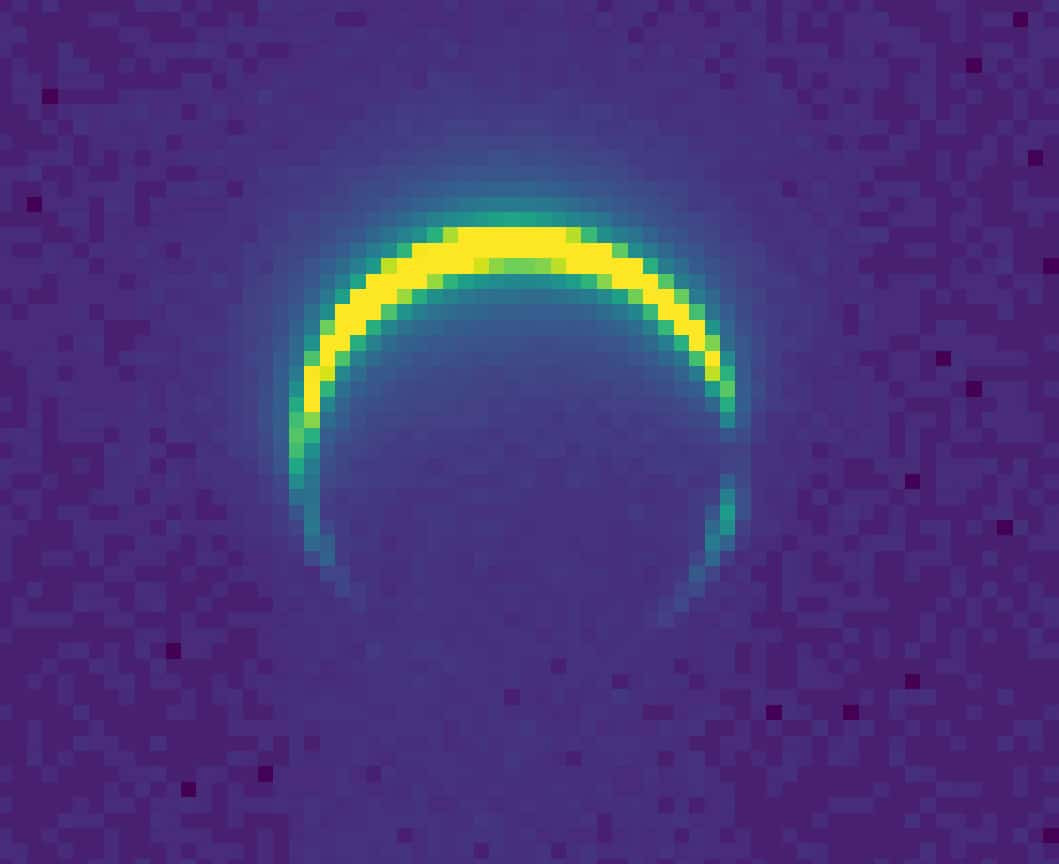
The scattering effect is driven largely by Mars’ thick dust layers, which bend sunlight around the planet’s edge, broadening the visible crescent. Variations in dust density also influence the brightness, making the crescent’s exact shape unpredictable ahead of time.
Shifting Polar Conditions
A distinct gap appears on the right side of the crescent where Mars' north polar ice cap is located. Now in its winter season, this area may be undergoing atmospheric changes affecting the visual characteristics of the planet.
Researchers propose that the opening corresponds to clouds or hazes over the pole, which might be reducing the dust’s light-scattering effect in this region. These seasonal cloud formations affect how sunlight interacts with the Martian environment, offering clues about the planet's dynamic climate system.
This gap may additionally hint at uneven dust distribution on Mars, with fluctuations in atmospheric dust levels impacting the planet’s overall luminosity. Understanding these seasonal differences is important for planning future explorations.
Readying for Upcoming Milestones
This Mars picture serves as part of the comprehensive efforts to prepare for the Psyche mission. As the probe nears its next major target, the images help technicians practice and calibrate equipment to enhance the quality of future observations. According to NASA’s official statement:
“The Psyche mission’s imager team will be acquiring, processing, and interpreting similar images in the lead-up to the close approach on May 15. The images are primarily designed to calibrate the cameras and to characterize their performance in flight as a practice run for the approach to asteroid Psyche in 2029.”
- Categories:
- Nasa







0 comments
Sign in to Comment