
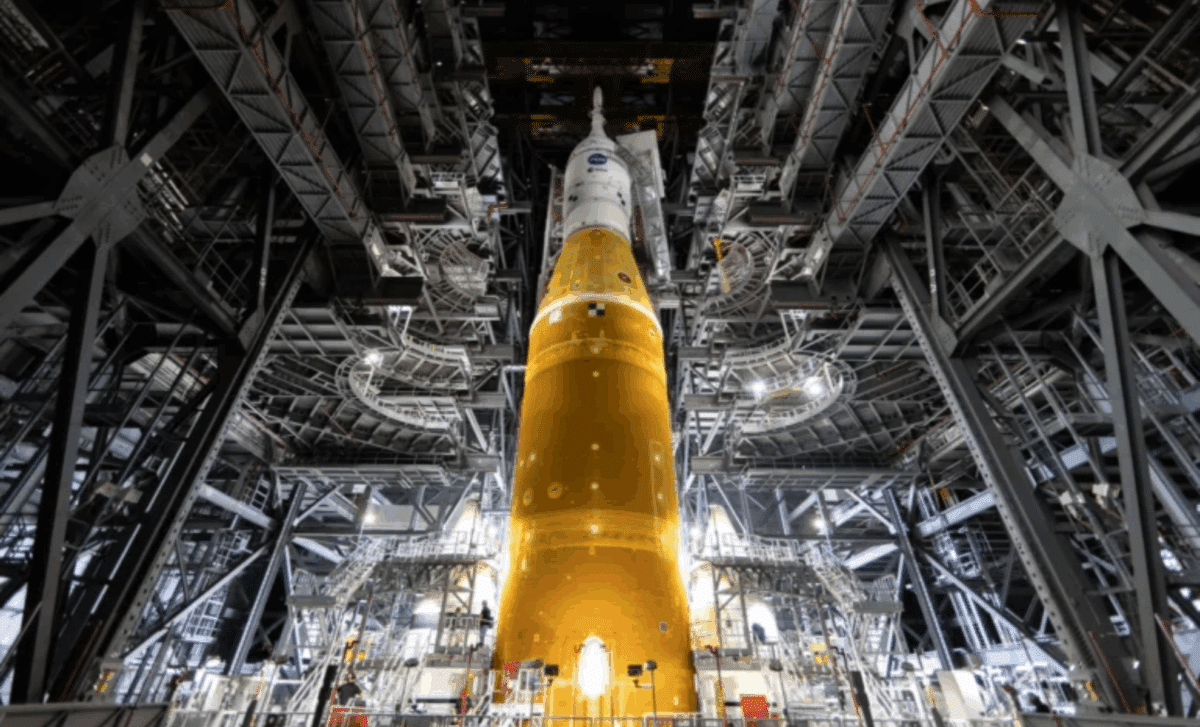
NASA’s Artemis initiative is propelling humanity closer to returning to the Moon, signifying a bold step in the realm of space discovery. After extensive preparation and technological advances, Artemis plans to accomplish historic firsts by landing the first woman and the first person of color on the lunar surface, while also aiming to create lasting operations on the Moon. This mission heralds a transformative phase where human presence beyond Earth is becoming a tangible goal.
Artemis II: Setting the Stage for Moon Missions
Artemis II, slated for launch in 2026, will represent NASA’s first crewed lunar voyage in over five decades. In contrast to the Apollo 11 landing in 1969, Artemis II will conduct a crewed lunar flyby without touching down. This mission is crucial for validating NASA’s new Space Launch System (SLS) and Orion spacecraft, essential technology for upcoming crewed lunar arrivals.
This flight acts as a significant safety and operational assessment to ensure astronauts can reliably travel to and orbit the Moon before attempting surface landings. NASA’s utmost priority during Artemis II is protecting the crew throughout these pioneering operations.

“There is a desire for us to return to the surface of the Moon and to be the first to return to the surface of the Moon,” said NASA Administrator Bill Nelson.
He further highlighted that
“NASA’s objective is to do so safely,” ensuring that each step of the mission is executed with precision and security.
Beyond reaching the lunar surface, Artemis is envisioned as a foundational campaign to enable long-term human exploration of the Moon. This program supports NASA’s overarching ambition to become a multi-planetary species, using the Moon as a critical stepping stone toward Mars and further destinations. The success of Artemis II will showcase NASA’s capacity for managing crewed missions that venture beyond Earth's orbit.

Innovations Powering Artemis: The SLS and Orion Spacecraft
The achievements of the Artemis missions heavily depend on NASA’s cutting-edge technologies, chiefly the heavy-lift Space Launch System (SLS) and the advanced Orion crew vehicle. The SLS is engineered as the most powerful rocket built, capable of propelling astronauts and cargo well beyond Earth’s gravitational pull toward the Moon and eventually Mars.
Meanwhile, Orion is designed to carry astronauts safely throughout deep space, equipped with state-of-the-art life support, radiation protection, and systems to support lengthy voyages. For Artemis II, Orion will take crew members on a lunar orbit mission that will yield critical insights for upcoming lunar surface missions.
As Jeremy Parsons, NASA’s Artemis mission manager, explains, “The spacecraft will carry the crew farther into space than any spacecraft has before.” This mission not only demonstrates technological progress but also rigorously tests the systems necessary for sustaining human life in prolonged extraterrestrial environments. Artemis II exemplifies the pivotal role of lunar missions as preparation for extended space exploration.
The Moon’s Role in NASA’s Vision for the Future
Returning astronauts to the Moon forms a fundamental element of NASA’s larger vision to establish a lasting human foothold by the late 2020s. The Artemis program lays essential groundwork for constructing a permanent lunar base, envisioned as both a research hub and launch site for Mars expeditions. Experimentation with habitats, life support, and other technologies on the Moon will address the challenges of extended space travel.
A vital component of this vision is the Lunar Gateway, an orbiting outpost that will facilitate travel to the lunar surface and beyond. The Gateway’s strategic lunar orbit position will enable exploration of the Moon’s far side and enhance scientific studies including resource utilization, geology, and mining possibilities off Earth.
The Artemis program’s international partnerships and collaboration with private companies highlight a global commitment toward lunar exploration. The Moon, once a distant target, is now a focal point for cooperative breakthroughs in science and technology, rather than competition.
Diversity at the Heart of Artemis
A standout feature of Artemis is its dedication to inclusivity and representation. Artemis II is expected to be the first crewed mission with a diverse astronaut team, breaking new ground in racial and gender representation on lunar missions. NASA’s objective to land the first woman and the first person of color on the Moon demonstrates a focus on equitable participation in humanity’s exploration of space.
This commitment not only inspires future generations but also brings essential perspectives and skills to confront the unique challenges of space travel. By prioritizing diversity within Artemis, NASA affirms that space is accessible and belongs to all people, irrespective of identity or background.
- Categories:
- News











0 comments
Sign in to Comment