
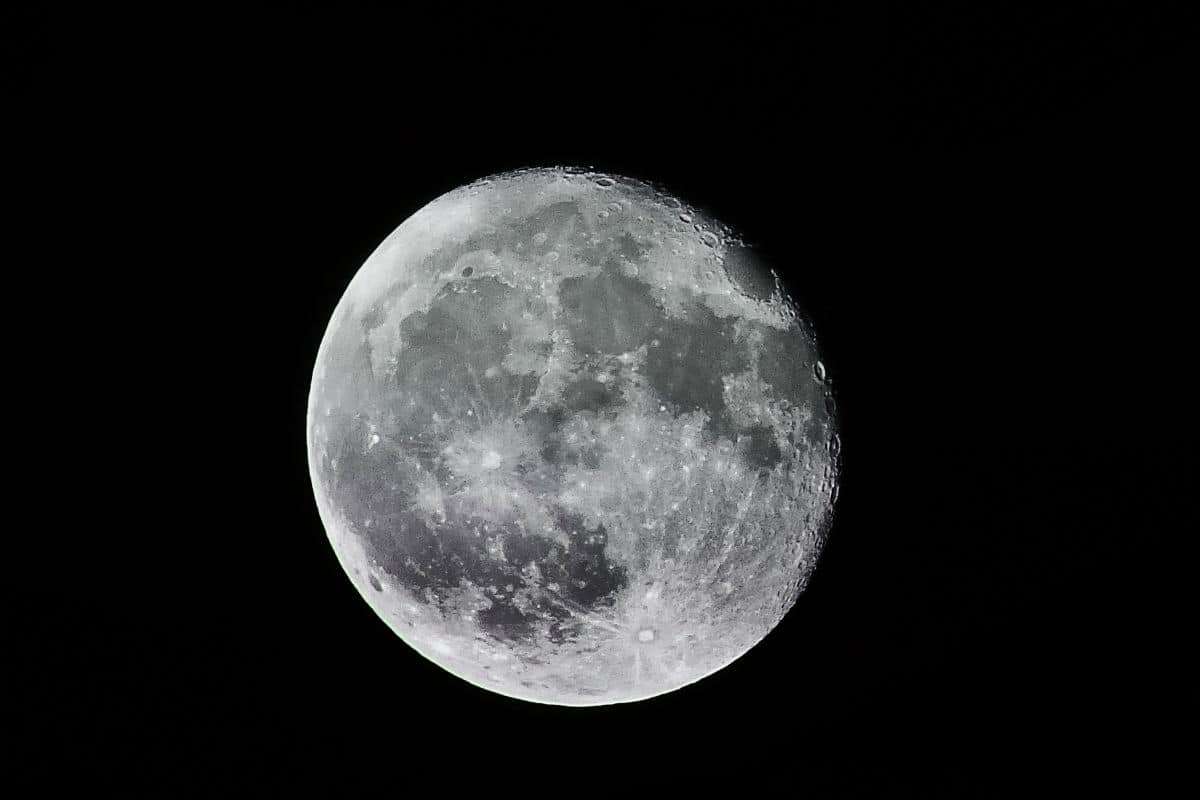
Recent discoveries from India’s Chandrayaan-3 lander indicate that retrieving water ice on the Moon might be less challenging than once thought. Research points to specific high-latitude slopes as promising sites where ice could be more readily available, potentially simplifying lunar water extraction efforts.
Unexpected Insights From Chandrayaan-3
In August 2023, India’s Chandrayaan-3 mission made a historic touchdown close to the Moon’s south pole. Equipped with sensors analyzing lunar temperature variations, the lander uncovered remarkable patterns in surface heat distribution.
Measurements from the Surface Thermophysical Experiment (ChaSTE) showed that temperatures on the Moon swing dramatically between day and night. While sun-exposed areas soared to around 179.6°F (82°C), the shaded spots dropped sharply to about -270.67°F (-168.15°C).
Interestingly, just a meter from the lander’s touchdown spot, on a less sloping surface facing the lunar pole, temperatures were noticeably milder, reaching only about 138.2°F (59°C).

These results imply that certain high-latitude inclines—particularly those shielded from direct sunlight—may offer stable environments favorable for ice retention.
Reimagining Lunar Ice Harvesting
Previous strategies targeted the Moon’s permanently shadowed regions (PSRs) near the poles, where sunlight never penetrates and ice is believed to be abundant. However, these areas pose serious challenges due to their extreme cold, rugged terrain, and limited solar energy for operations.
The insights from the Chandrayaan-3 mission spotlight slopes steeper than 14 degrees that still receive some sunlight. These zones might harbor shallow ice deposits that are easier to extract compared to the notoriously inaccessible shadowed craters. This could alter mission plans focused on utilizing lunar water resources.
Impact on Future Lunar Expeditions
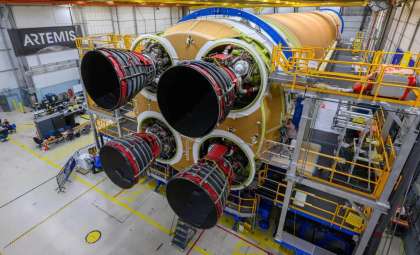
This breakthrough has important consequences for forthcoming lunar projects, including NASA’s Artemis initiative. Access to ice in these more reachable areas would provide essential supplies such as water, breathable oxygen, and fuel for rocket propulsion.
Mining lunar water reduces dependency on costly supply runs from Earth, making sustainable lunar bases a more achievable goal. Agencies like NASA, alongside China and private ventures, are advancing technologies for in-situ resource utilization (ISRU).
Advancing the Quest for Lunar Water
Earlier lunar temperature data came primarily from the Apollo missions of the 1970s, which mainly studied equatorial regions. The data sent back by Chandrayaan-3 adds valuable thermal details near the lunar south pole for the first time.
As detailed in a recent study published in Communications Earth & Environment, future explorations equipped with drilling and subsurface radar could verify if these cooler slopes truly contain usable ice deposits.
Missions like NASA’s VIPER rover and China’s Chang’e 7 are set to extend lunar ice hunting efforts. These findings may speed up establishing long-term crewed installations on the Moon.
- Categories:
- Space









0 comments
Sign in to Comment