
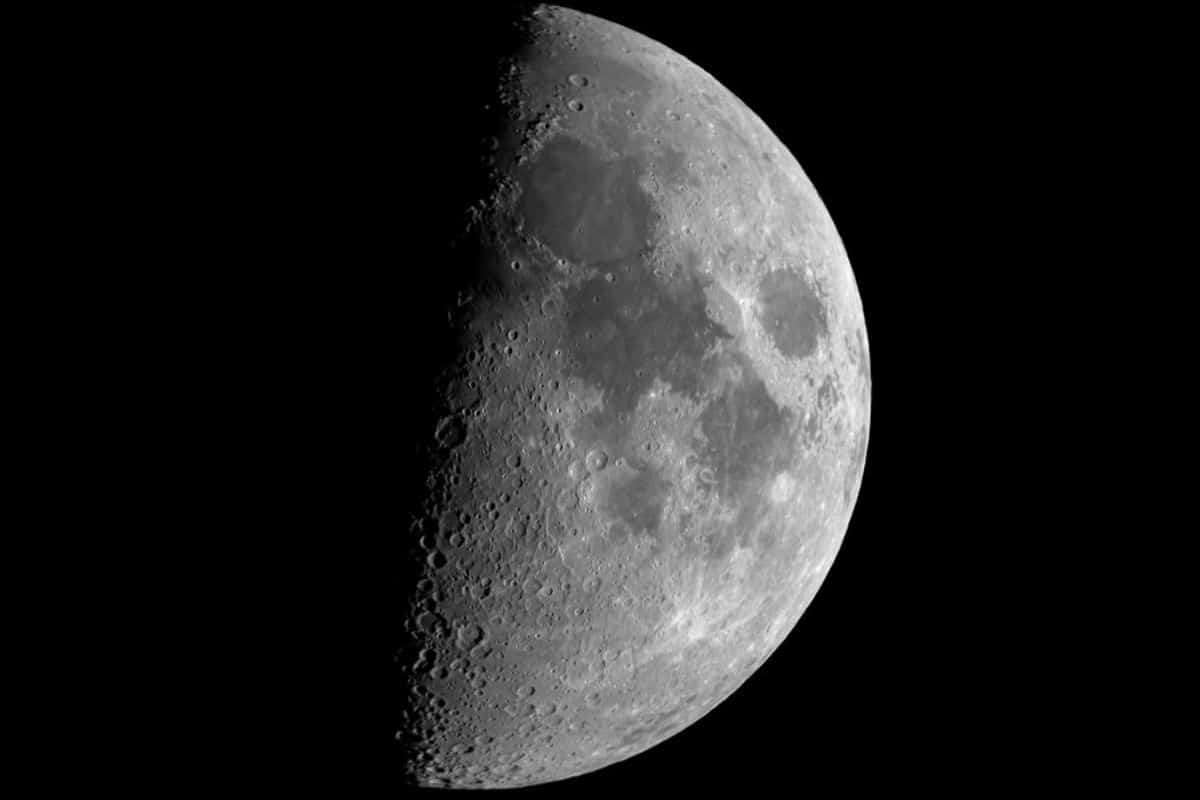
Scientists have achieved a significant breakthrough by confirming that the moon harbors a solid inner core composed primarily of iron, with a density near 7,822 kg/m³, much like Earth's core.
This finding reshapes our comprehension of the moon’s internal makeup and offers fresh perspectives on the early dynamics of our solar system.
Decades-Old Puzzle About Lunar Core Resolved
For many years, the scientific community debated whether the moon’s core was entirely molten or partially solid. Earlier research, constrained by the quality of Apollo-era seismic records, led to mixed conclusions. While it was understood that the moon possessed a liquid outer core, the presence of any solid inner core remained uncertain.
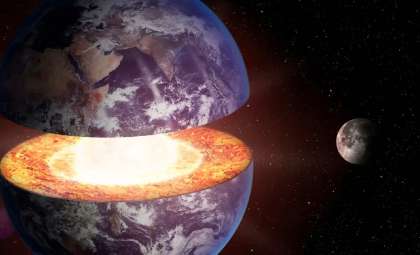
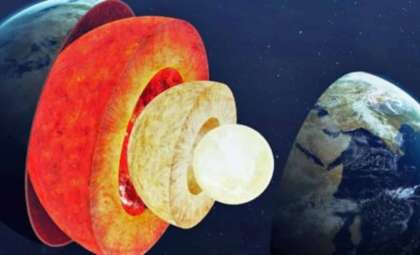
Led by Arthur Briaud from the French National Centre for Scientific Research, a research team employed an innovative method. By integrating data from lunar missions, laser-ranging studies, and gravitational measurements, they developed a more refined model of the moon’s interior, confirming a layered core structure similar to that of Earth, with a solid central core enveloped by a molten outer layer.

Close Parallels Between the Moon’s and Earth’s Core
This investigation estimates the moon’s solid inner core to have a radius of 258 kilometers (160 miles), corresponding to roughly 15% of the moon’s overall radius. It sits within a liquid outer core extending to about 362 kilometers (225 miles). Such a stratified core arrangement closely echoes that of our planet.
Interestingly, these new results bolster conclusions from a 2011 NASA investigation which also proposed a solid inner core but with less precise measurements. Briaud’s group has now provided more compelling proof by utilizing advanced simulations and the latest observational datasets.
Insights Into the Moon’s Ancient Magnetic Field
This discovery carries profound implications for understanding the moon’s former magnetic field, which is believed to have been strong but began to wane around 3.2 billion years ago.
Typically, a planet’s magnetic field arises from the movement of molten metals within its core, generating electrical currents. Gaining clarity on the moon’s internal composition and core dynamics offers explanations for the gradual disappearance of its magnetic activity.
Furthermore, the research supports the concept of "mantle overturn", wherein heavier materials sink inward while lighter elements ascend, potentially shedding light on the distribution of various elements observed in the moon's volcanic areas, thus enhancing our understanding of its geological development.
Future Prospects for Exploring the Moon’s Interior
NASA’s Artemis initiative to send humans back to the lunar surface offers an excellent chance to validate these findings with upgraded seismological instruments.
Upcoming expeditions could gather more precise data on the moon’s interior layers, refining knowledge about its origin and geological story. Each discovery adds depth to our appreciation of the moon’s intricate evolution.
- Categories:
- News






0 comments
Sign in to Comment