
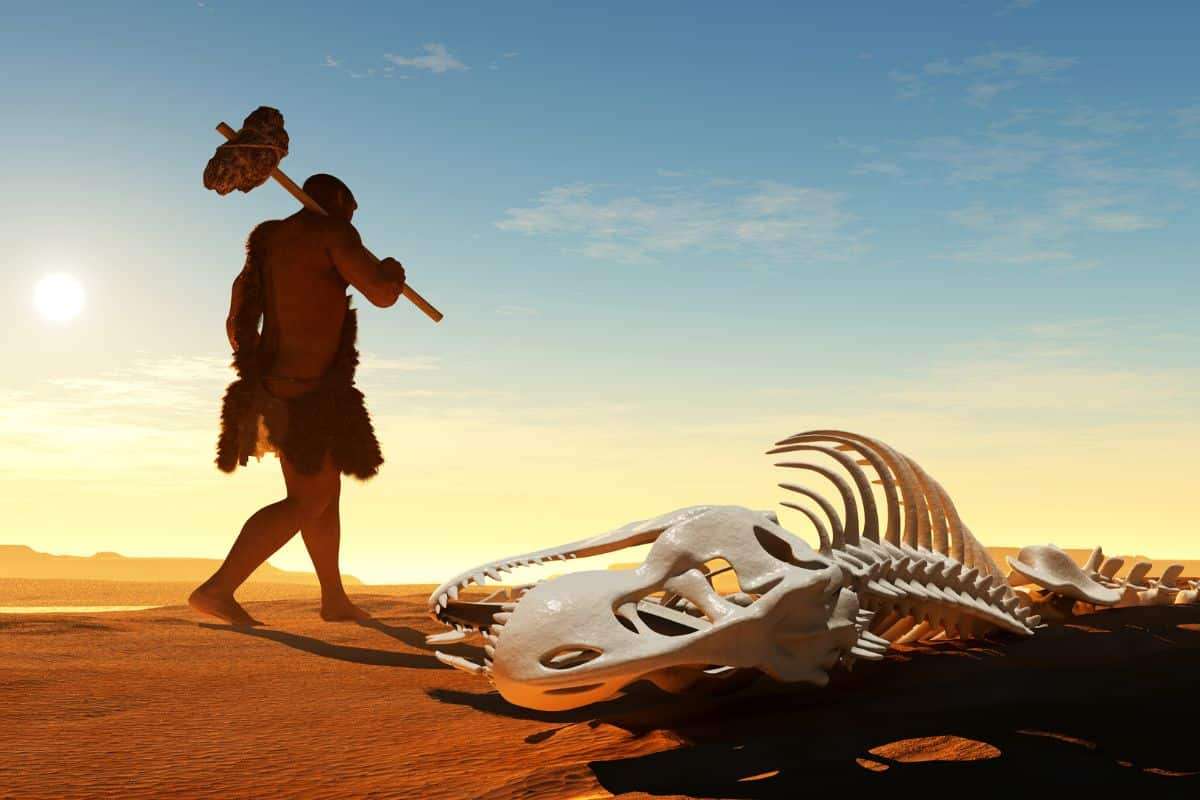
For many years, the dominant story of human evolution linked the rise of meat-eating to key developments in brain growth and tool use. Yet, innovative research now challenges this view, revealing that Australopithecus, an early human ancestor from roughly 3.5 million years ago, primarily relied on plant-based foods. This discovery reshapes prevailing ideas about how ancient diets shaped our evolutionary path.
Examining Ancient Tooth Enamel
A team spearheaded by Dr. Tina Lüdecke at the Max Planck Institute for Chemistry collaborated with scientists from Wits University in South Africa to study fossilized teeth from seven Australopithecus individuals. These specimens were excavated from the Sterkfontein Caves, a site rich with early hominin discoveries near Johannesburg.
Through nitrogen isotope analysis, researchers assessed chemical signals locked in the enamel. The isotope patterns indicated a diet closely matching that of plant-eating animals. While evidence does not exclude occasional consumption of insects or eggs, meat did not appear to be a consistent dietary component.

The Role of Nitrogen Isotopes in Diet Reconstruction
Nitrogen isotopes serve as a valuable indicator for ancient dietary habits. Different feeding behaviors produce distinct nitrogen isotope signatures: herbivores typically exhibit reduced levels of the heavier isotope (15N), whereas carnivores show elevated levels.
"Because tooth enamel is highly durable, it retains dietary isotope markers for millions of years," commented geochemist Tina Lüdecke.
Previously limited to much younger fossils due to degradation of organic matter, isotope analysis was revolutionized by a technique from Alfredo Martínez-García’s lab at the Max Planck Institute. This method enabled extraction of isotope data from enamel specimens millions of years old, unlocking new perspectives on prehistoric diets.
Rethinking Early Human Meat Consumption
These findings contest longstanding assumptions that early humans’ evolutionary milestones were driven by increased meat intake. While larger brains and enhanced tool use emerged in later species like Homo erectus and Neanderthals, the primarily plant-based diet of Australopithecus indicates this significant dietary shift happened later than previously believed.
Unlike Neanderthals—known for hunting large prey—Australopithecus likely did not rely extensively on animal protein.
Implications for Human Evolution
This study opens new questions about dietary influences on human development. Although meat intake is often linked to brain growth due to its rich protein and fat content, the timing and impact of this transition remain uncertain.
Martínez-García noted that the innovative method "offers exciting opportunities to deepen our understanding of human evolution, such as pinpointing when meat was added to our ancestors’ diets and how it correlated with brain expansion."
Further investigations may also explore how dietary choices influenced social behaviors like hunting and food sharing that shaped early human societies.
Broadening the Study of Ancient Diets
Researchers plan to extend nitrogen isotope analysis to fossil dental enamel from various early hominin species, spanning different regions and periods. Comparing dietary patterns across eastern and southern Africa, as well as Southeast Asia, could illuminate the origins and timing of omnivory in human ancestors.
Professor Dominic Stratford, research director at Sterkfontein Caves, described this progress as a “major advance” in reconstructing ancient diets. Directly analyzing isotope signatures in tooth enamel provides more accurate insights into early human nutrition, enhancing the field of paleoanthropology.
Looking Ahead in Evolutionary Dietary Research
As analytic techniques evolve, scientists anticipate uncovering richer details about diets that influenced human evolutionary trajectories. Future research may clarify the role of meat consumption in brain development, social structures, and evolutionary advantages.
By harnessing cutting-edge technology on fossil records, scholars are piecing together a refined picture of early hominin life. The latest discoveries reveal an unexpected truth: plants, not meat, dominated our ancestors’ diets. This insight underscores the complexity of human evolution and highlights the value of interdisciplinary study in tracing our deep history.
- Categories:
- News










0 comments
Sign in to Comment