
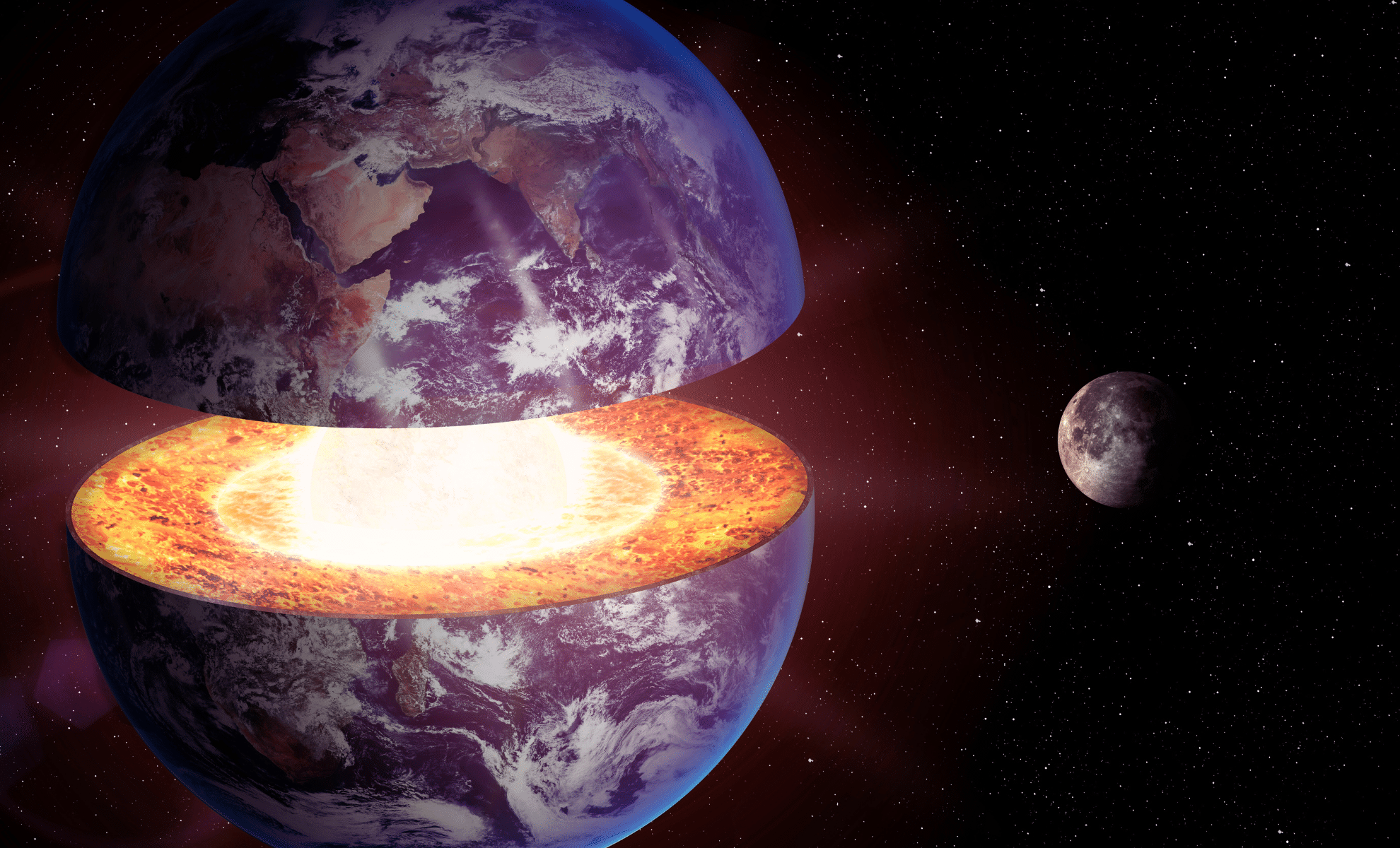
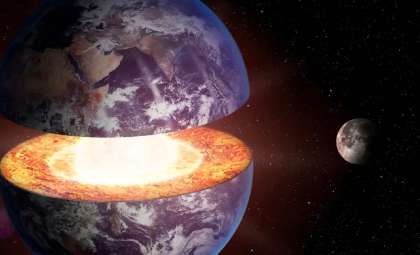
For years, scientists have faced challenges in explaining how Earth’s solid inner core originated, cooled, and began crystallizing without needing extreme supercooling. Recent research published in Nature Communications highlights carbon as a key player in this process. An international collaboration between the University of Oxford, University of Leeds, and University College London employed atomic-scale simulations that demonstrate how carbon significantly speeds up the nucleation essential for the inner core to solidify, unveiling new perspectives on a persistent geological enigma.
Unlocking the Nucleation Puzzle Inside Earth’s Core
It has long been established that Earth’s inner core maintains a gradual growth by crystallizing from the molten outer core. However, the initial crystallization steps, or nucleation—the formation of atomic-scale crystal seeds—have remained poorly understood due to intense pressure and temperature deep within the planet, nearly 3,200 miles below the surface.
The team ran atomic-level simulations encompassing more than 100,000 atoms, replicating core-like conditions. They analyzed interactions between carbon, silicon, sulfur, and oxygen within the predominantly iron-rich liquid core to assess their influence on nucleation. The outcomes challenged prior expectations.

While silicon and sulfur, previously considered vital core components, actually hinder crystallization, carbon was found to facilitate it. “These elements exist in the mantle above and may have dissolved into the core over Earth’s history,” explained Andrew Walker, associate professor of Earth sciences at Oxford and co-author. “This could explain how the core solidified without excessive supercooling, and why its density is lower than pure iron—an observation supported by seismic studies.”
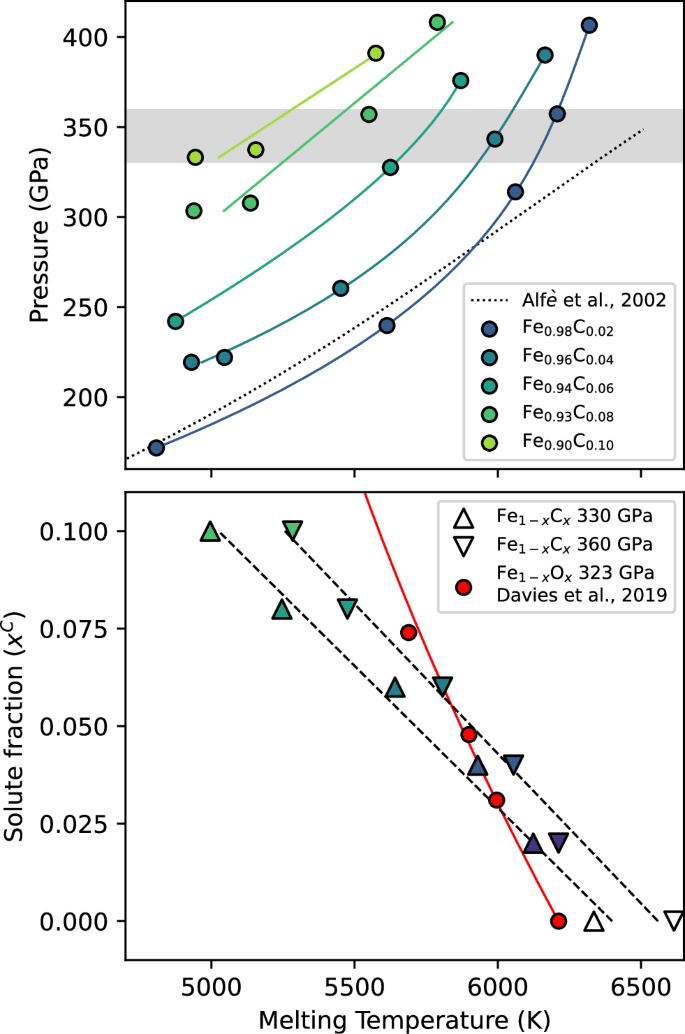
Carbon’s Unexpected Influence on Inner Core Crystallization
One notable discovery from the simulations is that if the inner core contains roughly 3.8% carbon by mass, crystallization could be triggered at just 266°C below iron’s melting temperature, indicating mild supercooling. This temperature range matches current seismic and geomagnetic observations, lending strong support to the model.
This means carbon may be crucial in enabling the inner core’s formation under realistic geophysical circumstances. Without carbon, Earth might not have developed a solid inner core, potentially jeopardizing the planet’s magnetic field generation, which protects life by deflecting harmful solar radiation. Thus, carbon's presence could be fundamental to maintaining Earth’s habitability over millions of years.
The study also showed nucleation took place without reliance on traditional nucleation seeds, usually critical to start freezing. “The experiments also show,” the team noted, “that the inner core freezing was possible with just the right chemistry, and unlike water when it forms hail, it did so without nucleation seeds, tiny particles which help to initiate freezing. This is vital, because when tested in previous simulations, all of the candidates for nucleation seeds in the core have melted or dissolved.” The lack of necessary seeds under such harsh core conditions highlights the essential role of chemical makeup, especially that of carbon.
Broader Impacts for Planetary Science and Seismology
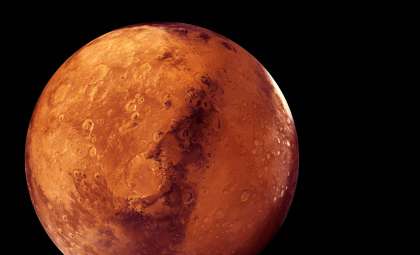
These findings extend far beyond our planet. Pinpointing the chemical constituents of planetary cores is vital for understanding the development of magnetic fields and geological histories on other worlds, including exoplanets. Carbon’s newly identified significance raises compelling questions about the cores of Mars, Mercury, and distant rocky planets, particularly those with metallic interiors.
Additionally, the revelation that carbon lowers the requirement for intense supercooling might clarify inconsistencies between seismic profiles and theoretical core solidification models. Seismologists have long noted that Earth’s core is less dense than expected from pure iron alone, and this research posits that light elements like carbon could resolve this anomaly, reinforcing the interpretation of seismic data.
Advancing Our Understanding of Earth's Deep Interior Chemistry
Despite advances, Earth's core remains largely unreachable and thus enigmatic. Direct measurements are impossible, so researchers depend on indirect methods such as seismic waves and geomagnetic observations. Computational simulations like those used here offer critical insights by replicating core conditions that cannot be recreated experimentally.
This work marks a milestone in computational geoscience, illustrating how atomic-level modeling can provide concrete understanding about planetary core formation. It also exemplifies the power of integrating disciplines such as geochemistry, physics, and computational sciences to unravel Earth’s deep mysteries and promises further breakthroughs.
Reevaluating Earth's Hidden Heart
Discovering that carbon likely played an essential role in forming Earth’s inner core prompts a fresh look at deep-Earth chemistry. This finding solves a key riddle about core solidification and connects dots between seismic evidence, magnetic field generation, and long-term planetary habitability.
As scientists refine their models, they may soon uncover whether other light elements were equally influential or if carbon stands alone as the primary architect of our planet’s essential inner structure. For now, this once underestimated element shines as the driving force behind Earth’s solid core.
- Categories:
- News





0 comments
Sign in to Comment