
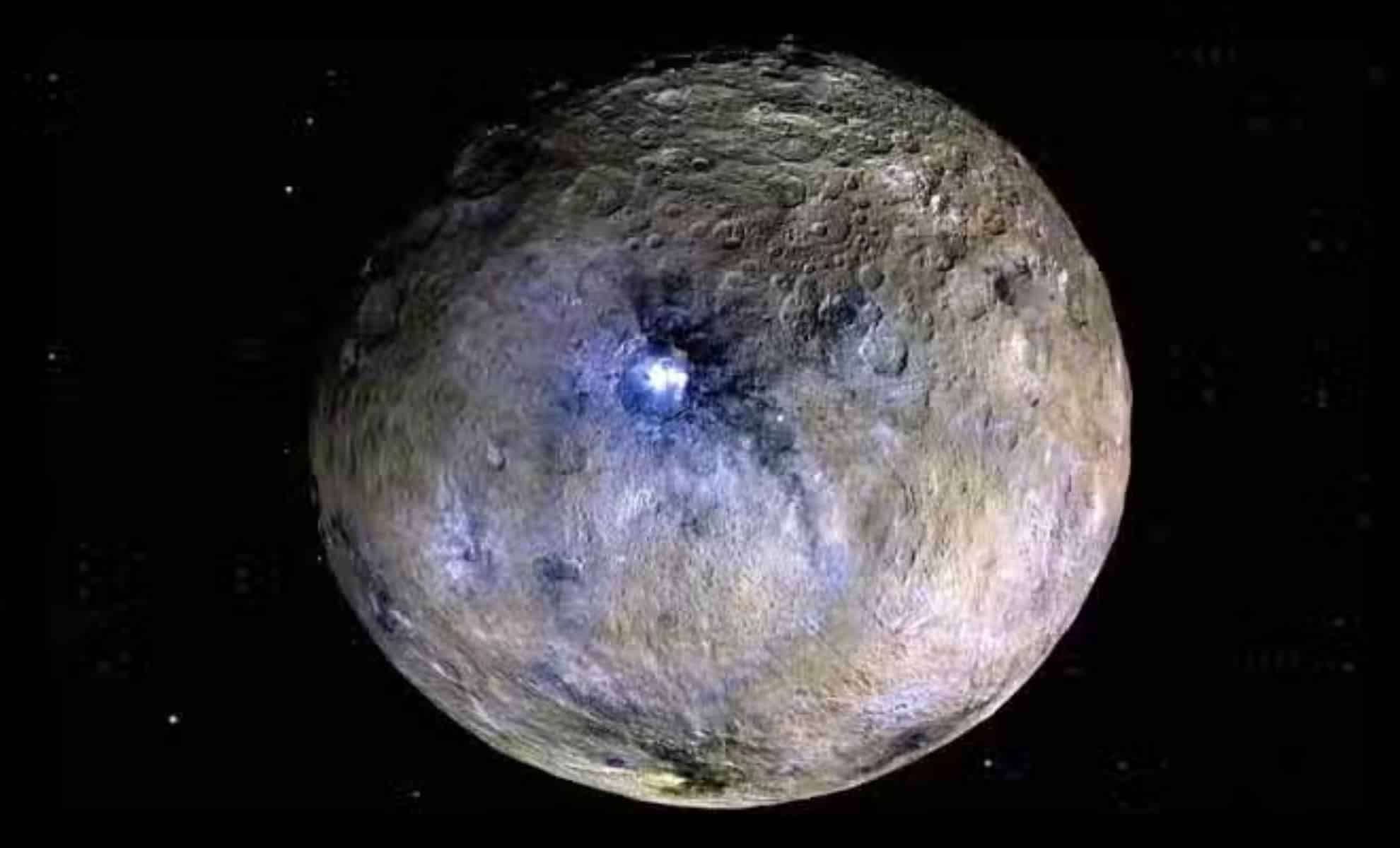
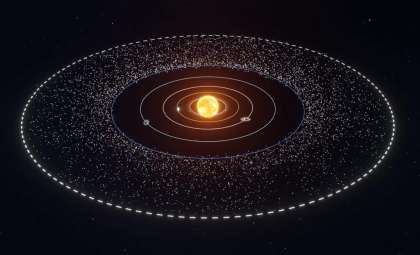
Groundbreaking research featured in Nature Astronomy uncovers strong evidence pointing to a frozen ocean beneath the surface of the dwarf planet Ceres, located in the asteroid belt between Mars and Jupiter. By leveraging observations from NASA’s Dawn spacecraft, researchers have detailed Ceres’ surface and internal makeup, highlighting a crust rich in ice. This discovery is pivotal for understanding nearby ocean worlds and offers exciting prospects for planetary comparisons, particularly with icy bodies farther out in the solar system.
Indications of an Ice-Dominant Crust Resisting Crater Deformation on Ceres
Scientists analyzed the shape of impact craters on Ceres to determine the properties of its upper layers. Unlike solid rock, ice can slowly reshape itself over time, causing craters to become more shallow. “We were encouraged by multiple Dawn datasets suggesting the existence of an ice-rich crust that helps maintain crater morphology on Ceres,” stated Pamerleau, a member of the research team. The existence of a thick icy shell retards crater relaxation, keeping their structures more intact than would be expected if the crust were largely rocky.
This crust’s resistance to deformation is crucial as it signals a significant reservoir of ice close to the surface, impacting the dwarf planet’s geophysical dynamics. The icy layer likely influences heat retention, surface hardness, and overall planetary evolution. These findings refine theoretical models that explain how icy bodies retain their shape under cosmic conditions over vast periods.

Ice Flow Mechanics Under Long-Term Stress
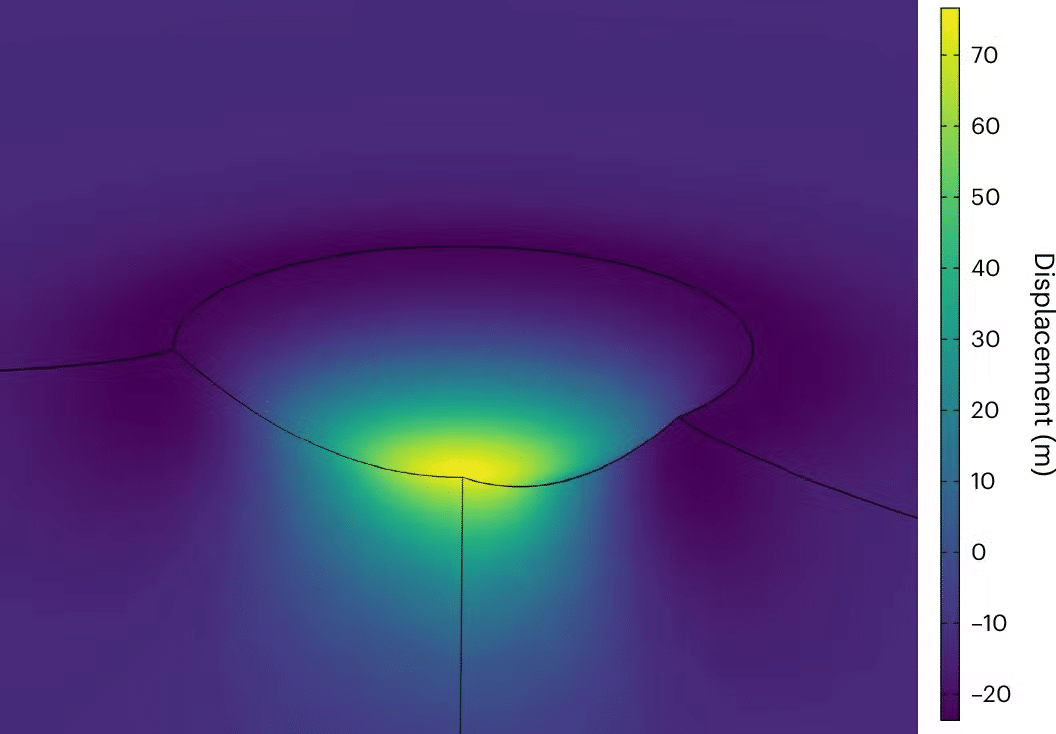
Unlike rock, ice exhibits plasticity when subjected to prolonged stress and gradually flows to relieve it. “Even solid materials can change shape over time,” explained Pamerleau. “Ice flows more readily than rock, causing craters’ deep bowls to relax into shallower depressions through solid-state flow.” This process sheds light on why some craters on Ceres appear partially flattened while others remain sharply defined.
Grasping how ice deforms on Ceres is key to interpreting surface features and determining their relative ages. The flow depends on environmental factors like temperature, purity of the ice, and the presence of impurities or mixed materials. Over millions of years, this gradual reshaping smooths terrain irregularities and offers clues about the thermal and mechanical history embedded in the crust.
Variations in Ice Concentration and Thickness Beneath Ceres’ Surface
Ceres displays a layered makeup with differing distributions of ice and rock. “We believe there's a considerable amount of water ice near the surface that diminishes progressively at greater depths,” explained Sori, the study’s lead author. This layering suggests upper regions are ice-heavy, transitioning to rock-enriched layers deeper down—likely a result of Ceres’ formation and temperature changes over time.
This stratified interior supports hypotheses that Ceres once contained a subsurface ocean or a sizable body of liquid water. The current frozen ocean is thought to be the frozen remnant of that liquid reservoir, encased beneath an icy crust. These layers influence not only geological activity but also potential chemical processes relevant to habitability.
Positioning Ceres Among Solar System Ocean Worlds
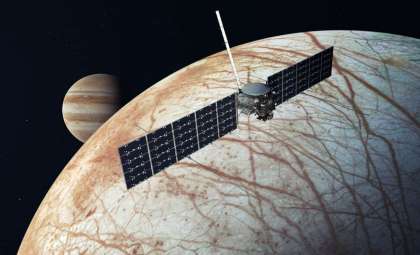
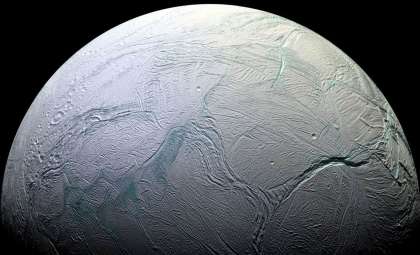
Identifying an ice-rich shell and a possible frozen ocean places Ceres among a distinguished set of ocean-bearing bodies in our solar system. “The exciting takeaway is that we may have a frozen ocean world relatively close to Earth,” remarked Sori. Ceres’ significance goes beyond its asteroid belt residence, serving as a point of reference for larger icy moons like Jupiter’s Europa and Saturn’s Enceladus.
Compared to these distant satellites, Ceres is more accessible for exploration, presenting unique opportunities to study the persistence of subsurface oceans beneath icy crusts. Investigating its ice layers and inner structure enables scientists to refine models of ocean worlds and better predict conditions that might support life in other parts of the solar system.
Future Exploration Prospects for the Icy Dwarf Planet
Owing to its distinct characteristics, Ceres is becoming a prime candidate for upcoming space missions. “We consider Ceres to be the most reachable icy world out there, making it an excellent target for future spacecraft investigations,” Sori emphasized. Missions aimed at penetrating its surface could verify the frozen ocean’s properties and its potential to harbor prebiotic compounds or microbial life.
Close-up study of Ceres would deepen our understanding of how water ice survives and evolves in the inner solar system over billions of years. Its proximity allows for in-depth research with lower costs and shorter mission timelines than those needed for large icy moons. This exploration will ultimately enhance our knowledge of water distribution and retention in small celestial bodies, shedding light on the solar system’s broader evolutionary story.
- Categories:
- News





0 comments
Sign in to Comment