
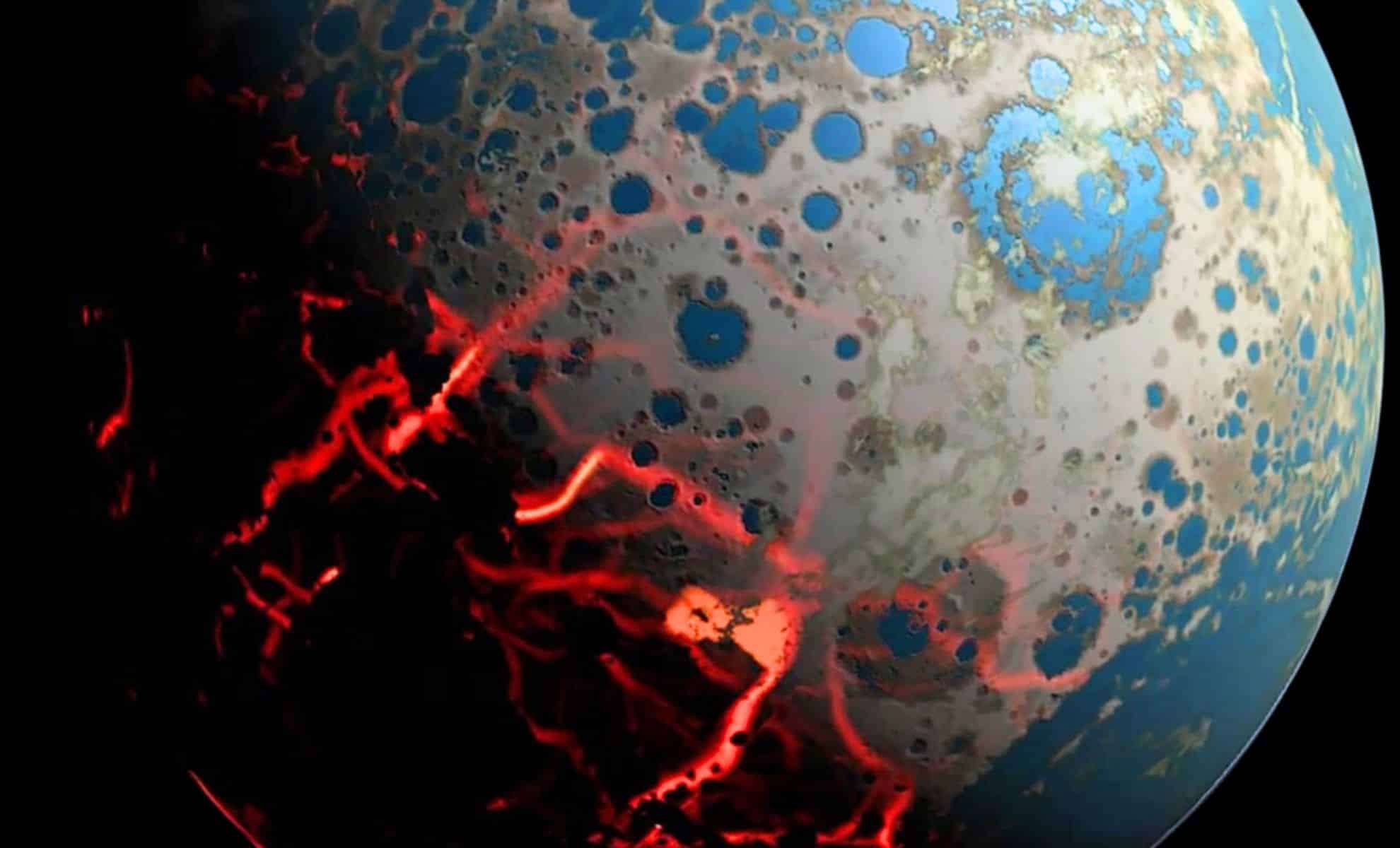
A recent publication from July 2025 delves into one of science’s most profound questions—how life first emerged from non-living components on the early Earth. Led by Robert G. Endres at Imperial College London, this study introduces a novel mathematical model highlighting that the spontaneous origin of life is significantly more intricate than earlier theories suggested.
Understanding the Odds of Life Emerging
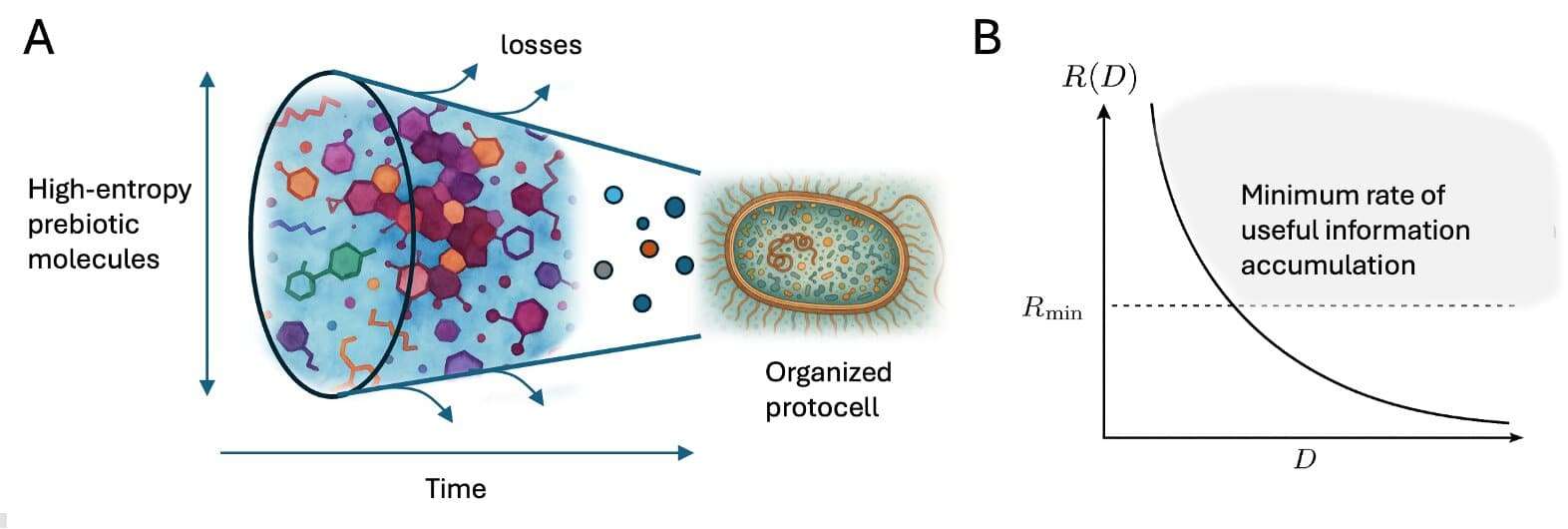
Endres employs principles from information theory and algorithmic complexity to explore the difficulty of generating biological order under Earth’s primordial conditions. His research particularly examines how intricate biological information could arise naturally during the planet’s early stages.
Endres draws a vivid comparison, likening the task of creating a protocell to “trying to compose an article on the origins of life for a prestigious space-focused publication by randomly pressing keys.” As the complexity needed for life increases, the likelihood of such random success plummets.

While the study acknowledges that the emergence of life is not impossible, it suggests that attributing it solely to chance and chemical reactions may fall short in explaining how life developed within the timeframe available. Given that natural systems generally trend toward disorder rather than increasing organization, the construction of the highly ordered systems living organisms require presents a formidable challenge.
The Mathematics Behind Life’s Formation
A key aspect of the research is the application of rate-distortion theory, which uncovers profound mathematical obstacles involved in assembling a protocell. According to this framework, the creation of complex biological forms encounters vast difficulties due to inherent informational limits and disruptive effects found in chemical processes.
The findings stress that generating the first living cell—capable of metabolism and replication—would necessitate overcoming enormous information-theoretical barriers that current chemistry and physics alone might not fully account for.
Although the study highlights the low probability of life arising spontaneously, it stops short of ruling it out entirely. Instead, it calls for deeper investigation into physical laws that could help explain how these hurdles were overcome.
The Possibility of Directed Panspermia
While focusing mainly on natural origins, the study also briefly addresses the concept of directed panspermia, an idea first proposed by Francis Crick and Leslie Orgel. This theory posits that life may have been deliberately introduced to Earth by highly advanced extraterrestrial beings. Although speculative, the researchers leave space for this scenario, even as it conflicts with Occam’s razor.
Endres weighs this possibility, emphasizing that although it remains a logical option, it is far from an established explanation. The research does not attempt to refute the idea of directed panspermia but rather focuses on quantifying the significant mathematical challenges involved in spontaneous life formation.
- Categories:
- News





0 comments
Sign in to Comment