
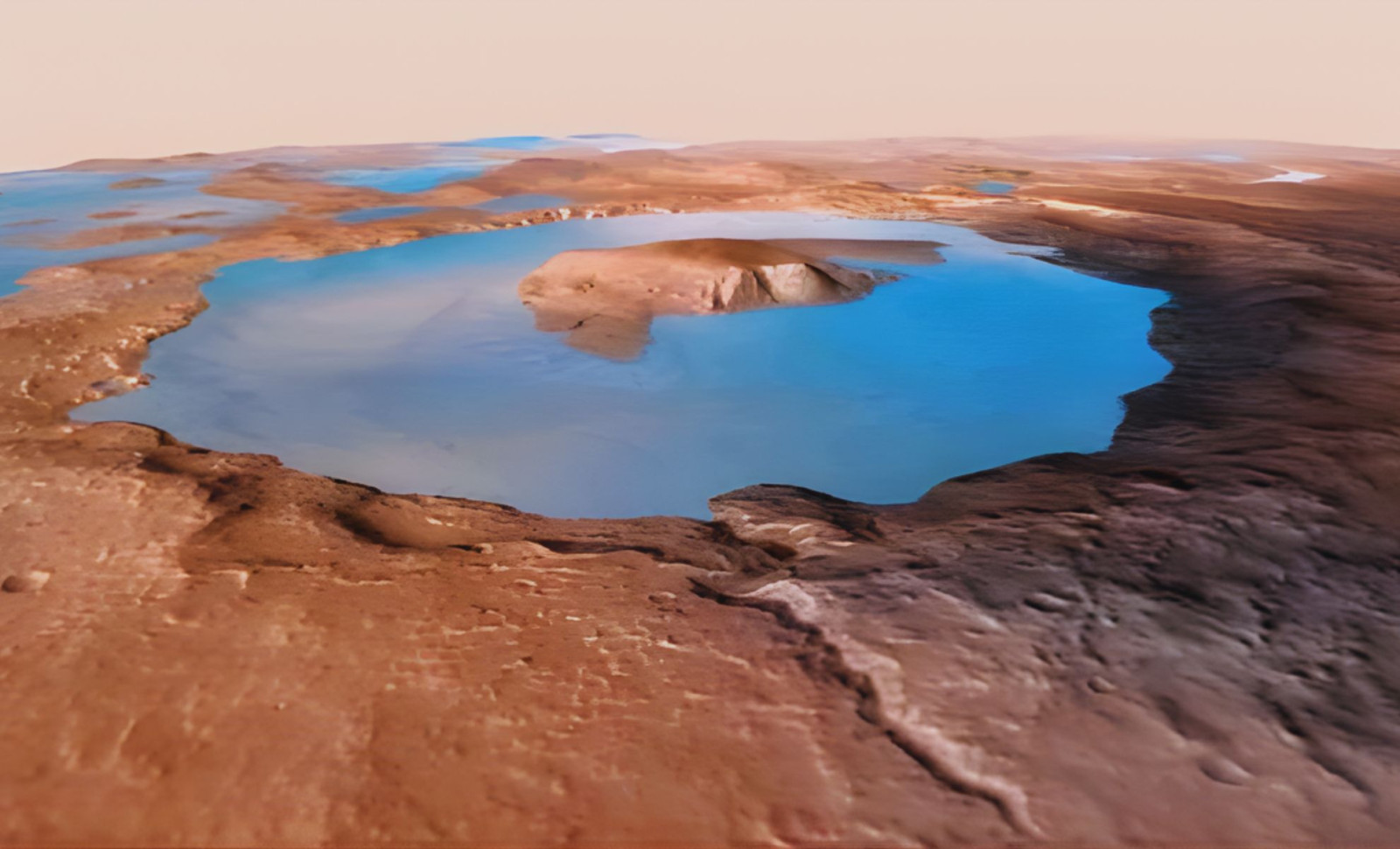
Recent findings have uncovered a geological formation on Mars that could support the theory the planet once harbored a vast ocean. Researchers have pinpointed an area resembling a continental shelf, a geographic feature that suggests the presence of a stable, long-standing ocean.
The northern region of Mars has been considered a prime candidate for ancient oceanic water due to its lower elevation and relatively sparse impact craters compared to the south.
Despite this, confirming an ancient shoreline has been challenging because earlier clues were inconsistent and ambiguous. Instead of chasing elusive shorelines, scientists shifted their focus to a more permanent element: the coastal shelf.

Why Shorelines Can Be Deceptive
While shorelines are traditionally used as markers for ancient seas, they can be unreliable. Dr. Abdallah Zaki of the University of Texas at Austin noted that shorelines evolve rapidly because of geological shifts and tides.
“If people really want to search for oceans, they shouldn’t look for shorelines because they are not really good indicators. They move really fast, and that’s why they’re not even indicators of [ancient] lakes on Earth,” he said.
Due to their dynamic nature, shorelines often fail to accurately represent ancient water bodies. On Earth, the continental shelf's relatively stable, shallow seabed is a more dependable marker of enduring oceans. Dr. Zaki, formerly affiliated with Caltech, collaborated with Professor Michael Lamb to apply this concept to Mars.
“If Mars did have an ocean, it dried up a long time ago — possibly several billion years ago, more than half of the age of the planet itself,” Lamb explained in a university statement. “There is hardly anything on Earth that is that old; anything on Mars from that time has been eroded by billions of years of wind blowing, volcanoes erupting, and other disturbances removing subtle features. We wanted to find a better topographic feature than shorelines that could be evidence for an ocean.”
Investigating Mars’ Supposed Ancient Coastline
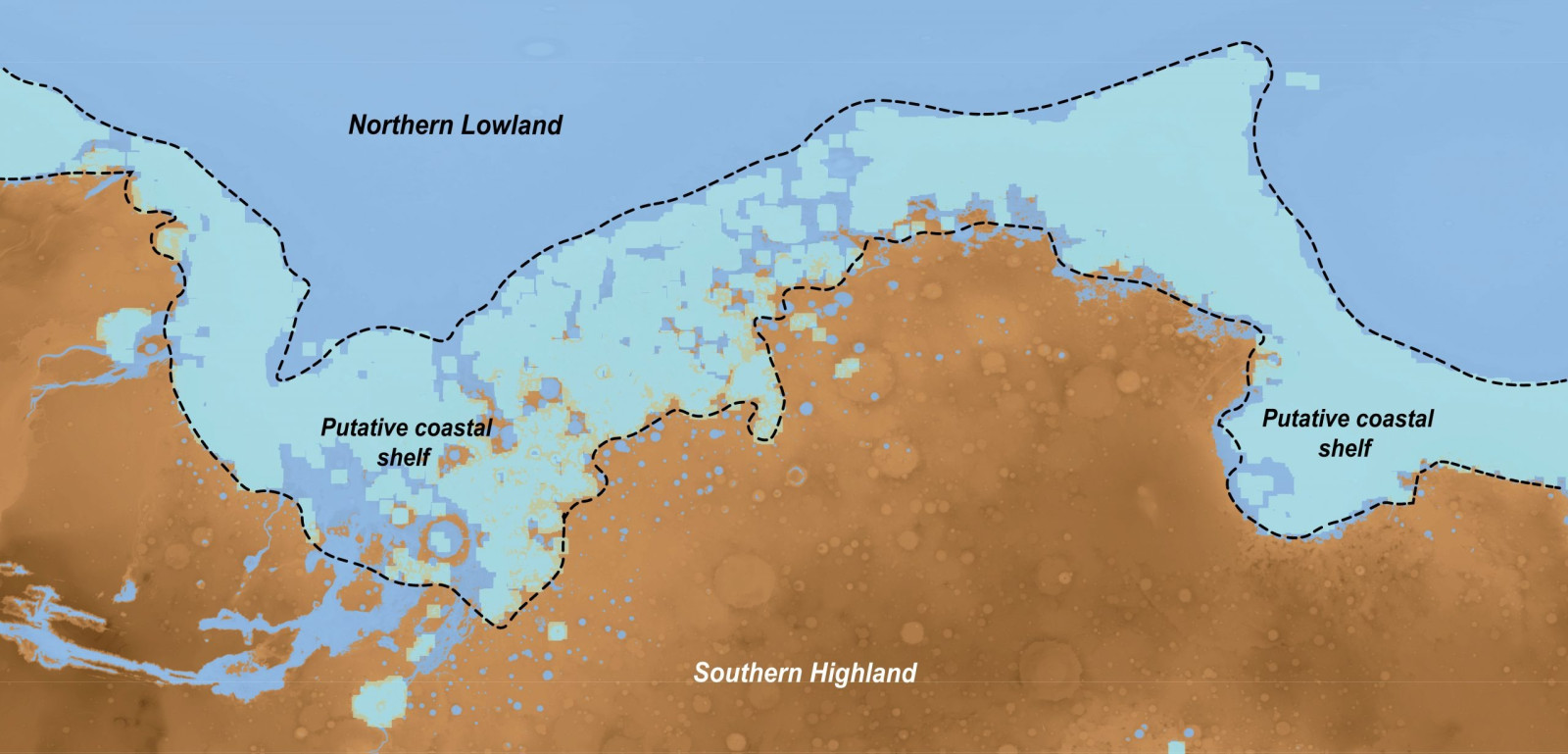
By studying the surface elevations of Mars, experts detected a northern hemisphere zone bearing resemblance to Earth's continental shelf. This area features mild slopes and minimal curvature, implying the past presence of a sizable ocean.
“Within the zone that has low values of slopes and curvature, we found evidence of coastal deposits, deltas, and depositional rivers. This is common. You see, actually, the continental shelf [on Earth] has all these: it has deltas, it has coastal deposits, and it has some flowing deposits bloomed from the rivers globally.”
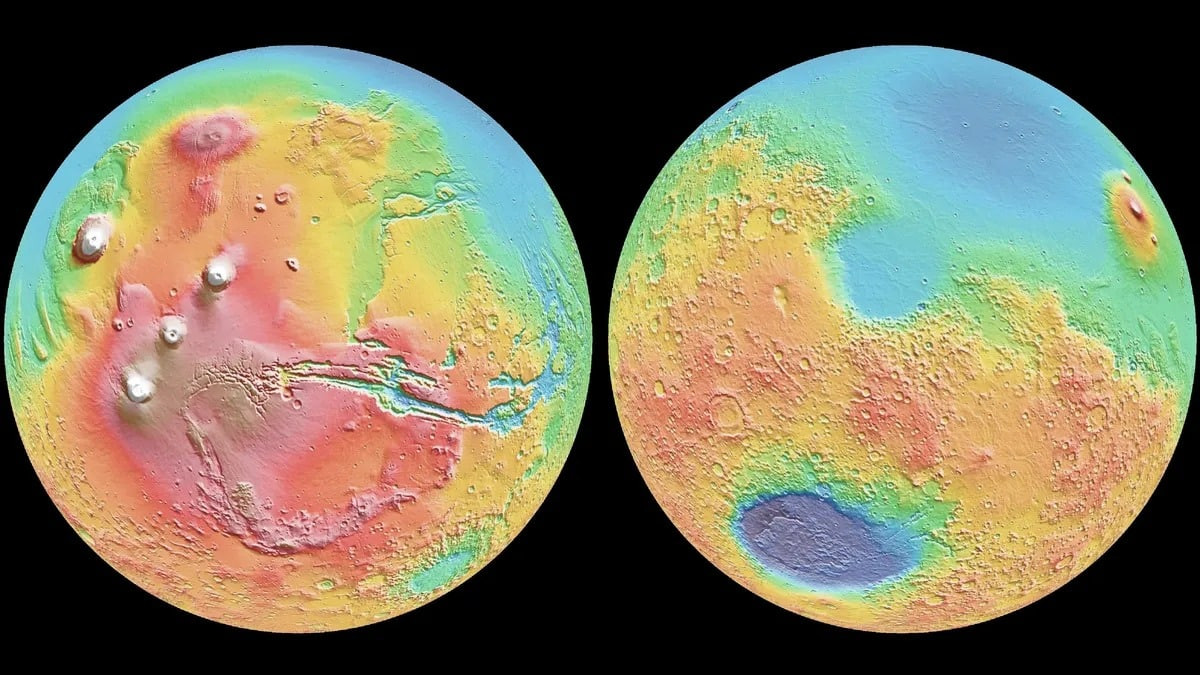
Unlike Earth, Mars lacks tectonic plate tectonics, so its surface remains largely unchanged by plate movements. This newfound coastal shelf is notably stable, suggesting it's remained intact for eons. Such a feature strengthens the possibility that Mars once sustained an ocean over long durations, potentially creating conditions for life.
Is Mars a Viable Future Habitat?
Published in Nature, this research advocates using durable geological features like coastal shelves to unearth evidence of ancient water bodies on Mars. This approach may enhance the search for signs of past life by spotlighting promising locations for further exploration.
“It’s a strong additional piece of evidence supporting a northern ocean on Mars,” Zaki stated, “but there’s plenty of follow-up work to be done for rovers to examine deposits and for further analysis of satellite data.”
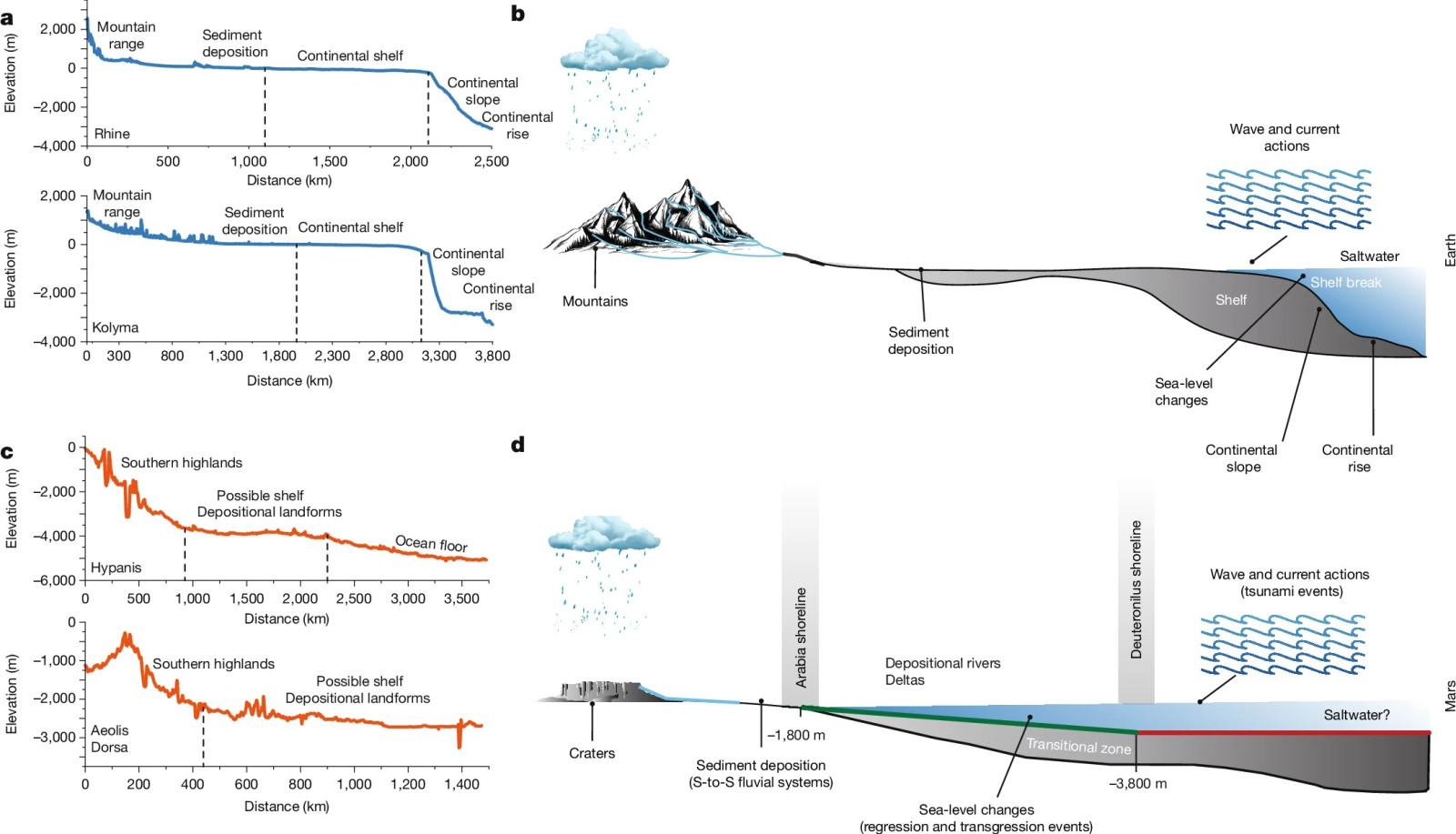
This probable coastal shelf may become a key focus in upcoming missions aiming to reveal more about Mars’ watery past and assess its habitability.
- Categories:
- Astronomy









0 comments
Sign in to Comment