
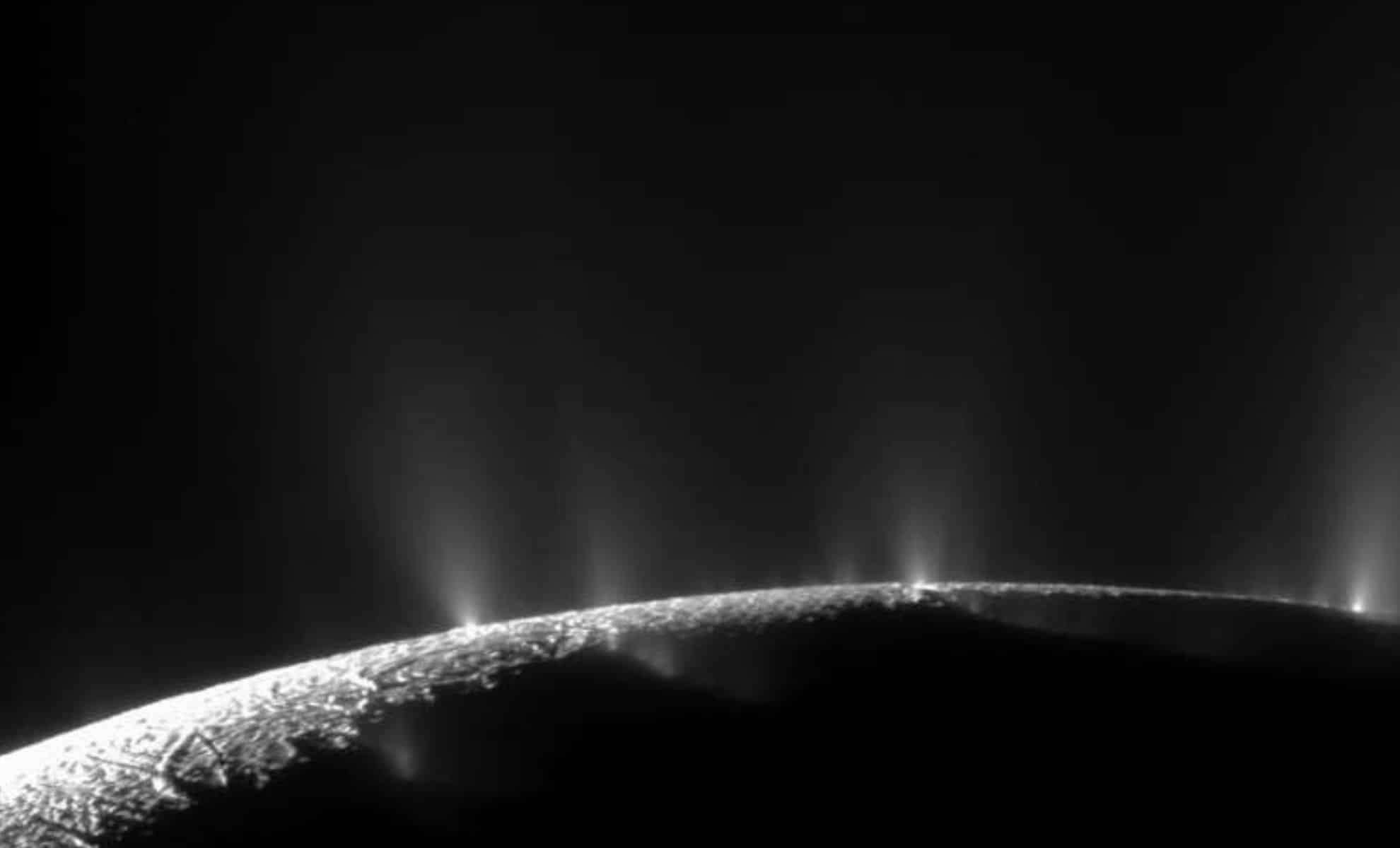
Scientists at NASA have discovered that amino acids, which may signal the presence of life, can endure near the ice-covered surfaces of Jupiter’s moon Europa and Saturn’s moon Enceladus.
Tests show these organic compounds can resist radiation damage close to the ice shell, potentially allowing future robotic explorers to sample them without needing to drill deeply.
Life Potential on Ocean Worlds
Europa and Enceladus have intrigued researchers due to their hidden oceans beneath icy crusts. Heated by gravitational forces, these subsurface seas might offer habitable conditions if they contain key chemical ingredients. According to a NASA study, biomarkers like amino acids could remain intact just beneath the surface ice despite intense space radiation.

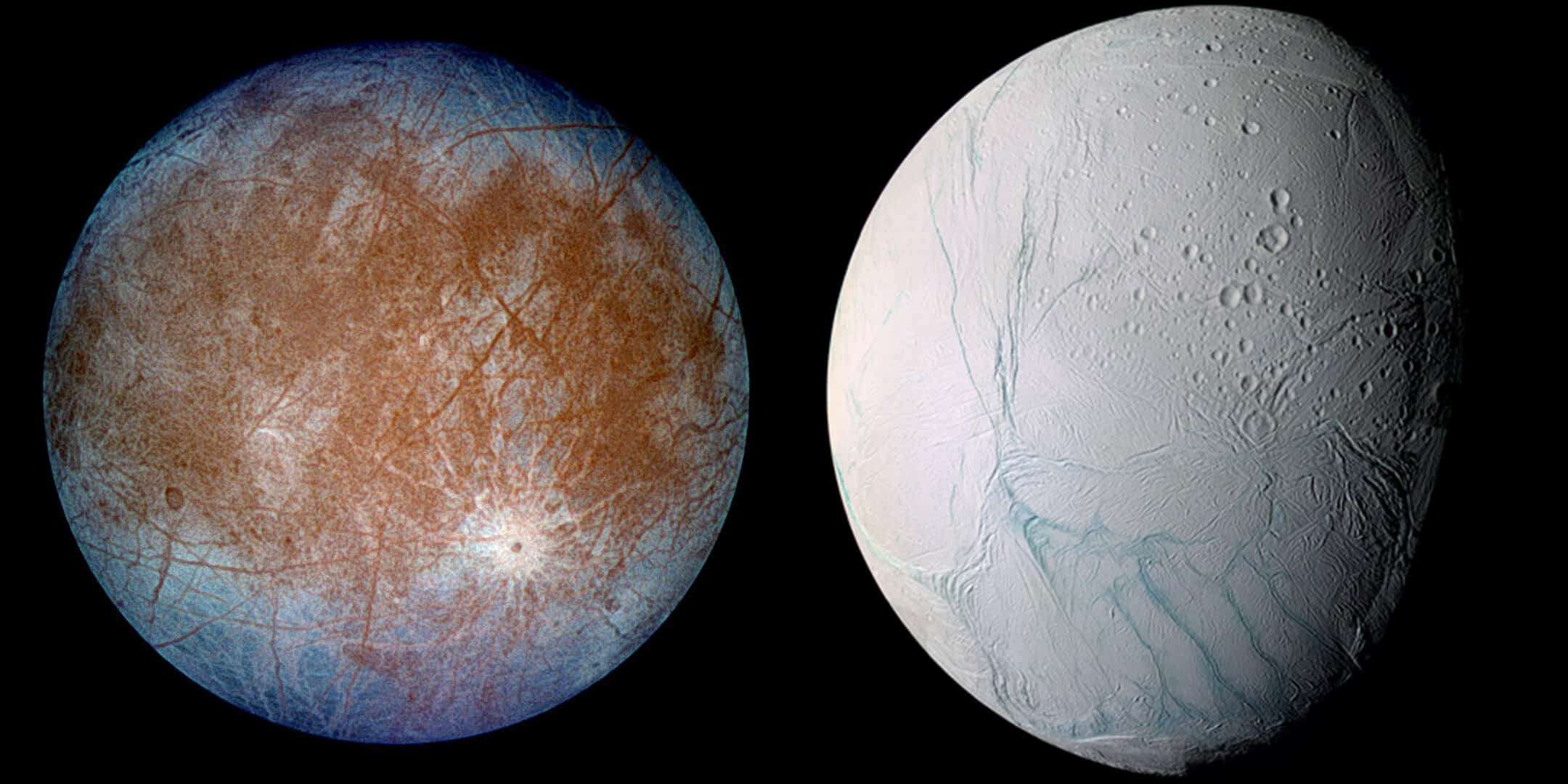
Alexander Pavlov from NASA’s Goddard Space Flight Center, leading author of the published work in Astrobiology, notes, “Our findings indicate that amino acids would be protected from radiation at nearly 8 inches (20 cm) beneath Europa’s surface at certain high-latitude sites with minimal meteorite disturbance.” He added, “On Enceladus, sampling just below a tenth of an inch from the surface suffices for amino acids to survive radiolytic breakdown across the moon.”
NASA’s Experimental Techniques and Insights
The team used radiolysis studies to simulate the effects of radiation on amino acids, molecules that can emerge through biological or abiotic routes. Detecting these on Europa or Enceladus could hint at life, as terrestrial organisms rely on amino acids to synthesize proteins essential for enzymes and structural components.
In the lab, amino acid samples were combined with ice cooled to around minus 321°F (-196°C) in airtight vials and exposed to gamma radiation. They also examined amino acids embedded in dead bacterial cells and mixed with silicate dust, mimicking conditions where extraterrestrial dust or internal material might blend with icy surfaces.
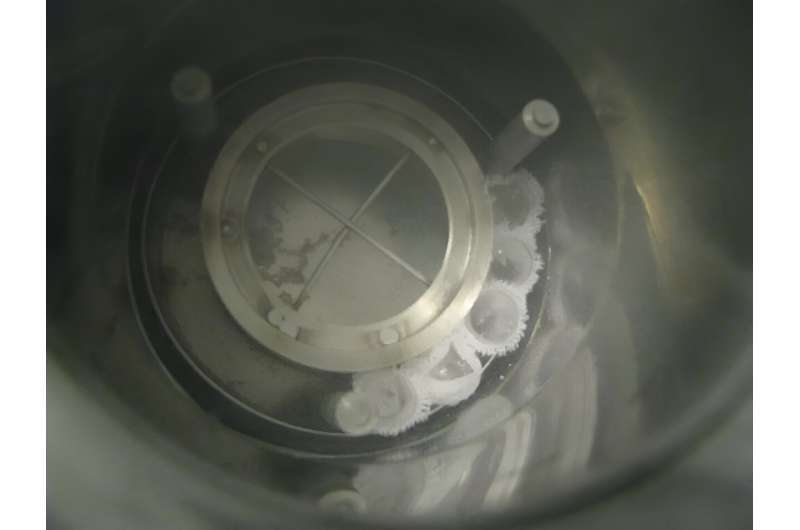
These experiments yielded critical radiolysis rates, which the researchers used to estimate optimal sampling depths where 10% of the amino acids remain intact. Pavlov emphasized the importance of the findings: “The slow degradation of amino acids under conditions like those on Europa and Enceladus supports the feasibility of detecting biomarkers with shallow lander missions.”
Impact on Future Exploration
These discoveries suggest that upcoming missions to Europa and Enceladus might access amino acids without requiring extensive drilling, simplifying life-detection efforts. Pavlov cautions, “Our data show that biomolecule degradation is greater in silica-rich areas than in pure ice, so missions should carefully select sampling sites on both moons.”
Planning future missions must account for surface radiation levels and ice composition, as this research highlights the promising possibility of uncovering life evidence with relatively shallow collection points.
The study also found that amino acids degrade more rapidly when mixed with dust but exhibit slower breakdown when protected inside microbial remnants. Pavlov noted, “Bacterial cellular material may shield amino acids from radiation-induced reactive compounds.”
This protective effect could be vital for preserving key biomarkers in the extreme radiation environment of these moons, enhancing the chances of detecting life signatures.
Overall, this research lays crucial groundwork for refining life-detection strategies and instrument designs for probing icy worlds. Exploring Europa and Enceladus continues to hold exceptional promise for revealing new insights into the potential for life beyond Earth.
- Categories:
- Astronomy ,
- News ,
- Space ,
- Nasa






0 comments
Sign in to Comment