
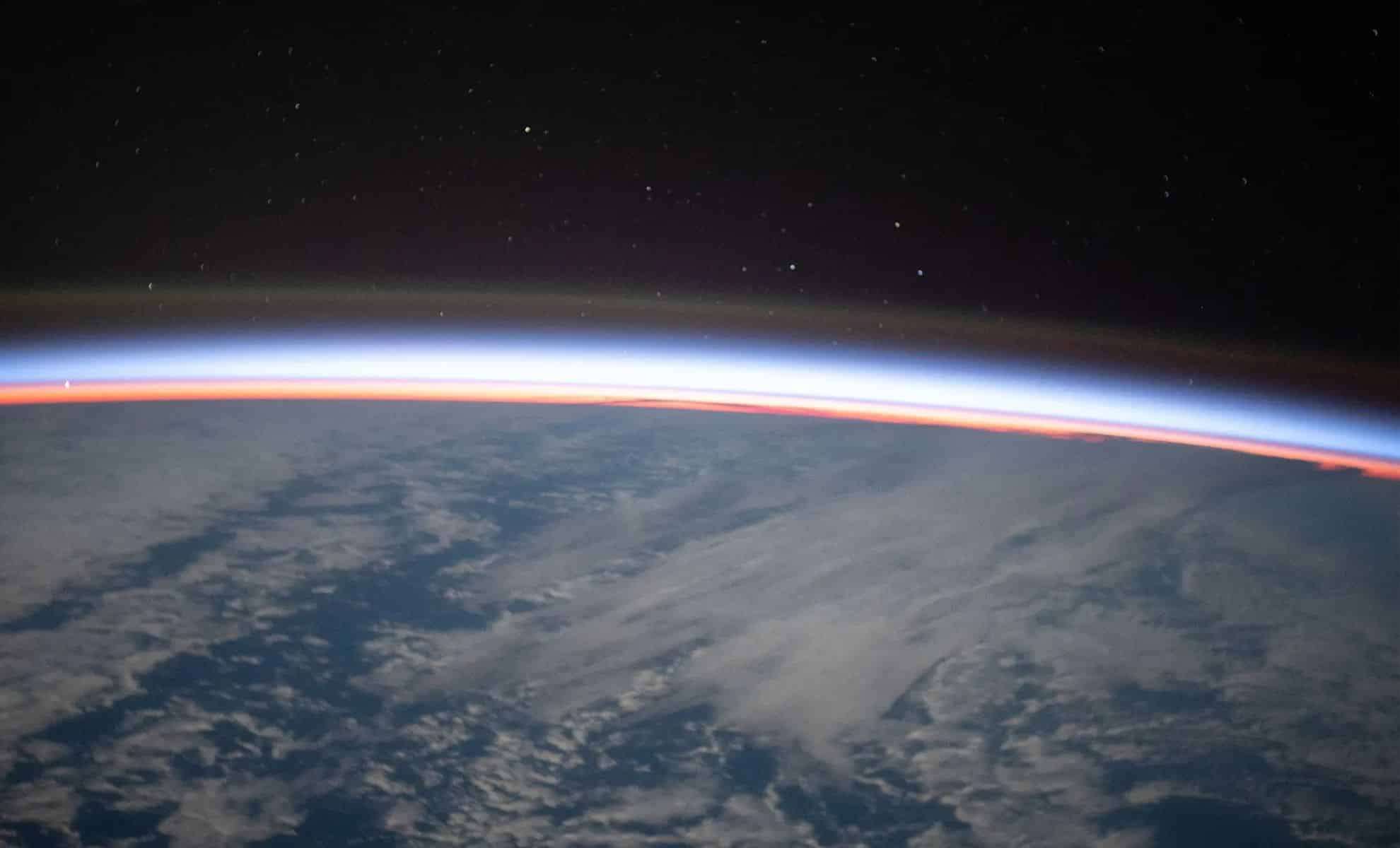
For years, the boundary dividing Earth's atmosphere and outer space has been recognized as the Kármán Line, positioned at an altitude of 100 kilometers (around 62 miles) above sea level. This invisible line has served as a fundamental reference point, marking the transition from our planet's atmosphere to the vastness of space. However, a recent investigation led by Harvard-Smithsonian astrophysicist Jonathan McDowell challenges this traditional boundary, suggesting space begins significantly closer to Earth—by roughly 12 miles.
The findings, detailed in Acta Astronautica, reassess the location of space's starting point by analyzing orbital data from more than 43,000 satellites monitored by the North American Aerospace Defense Command (NORAD). McDowell argues that the conventional 100 km elevation defining the Kármán Line is no longer accurate, recommending the boundary be adjusted to 80 km (approximately 50 miles). This revision could reshape how we understand space's fringe and categorize spacecraft and missions.
Reevaluating the Atmospheric Threshold
McDowell’s study revisits physical, historical, and technical perspectives on where Earth's atmosphere ends and space begins. He advocates for the 80 km mark as a more precise indicator of space’s onset, noting this altitude aligns with the mesopause—the atmosphere's coldest layer. This region also matches the typical altitude where many meteors incinerate upon entering the atmosphere, reinforcing the idea that atmospheric density significantly decreases around this height.

He also highlights that during the 1950s, the U.S. Air Force granted astronaut wings to pilots surpassing this altitude, officially acknowledging it as the start of space. This historical precedent, combined with McDowell's current analysis, questions the authority of the Kármán Line as the definitive space frontier.
Implications for Spaceflight and Exploration
If McDowell's suggested 80 km boundary gains acceptance, it could transform criteria for spaceflight classification and redefine mission parameters for government agencies and private companies. This change would more closely reflect the atmospheric dynamics at play and better integrate contemporary understanding of spacecraft behavior near Earth.
As McDowell states, “The debate about where Earth's atmosphere ends and space begins has persisted for decades. It's time to reassess the established boundary, especially with new evidence demonstrating how spacecraft operate at lower altitudes.” This compelling proposition has the potential to ignite discussion amongst scientists and possibly lead to redefining the edge of space.
- Categories:
- News





0 comments
Sign in to Comment