
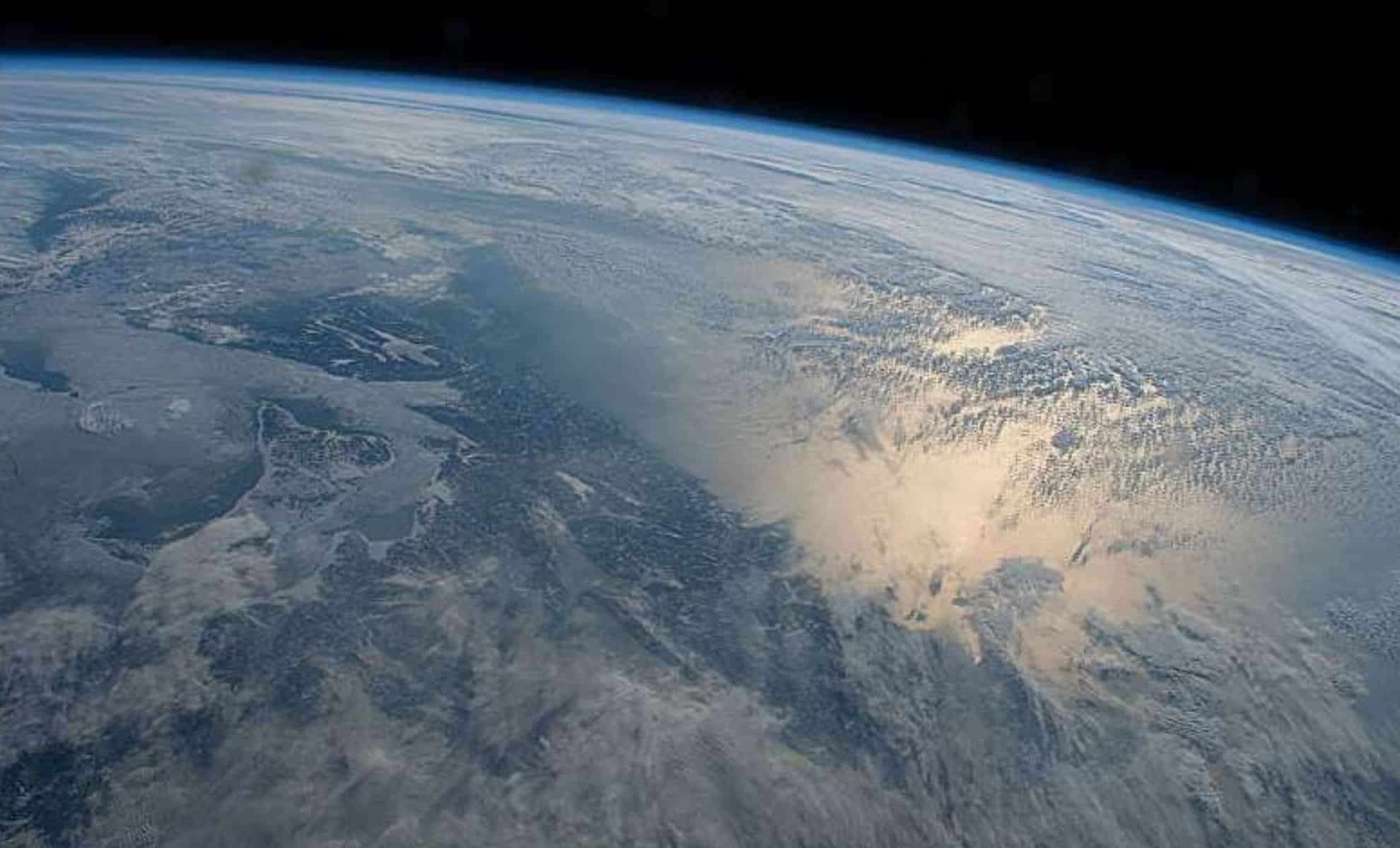
A recent breakthrough study from Penn State University is reshaping our views on how intelligent life arises, disputing the belief that its development is a near-impossible occurrence. The findings indicate that intelligent beings, similar to humans, might be a natural result of how planets evolve over time, relying heavily on planetary conditions and their timing rather than a chain of highly unlikely events. This research argues that complex life forms are not an accidental product of random luck but emerge through dynamic interactions between organisms and their environments, prompting a fresh outlook on our origins and the prevalence of life elsewhere in the universe.
This research presents a major update to the traditional “hard steps” model, which previously suggested that the emergence of intelligent life was exceptionally rare. Instead, the new model posits that life's development follows a logical progression shaped by the evolving conditions on a planet. This perspective not only redefines the narrative of humanity’s origins but also raises the prospects of intelligent life existing on other worlds.
Rethinking the Path to Complex Life
The heart of this study is a challenge to the idea that life's evolution depends on a succession of unlikely events. Scientists argue that intelligent life could naturally arise from the changing environments of a planet. For instance, Earth’s transformation to an oxygen-rich atmosphere, largely due to photosynthetic microbes, was a crucial turning point that enabled complex organisms to develop. Rather than depending on random fortunate events, this approach highlights the critical role of environmental shifts in life’s evolution.

“This represents a major change in our understanding of life’s history,” said Jennifer Macalady, a geosciences professor at Penn State and one of the paper’s authors published on February 14, 2025, in Science Advances. “It implies that the rise of complex life forms is less about random chance and more about the interaction between living organisms and their planetary environment, opening exciting opportunities for new research into our origins and cosmic context.”
Critical Timing and Environmental Factors Behind Intelligence
The authors suggest that intelligent life, like humans, arose at an optimal period—neither too early nor too late in Earth’s timeline, but when conditions favored its development. The research introduces the idea of “habitability windows,” defined as periods when planetary conditions support the advancement of life into greater complexity. Initially, Earth’s capacity to host life was limited, but as its atmosphere and environments transformed, conditions became ripe for intelligent species to evolve.
“We propose that intelligent life’s existence isn’t reliant on a lucky series of events,” explained Dan Mills, lead author and postdoctoral researcher. “Humanity evolved ‘just in time,’ capitalizing on favorable conditions. Perhaps other planets develop these conditions sooner or later than Earth, implying varied timelines for the emergence of intelligent life elsewhere.”
This perspective suggests that intelligence might be a predictable outcome on planets with the right evolutionary courses, greatly boosting the possibility of extraterrestrial civilizations resembling or paralleling human life.
Impacts on the Quest for Extraterrestrial Intelligence
This updated framework holds significant consequences for the search for life beyond our planet. Moving away from the notion that intelligent life is extraordinarily rare, this research emphasizes the importance of planetary timing and environmental factors. The implications are promising: intelligent, potentially human-like life might be more widespread across the cosmos than previously assumed.
The researchers advocate focusing future studies on exoplanet research, especially on worlds outside our solar system that exhibit suitable life-sustaining conditions. “Detecting biosignatures like oxygen in exoplanet atmospheres could be key to identifying candidates capable of supporting intelligent life,” stated Macalady. This marks a new roadmap for how scientists approach celestial life detection and reshapes expectations about the universe’s living inhabitants.
Future Directions for Astrobiology Research
The team plans to explore whether the so-called “hard steps”—including the origin of life, the rise of oxygen production, and the advent of intelligence—are unique to Earth or if they can independently occur elsewhere. Their work aims to transform our understanding of life’s mechanisms and the probability of encountering other intelligent beings.
Jason Wright, professor of astronomy and astrophysics at Penn State, highlighted that the study is part of bridging astrophysics with geobiology to grasp the broader evolution of life. “The timelines we observe on Earth should be considered normal,” Wright noted. “If life evolves in tandem with planetary development, it will proceed according to planetary rhythms.”
This integrative approach is expected to propel forthcoming research, enriching our knowledge of Earth's own evolution while expanding the search for life elsewhere in the universe.
- Categories:
- News









0 comments
Sign in to Comment