
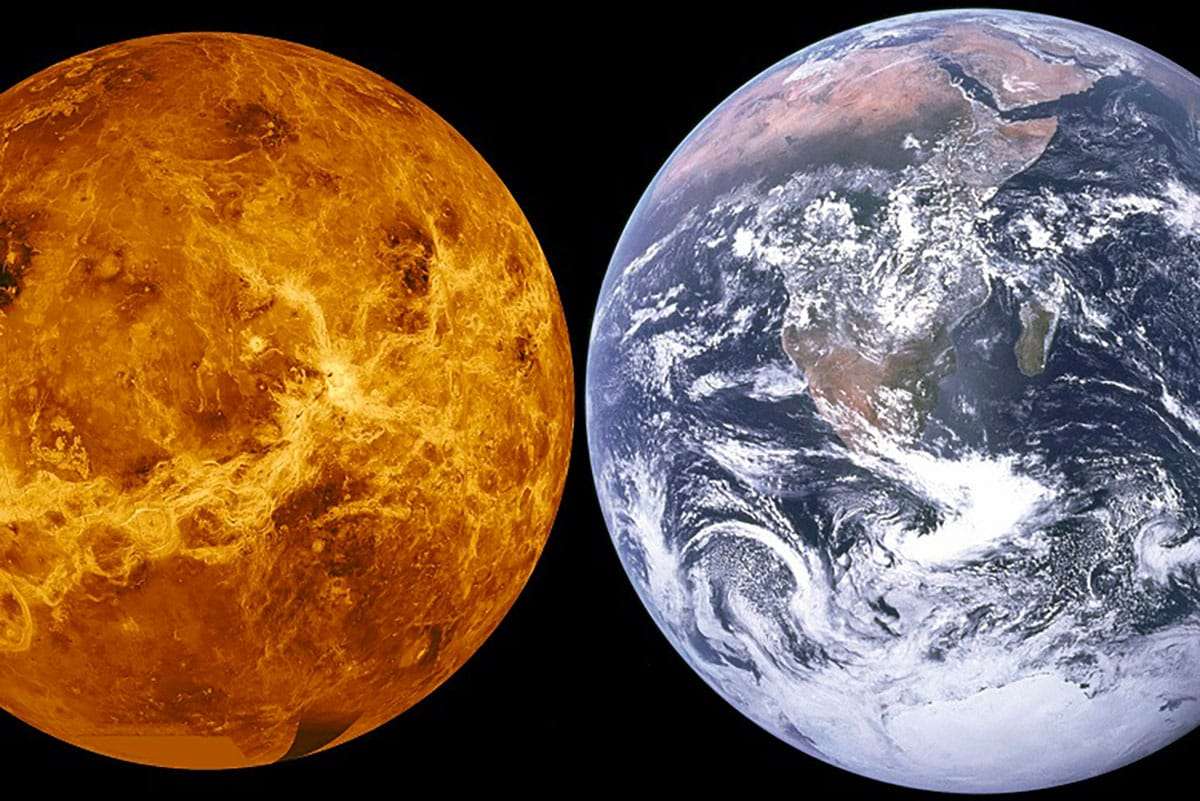
A recent article in Nature Astronomy reveals that Venus likely has been a hostile planet throughout its entire 4.6-billion-year existence. Despite its Earth-like size and make-up, Venus’s environmental conditions diverge sharply from our home planet’s, marked by:
- Surface temperatures around 500°C
- Dense clouds composed of sulfuric acid
- An extremely arid atmosphere and interior
These revelations hold major consequences for how scientists interpret planetary development and evaluate possible life-supporting environments beyond Earth. Since many exoplanets resemble Venus, this study suggests prioritizing planets with more Earth-like qualities in the hunt for habitable worlds.
Reevaluating Long-Standing Hypotheses About Venus
For many years, researchers have debated two primary scenarios for Venus’s evolutionary past:

- Venus once harbored mild temperatures that supported liquid water, but then volcanic-driven runaway greenhouse effects transformed it into its present harsh state.
- Venus formed as a hot planet and has never sustained liquid surface water.
The Cambridge researchers took an innovative path by examining the current chemical makeup of Venus’s atmosphere rather than relying exclusively on climate simulations. Lead author Tereza Constantinou described their approach: “To maintain stability in Venus’s atmosphere, any substances lost must be replenished, given the ongoing chemical exchange between the planet’s surface and interior.”
Revealing Venus’s Dry Interior via Volcanic Emissions
Volcanism is vital in shaping the atmospheres of rocky planets like Venus. As molten rock ascends from the mantle, it emits gases that offer clues about the planet’s internal composition. On Earth, volcanic eruptions largely release steam due to our water-rich interior.
Yet, this study found that Venusian volcanic gases contain no more than 6% water, indicating a severely depleted internal water content. This supports the idea that Venus likely never maintained sufficient water to form surface oceans.
Consequences for Exoplanet Exploration and Life Detection
These results reshape perspectives on which exoplanets might support life and where to focus efforts in the search for biosignatures. Constantinou stated, “If Venus never harbored habitable conditions, then Venus-like exoplanets are less promising targets for finding life.”
The findings emphasize the need to concentrate on truly Earth-like planets as the most viable candidates for life. Venus itself offers a unique window into planets at the margins of habitability.
As the astronomical community progresses, lessons from Venus are crucial in refining search strategies. The discovery of unusual cosmic objects that defy current models highlights how continuous observation advances our cosmic understanding.
Looking ahead, NASA’s DAVINCI mission, planned for launch later this decade, aims to further explore Venus’s surface and atmospheric conditions. By gathering detailed data, the mission hopes to confirm whether Venus has always remained an arid and forbidding world.
While these outcomes may dampen hopes of past Venusian habitability, they play a vital role in optimizing the search for life elsewhere by narrowing down the most promising environments.
https://www.sciencedaily.com/releases/2024/12/241202123421.htm
- Categories:
- Astronomy











0 comments
Sign in to Comment